
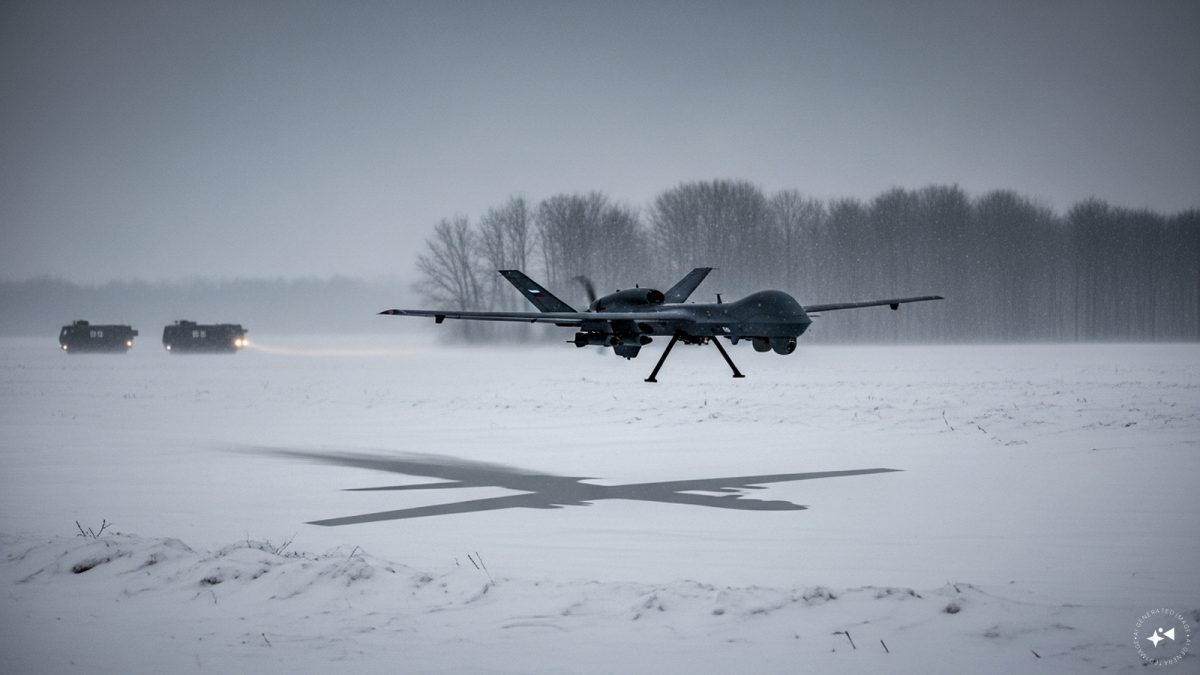
 "Russian breach of Polish airspace sparks debate on NATO’s readiness for modern drone threats")

After NATO aircraft intercepted drones in Polish airspace overnight, the Western military alliance sought to reassure its citizens on Wednesday that everything had gone as it should.
Following the interception of suspected Russian drones in Polish airspace, NATO officials on Wednesday projected an image of strength and success. Yet, the incident, the most serious spill over from the war in Ukraine to date has ignited a sharp debate among defence analysts, who question whether the alliance’s Cold War-era architecture is prepared for the realities of modern drone warfare.
While NATO leadership celebrated the response, the incursion has exposed a critical tension between the alliance’s official confidence and growing concerns about its strategic and technological readiness.
“Our air defences were activated and successfully ensured the defence of NATO territory, as they are designed to do,” declared Mark Rutte, NATO’s secretary general.
“NATO’s swift response to Russian drones violating Polish airspace overnight is firm. Well done to the responders, that’s the way we do business!” exclaimed Admiral Giuseppe Cavo Dragone, head of the alliance’s military committee.
Admiral Giuseppe Cavo Dragone, head of the alliance’s military committee, echoed this sentiment, exclaiming, “NATO’s swift response to Russian drones violating Polish airspace overnight is firm. Well done to the responders, that’s the way we do business!”
However, behind the official pronouncements, a chorus of expert voices raised pointed questions. For many analysts, the very fact that foreign drones could penetrate the airspace of a member nation is a significant concern.
Peter Bator, Slovakia’s former ambassador to NATO, warned, “It is a very good illustration that we need to be not only vigilant but more decisive in our actions.” He argued the episode was “unacceptable”—an instance where NATO was forced into reacting to incoming threats when its very charter is built around deterrence: “There’s not much difference between drones and troops,” Bator observed, likening the airspace breach to the entrance of hostile forces.
With the origins of the drones still in dispute—Russia’s defence ministry claimed its drones only targeted sites in Ukraine and Polish officials acknowledged uncertainty—the incident nonetheless fuelled calls for a new approach. Bator even suggested giving Ukraine the authority to intercept Russian drones inside Ukrainian territory if they pose a risk to NATO, a contentious proposal given the alliance’s tradition of consensus and reluctance to escalate confrontation.
Complicating matters is the nature of the drone threat itself. The Polish military identified many of the aircraft as Gerbera-type UAVs: exceedingly cheap, lightweight, and capable of traversing hundreds of kilometres. Researcher Fabian Hinz described them as a “Styrofoam” menace to which high-value Western platforms—F-35s, F-16s, assault helicopters, and Patriot missiles—had to be scrambled in response.
While NATO’s multinational arsenal, including forces from Poland, the Netherlands, Italy, and Germany, was able to neutralize the immediate threat, the scale and cost-efficiency mismatch was striking. In Ukraine, drone assaults often involve hundreds of cheap UAVs at once, overwhelming air defences designed for missiles or piloted aircraft. “Western air defence systems have not been designed with affordable UAV systems being used on such a large scale in mind,” Hinz said.
Strategic experts say these defences may be ill-matched for the current era. “They should have been identified as possible threats much earlier and defence preparations put in place with plenty of time,” wrote Phillips P. O’Brien, professor of strategic studies at St Andrews. “It should have been child’s play for NATO… God help them if they are faced with 600 UAVs and missiles on a single night.”
Despite these pointed critiques, NATO’s leadership remains publicly steadfast. When asked if the alliance needed to bolster its drone defences, Secretary General Rutte was clear: “Of course, we always have to make sure that we are one step ahead. But I think last night showed that we are able to defend every inch of NATO territory.”
While NATO successfully defended its airspace in this instance, the event has forced a critical conversation into the open, leaving the alliance to reconcile its leaders’ confidence with the urgent warnings that its defences may not be ready for the drone-saturated conflicts of the future.
With inputs from agencies
End of Article

 "Qatar PM slams Israeli strike on Doha as ‘state terror’, says Netanyahu ‘killed any hope’ for hostage deal")
&description=Russian+breach+of+Polish+airspace+sparks+debate+on+NATO%E2%80%99s+readiness+for+modern+drone+threats)