
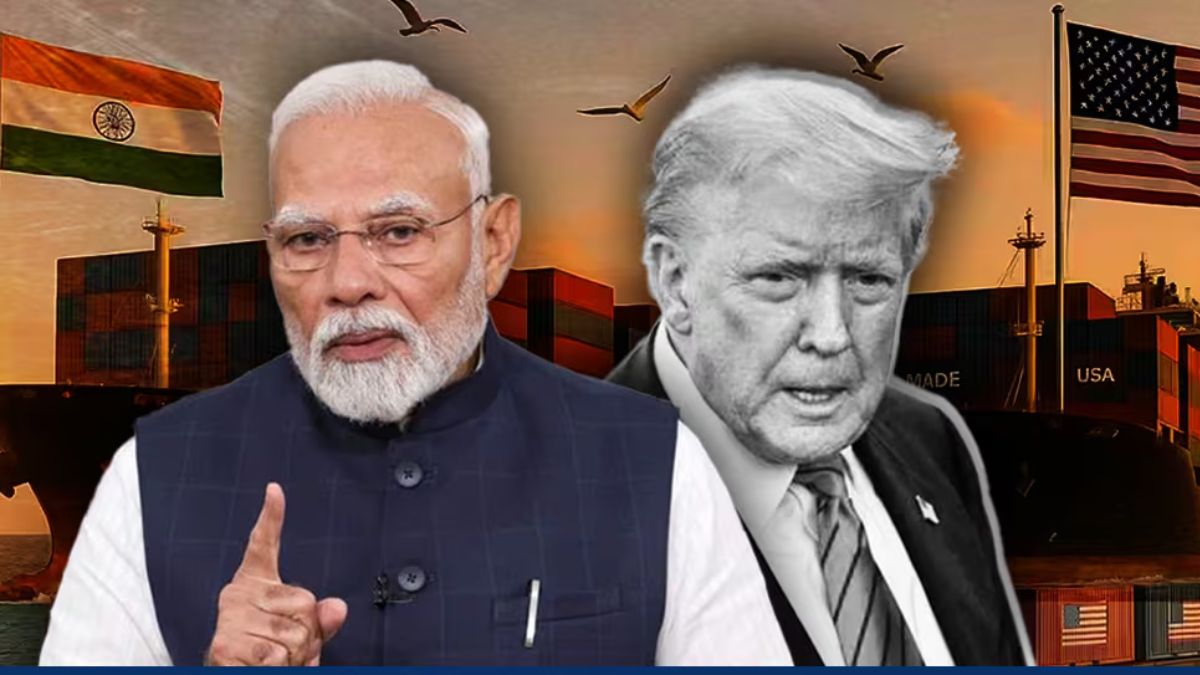
 "<div>‘Bizarre and self-destructive’: Sachs warns Trumps tariffs risk isolating America, hails India’s measured response</div>")

Renowned economist and Columbia University Professor Jeffrey Sachs has strongly criticised the United States administration’s tariffs, terming them as pressure tactic on India.
Renowned economist Jeffrey Sachs has sharply criticised US President Donald Trump’s tariffs on India, calling them “bizarre” and “very self-destructive of US foreign policy interests.”
In an interview with ANI, Sachs said the tariffs undermine years of work to strengthen US-India relations and reflect a “shocking level of incompetence” by the Trump administration. He highlighted that the tariffs, including a 50% levy imposed in July on Indian goods over continued Russian oil imports, are not only economically harmful but also potentially unconstitutional.
“He said years of hard work in improving US-India relations is being undermined by the Trump administration.
“It’s a shocking level of incompetence. I see incompetence in the US government, I’m never surprised, but I’d say that this reached this level that I have to admit actually surprised me,” he said, answering a query regarding the Trump administration imposing 25 per cent secondary tariffs on India.
Trump announced 25 per cent tariffs on Indian goods in July, even as there were hopes of an interim India-US trade deal that would have otherwise helped avoid elevated tariffs. A few days later, he imposed another 25 per cent tariff, taking the total to 50 per cent, citing India’s continued imports of Russian oil.
Sachs highlighted the legal challenges facing the Trump administration in the wake of tariffs.”…Tariffs are wrong in that they’re destructive for the US economy. It violates international law. It’s a breakdown of our political system in the United States. We have a constitution. We don’t have one-person rule,” he said, while also referring to powers of the Congress under Article I, Section 8 of the US Constitution.
“There’s actually a lawsuit now in the US Appellate Court, which says that Trump has violated the law by imposing these tariffs. There’s a real possibility that Trump’s entire tariff regime will be deemed, as it should be, unconstitutional,” he added.
The economist said that from an economic point of view as also geopolitical point of view, Trump’s policies “are doomed to fail”. “They (tariffs) will not improve the US economy. They will isolate the United States geopolitically. They will strengthen the BRICS and other groups…,” Jeffrey Sachs told ANI.
“Trump hates the BRICS. Why? Because they stand up and say to the US, you don’t run the world. The world is multipolar and we want to cooperate with you, but we don’t want you to run the world. President Lula summarized it best. He said, we don’t want an emperor. This is basically the point. Trump thinks he’s an emperor,” he added. On India’s diplomatic strategy, Sachs praised the government’s measured approach.
“India’s right. Take a deep breath. Don’t do anything dramatic. Don’t get too vituperative. I personally would do exactly what Prime Minister Modi’s doing. He’s flying to meet with President Xi Jinping. He’s meeting with President Putin. He’s meeting with President Lula. Those are India’s real partners, by the way. Not only is the BRICS the fast-growing part of the world economy, but it’s also the part of the world that says we don’t want an emperor. We want multi-polarity and we want multilateralism,” Sachs said.
Sachs praised India’s measured diplomatic response, lauding Prime Minister Narendra Modi’s strategy of engaging with global leaders including China’s Xi Jinping, Russia’s Vladimir Putin, and Brazil’s Luiz Inácio Lula da Silva. “India’s right. Take a deep breath. Don’t do anything dramatic… Those are India’s real partners. Not only is the BRICS the fast-growing part of the world economy, but it’s also the part that says we don’t want an emperor. We want multi-polarity and multilateralism,” he said.
India and the US began negotiations for a Bilateral Trade Agreement (BTA) in March 2025, aiming to conclude the first stage by October-November 2025. The talks focus on balanced access to sectors such as agriculture and dairy, which provide livelihoods to millions.
Commerce and Industry Minister Piyush Goyal told Parliament that the Indian government is closely examining the impact of Trump’s tariffs and will take all necessary steps to safeguard national interests.
With inputs from agencies
End of Article
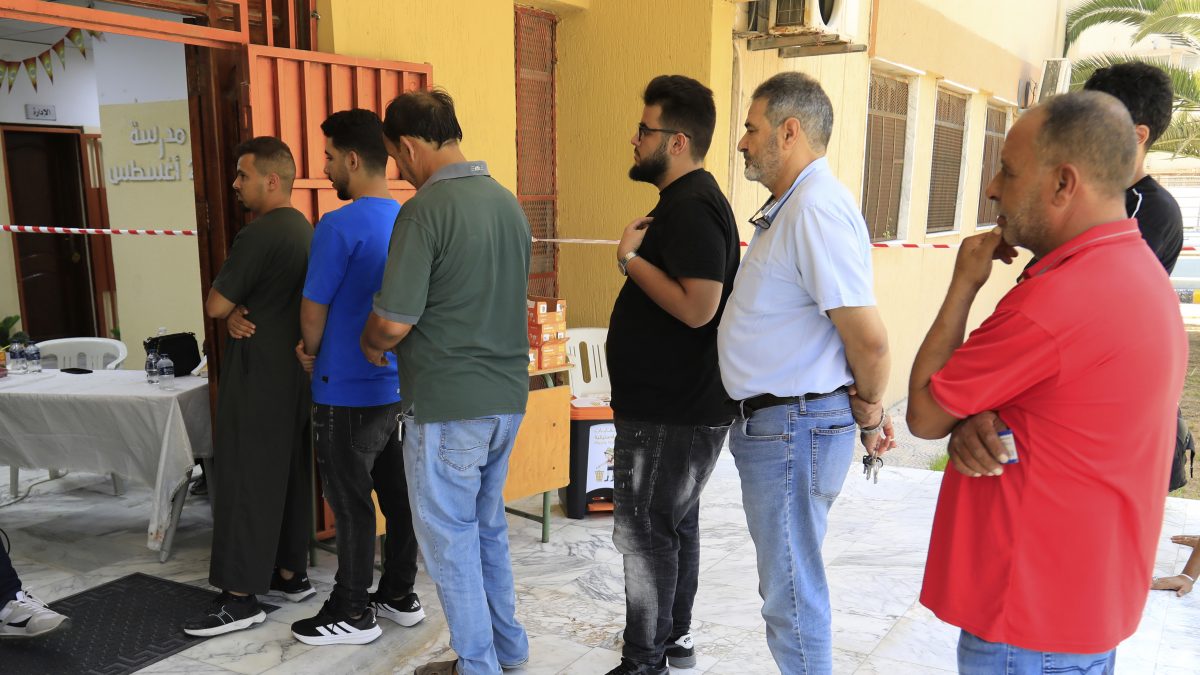 "Tight security as Libyans vote in key municipal elections after unrest")
&description=%E2%80%98Bizarre+and+self-destructive%E2%80%99%3A+Sachs+warns+Trump%E2%80%99s+tariffs+risk+isolating+America%2C+hails+India%E2%80%99s+measured+response)