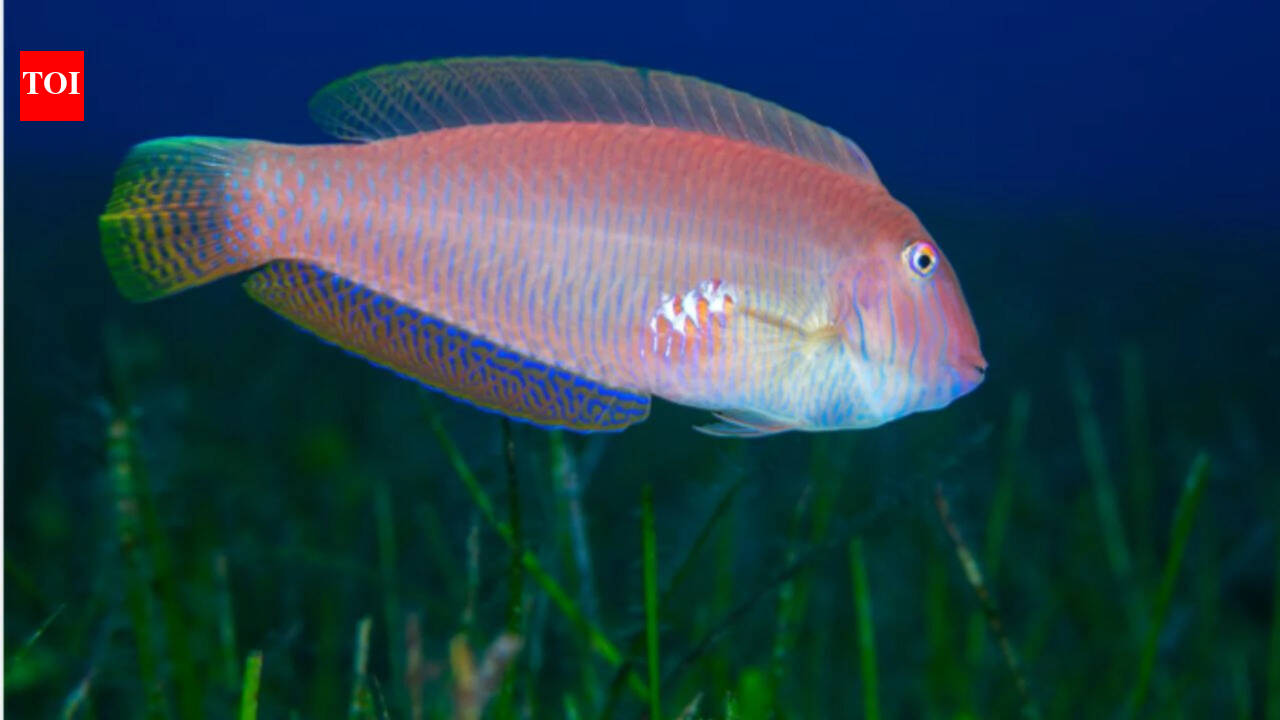


Pearly razorfish begin life as females before some naturally transition into males.- National Geographic photo
Fishing is known to reduce fish populations and change the size and age of fish found in the wild. But a new study suggests that the effects may go much beyond.Researchers have found that heavy fishing may be changing the biology of the pearly razorfish at the molecular level. The study says intense fishing pressure is linked with changes that may affect how the fish’s genes work.The findings, published in the journal Philosophical Transactions of the Royal Society B, Science X reported, offer some of the first evidence that fishing could influence epigenetic changes.
The pearly razorfish
The pearly razorfish (Xyrichtys novacula) is a small marine fish that lives in sandy coastal waters. It feeds on small sea animals such as shrimp and other tiny creatures found in the seabed.
CJP Jantar Mantar Protest Updates
According to National Geographic, every pearly razorfish is born female. As it grows, some naturally change into males. The dominant male defends a territory shared with several females, helping maintain order in the group and reducing early sex changes among younger females.In Spain’s Balearic Islands, the fish is locally known as raor. It is considered a popular seafood. Every year, many local fishers and families take part in the fishing season to catch it. Because of its popularity, the species experiences heavy fishing pressure in some areas. Scientists wanted to find out whether this pressure affects the fish in ways that go beyond reducing its numbers.
Protected vs fished areas
To study this, researchers collected 120 pearly razorfish from three different regions in the Balearic Islands. Each region included two types of locations.In the first area, fishing is allowed and the fish are regularly caught. The second area is a protected marine reserve where fishing is restricted.Scientists collected small fin samples from the fish and examined the DNA and the epigenetics in the lab.