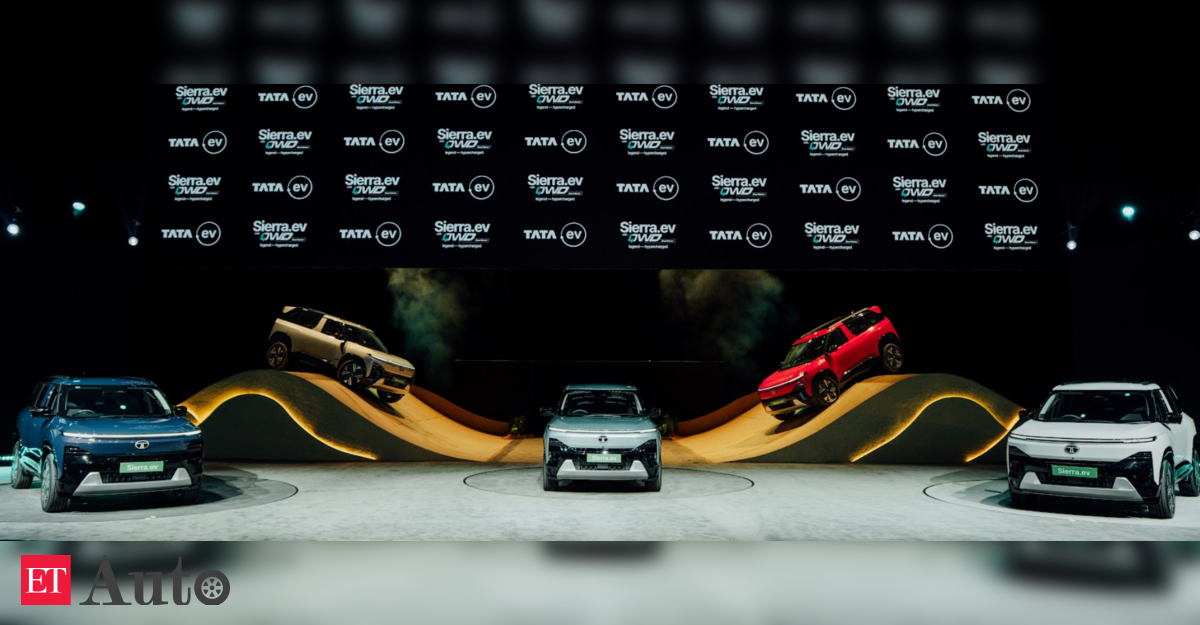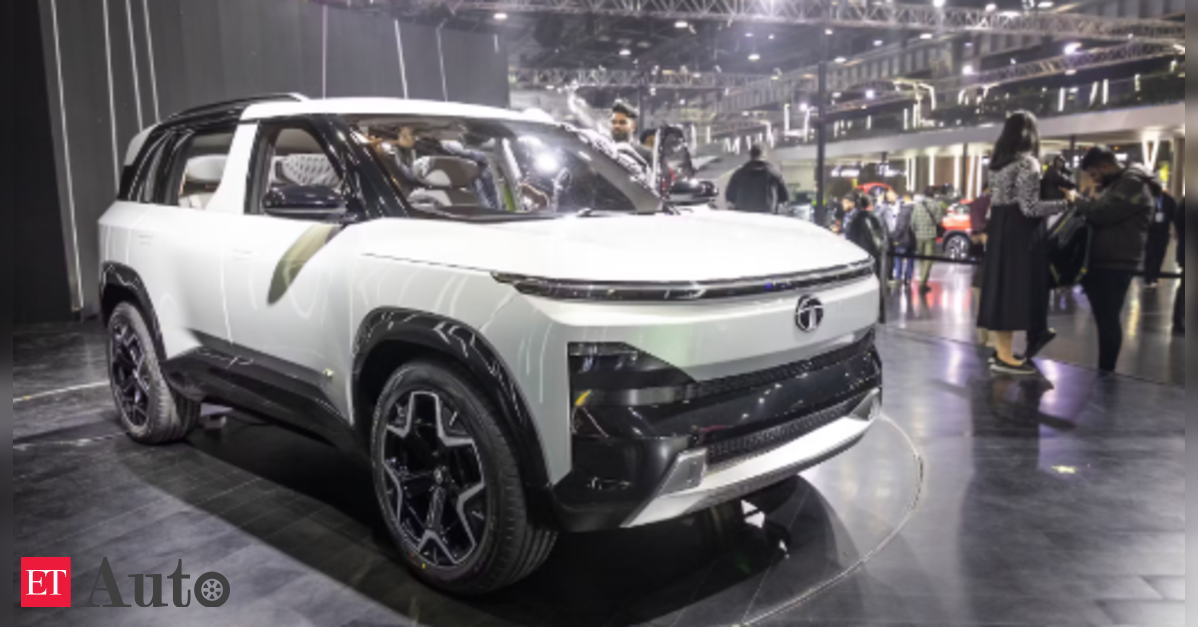

 The Sierra EV, Tata’s seventh electric passenger vehicle, is offered with 63 kWh and 75 kWh battery packs, with the larger battery claiming a range of up to 665 km.
Tata Motors on Thursday strengthened its electric vehicle portfolio with the launch of the Sierra EV, priced between ₹18.79 lakh and ₹24.79 lakh (ex-showroom), as the country’s largest electric passenger vehicle maker doubled down on its conviction that India is entering a phase of rapid EV adoption.
The launch comes at a time when the global electric vehicle narrative is increasingly shaped by slowing demand in markets such as the US and parts of Europe. Tata Motors, however, believes India is charting a very different course.
Speaking at a media interaction following the launch, Shailesh Chandra, Managing Director, Tata Motors Passenger Vehicles and Tata Passenger Electric Mobility, said electric vehicle penetration in India’s passenger vehicle market is expected to rise to 9-10 per cent by the end of FY27, up from 2.5 per cent in FY25 and 4.5 per cent in FY26.
“India’s story is completely different from what is happening across the world,” Chandra said, arguing that the domestic market is being driven by structural demand rather than policy-led incentives alone.
According to him, EV penetration has already reached 6.5-7 per cent during the first quarter of FY27 and is likely to edge closer to 8 per cent as the fiscal progresses.
The pace of adoption is also reflected in monthly sales volumes. Industry EV sales, which were below 10,000 units a month in FY25, climbed to around 15,000-18,000 units in FY26. This quarter, the industry is averaging 27,000-28,000 units every month, highlighting what Tata Motors sees as a sharp acceleration in consumer acceptance.
Towards a million-unit EV market
Looking beyond the immediate growth trajectory, Tata Motors expects India’s passenger vehicle industry to add around 1.7 million units over the next five years, expanding from 4.7 million units to 6.4 million units annually.
Of this incremental demand, Chandra estimates around 800,000 vehicles will be electric, taking the domestic EV market to approximately one million units a year by FY31.
“The industry will become a 10 lakh-unit EV market by FY31,” he said.
That outlook underpins Tata Motors’ own long-term strategy. The company has already committed to achieving 30 per cent plus EV penetration in its passenger vehicle sales by FY31, and Chandra said the business remains on course to meet that target.
“Today, EVs account for roughly 18-20 per cent of Tata Motors’ passenger vehicle volumes and about 25 per cent of its passenger vehicle revenue, significantly ahead of the industry’s current EV penetration levels, he added.
India’s unique dynamics
While global EV markets have experienced uneven growth, Tata believes comparisons with overseas markets often overlook the unique dynamics at play in India.
In China, he noted, the broader automotive industry has slowed, but electric vehicles continue to outperform the overall market despite the withdrawal of some incentives.
In the United States, recent policy changes have reduced momentum for electrification, while Europe has faced temporary disruptions following subsidy rollbacks, even though regulatory mandates continue to support long-term EV adoption.
India, by contrast, is witnessing demand driven increasingly by economics and product evolution.
Rising fuel costs, improving charging infrastructure, better battery technology and more compelling product offerings are making electric vehicles a stronger proposition for mainstream buyers, he said.
The company also believes the next phase of growth will increasingly come from the mass market rather than premium segments.
Initially, EV adoption was concentrated in higher price bands because larger battery packs made it easier for manufacturers to offer longer driving ranges and approach price parity with comparable internal combustion engine (ICE) vehicles.
At the lower end of the market, however, battery costs made it difficult to deliver both affordability and range. That equation is now beginning to change.
“The biggest opportunity now is in the entry segment,” Chandra said, adding that improvements in battery technology are gradually enabling manufacturers to deliver higher range without compromising affordability.
He cited the Punch EV as an example of changing consumer behaviour, saying demand for the model has grown six to seven times compared with its initial launch period.
“There are many days in a month when Punch EV bookings are higher than either the petrol or the CNG variant individually,” he said, attributing the surge to improved customer confidence in range, ownership economics and overall product value.
While the Sierra EV expands Tata Motors’ product portfolio, Chandra said the company’s focus over the past few years has also been on developing capabilities that will support future electric vehicles.
Several technologies introduced with the Harrier EV, including advanced ADAS functions, automated parking features under the e-Valet suite, and dual-motor all-wheel drive, have now found their way into the Sierra EV.
Equally important, he said, has been the company’s investment in software development, battery engineering and validation capabilities.
Using billions of kilometres of real-world driving data, Tata Motors has developed software algorithms tailored specifically to Indian driving conditions, while also strengthening its in-house battery pack development capabilities to improve reliability and reduce costs.
The automaker has also invested in software-in-the-loop and hardware-in-the-loop testing, simulation infrastructure and closer integration with technology suppliers to improve software quality before vehicles reach customers.
Volume over revenue
Despite launching increasingly premium products such as the Harrier EV and Sierra EV, Chandra said Tata Motors continues to evaluate its market position primarily through volume market share, rather than revenue market share.
“If I become a revenue-focused brand, I will create a portfolio only in a certain segment and will not remain relevant to all citizens of the country,” he said.
Revenue growth, he added, is a consequence of offering products that customers want across multiple price points.
As India’s passenger vehicle market gradually shifts towards higher average selling prices while electric mobility expands deeper into the mass market, Tata Motors believes it is well positioned to benefit from both trends.
With the Sierra EV now joining its lineup and four more EVs planned by FY31, the company is betting that the next chapter of India’s electric mobility story will be defined less by experimentation and more by scale.
The Sierra EV, Tata’s seventh electric passenger vehicle, is offered with 63 kWh and 75 kWh battery packs, with the larger battery claiming a range of up to 665 km. Built on the company’s new acti.ev+ architecture, the SUV also offers a dual-motor all-wheel-drive (AWD) option, available on the Empowered A variant for an additional ₹1.2 lakh, along with a suite of connected technologies, advanced driver assistance systems (ADAS) and premium features.