
 "Why is the UK asking people to delete old emails and photos to save water?")

The United Kingdom (UK) is confronting one of its most severe water shortages in decades.
With much of England in drought and reservoir levels continuing to fall, the government and water regulators are calling on citizens to rethink their daily habits.
Among the steps being promoted is a surprising one: clearing out old emails and photos stored online.
Worst dry spell since the 1970s
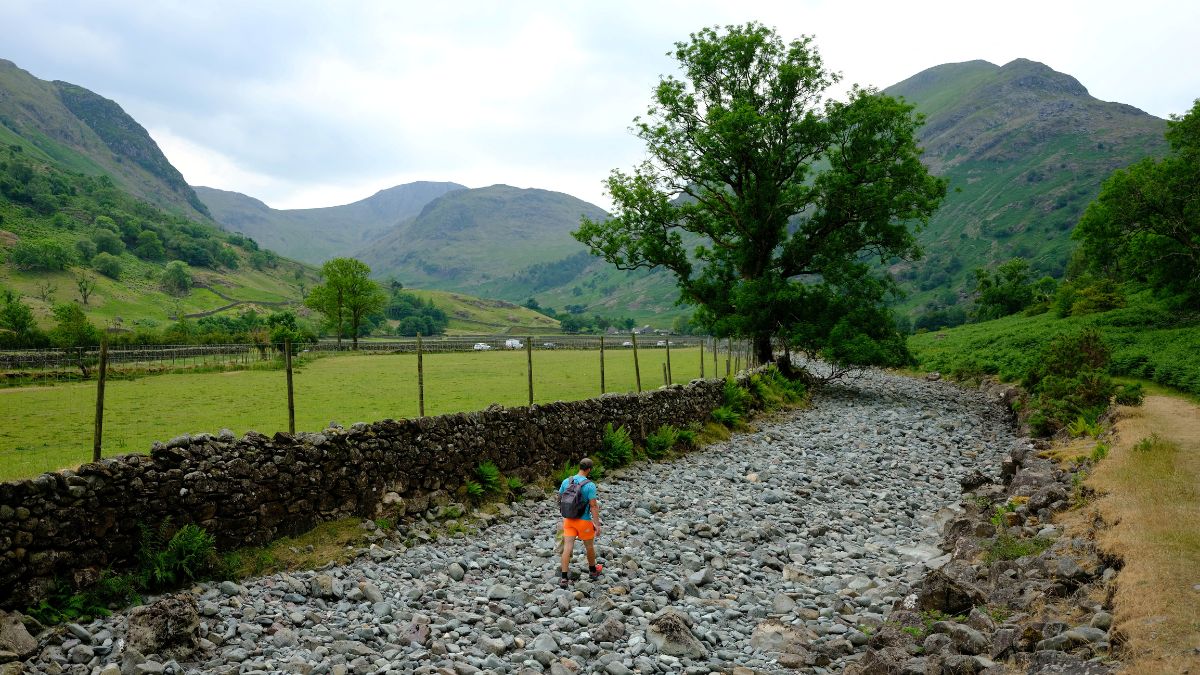
Data from the UK’s Met Office shows that the country has experienced its driest January-to-July period since 1976.
Five areas of England are formally designated as being in drought, while six others are enduring what officials term “prolonged dry weather.”
These conditions have persisted despite sporadic rainfall and unsettled weather patterns in recent months.
Yorkshire, Cumbria and Lancashire, Greater Manchester, Merseyside and Cheshire, the East Midlands, and the West Midlands are all classified as drought zones.
Other regions, including the Northeast, Lincolnshire, Northamptonshire, East Anglia, Thames, Wessex, Solent, and South Downs, are facing sustained dryness and could tip into official drought if conditions persist.
The country has been hit by multiple heatwaves, with August marking the fourth of the summer.
Dr Will Lang, Chief Meteorologist at the UK Met Office, explained that parts of southern England have recorded temperatures in the mid-30s Celsius, putting pressure on already stretched water supplies.
July this year ranked as the fifth warmest July on record, and while heavy showers provided temporary relief in some places, they failed to offset the long-term decline in river flows and reservoir reserves.
Editor’s Picks
How UK is coping with the crisis
To cope with the worsening situation, water restrictions have been imposed across a wide area. Hosepipe bans remain in force for Yorkshire Water customers and apply to parts of the Thames Water, South East Water, and Southern Water networks.
These restrictions are aimed at curbing non-essential use and prioritising water for households and essential services.
The National Drought Group (NDG) — which brings together the Environment Agency, the Met Office, regulators, government departments, and water utilities — has expressed gratitude to the public for following the rules where they are enforced.
“We are grateful to the public for following the restrictions, where in place, to conserve water in these dry conditions,” said Helen Wakeham, Director of Water at the Environment Agency.
Wakeham emphasised the importance of community participation in conservation efforts: “Simple, everyday choices – such as turning off a tap or deleting old emails – also really help the collective effort to reduce demand and help preserve the health of our rivers and wildlife.”
How digital storage is linked to water
The inclusion of digital behaviour in water-saving advice reflects the massive scale of resource consumption tied to data centres. Every email, photo, and file stored online requires energy for servers to operate, and that energy demand, in turn, carries a water cost.
An Oxford University study estimated that a single 1-megawatt data centre can consume around 26 million litres of water per year through cooling processes alone.
This water is used to prevent server overheating, often through evaporative cooling systems that spray or evaporate water to lower temperatures. Facilities that rely on such systems can evaporate millions of litres annually.
The water footprint extends beyond direct cooling. Electricity generation itself consumes significant quantities of water, whether through steam-driven turbines at fossil fuel plants, nuclear reactors requiring cooling towers, or hydroelectric stations managing reservoirs.
The energy used by data centres indirectly adds to the overall demand on water resources.
An August 13 press release from the National Drought Group highlighted the reality that “every click, photo, and email stored online has a hidden water cost — data may be digital, but its footprint is deeply physical.”
Why AI-data centres are central to the call
The UK has seen delays in the construction of some data centres due to constraints in the electricity grid, pointing out the enormous energy requirements of these facilities.
Cooling systems not only place pressure on water supplies but also raise concerns about emissions and air quality.
Globally, data centre expansion has already caused local tensions. In Newton County, Georgia, in the United States, a Meta-operated data centre reportedly accounts for around 10 percent of the area’s total daily water usage, reported Tech Republic.
Residents have complained of such severe water pressure problems that some cannot sell their homes to relocate.
The issue is compounded by the rapid growth of artificial intelligence, which relies heavily on data processing power. AI systems require vast amounts of electricity, and keeping the associated servers cool consumes yet more water.
The UK government has launched its AI Opportunities Action Plan, promoting adoption in the public sector and investing in infrastructure, including the construction of what will be Europe’s largest data centre in Hertfordshire.
Partnerships with OpenAI and NVIDIA form part of this strategy, but the environmental costs are significant.
Controversy over deleting emails & photos
The suggestion that individuals delete emails and photos has faced pushback from some experts who argue the effect is negligible. Analysis shows that a 75-kilobyte email consumes a tiny fraction of energy to remain stored — translating to approximately one-thousandth of a millilitre of water per month.
Deleting emails or photos, especially if it involves extensive searching and device usage, may actually use more energy than leaving them archived in a dormant state.
Nonetheless, the government and regulators maintain that collective action is important. Encouraging digital clean-ups is seen as part of a wider effort to raise awareness about the hidden resource demands of the online world.
The criticism has not gone unnoticed, but authorities continue to focus on the symbolic and educational value of linking digital consumption to real-world water use.
Traditional conservation measures remain vital
While attention has been drawn to the digital sphere, conventional water-saving steps remain central to the response. The UK National Drought Group has advised households to:
-
Fix leaking toilets, which can waste between 200 and 400 litres of water per day.
-
Collect rainwater for outdoor use.
-
Reuse household water for plants.
-
Limit lawn watering and car washing.
-
Turn off taps while brushing teeth.
-
Take shorter showers.
In addition to public action, water companies have committed over £700 million over the next five years to address leakage in supply networks.
The UK Environment Agency has increased compliance checks on businesses and utilities to ensure that official drought plans are being followed.
Despite the challenges, conservation messages have shown measurable results.
The UK National Drought Group reported that in the Severn Trent region, water demand dropped by 20 percent from a July 11th peak after targeted communication campaigns encouraged residents to save water.
Also Watch:
With inputs from agencies
End of Article


&description=Why+is+the+UK+asking+people+to+delete+old+emails+and+photos+to+save+water%3F)