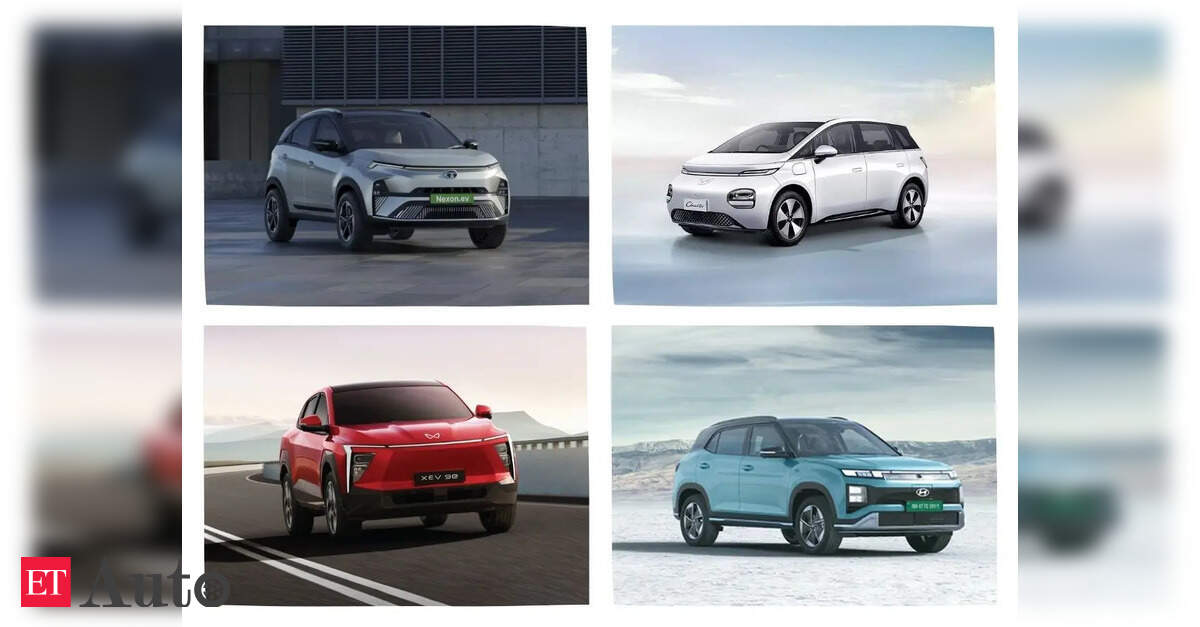

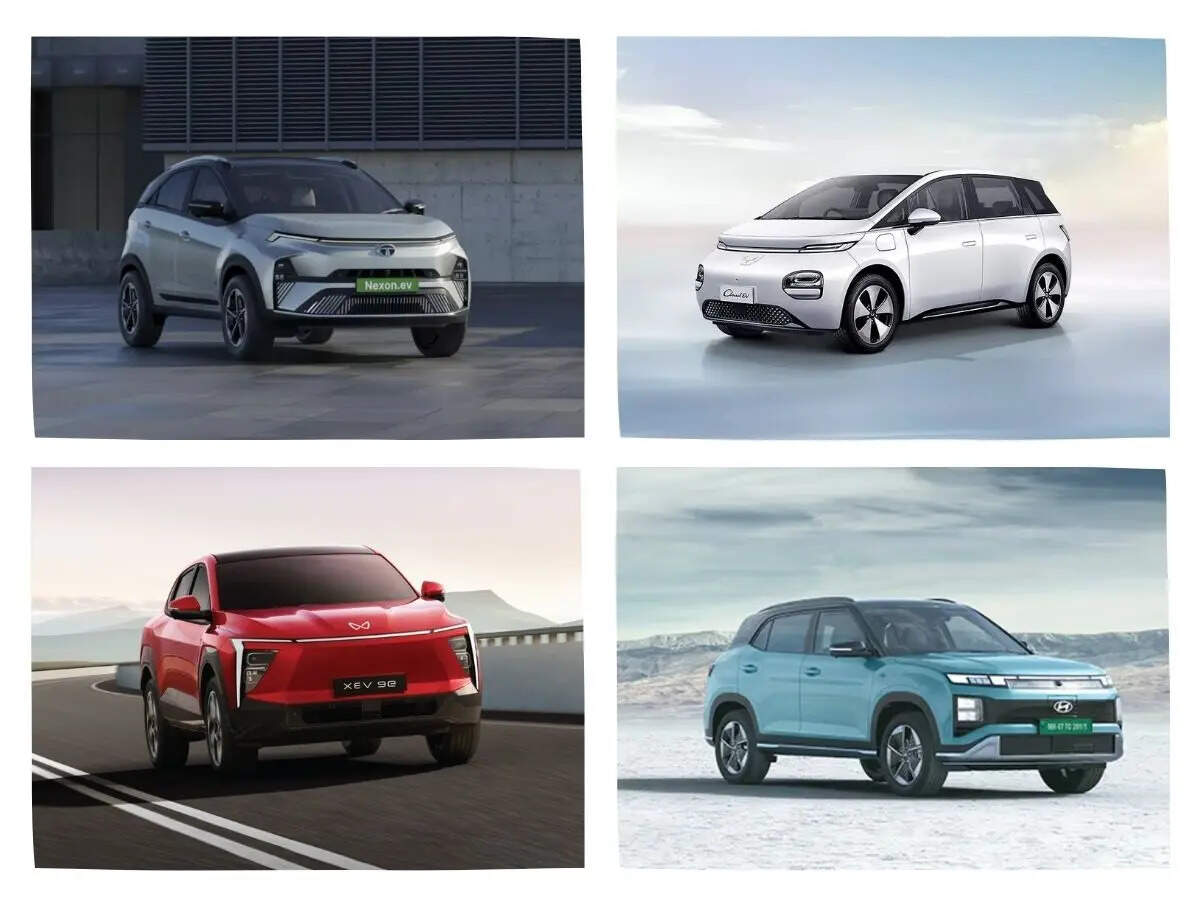
 Existing OEMs such as Tata Motors, JSW MG Motor, Mahindra and Mahindra caputed 87.3% market share in last fiscal, while new players such as Maruti Suzuki, VinFast India a&Tesla accounted for only 2% market share cumulatively.
India’s electric passenger vehicle market reported a massive increase in FY26, with EVs accounting for 4.2 per cent of total PV retail sales with 1,99,923 units, up from 2.6 per cent in FY25, according to data released by the Federation of Automobile Dealers Associations (FADA) on Tuesday.
OEMs such as Tata Motors PV, JSW MG Motor, and Mahindra and Mahindra captured 87.3 per cent of the market share in the last fiscal, while new players such as Maruti Suzuki, VinFast India, and Tesla accounted for only 2 per cent of the market share cumulatively.
Tata Motors remained at the top with 78,811 units in FY26, registering a 35.9 per cent growth from 57,994 units in the previous fiscal year. Tata Motors PV’s Nexon EV drove the demand, now a new addition to the EV portfolio, and the Punch EV.
JSW MG Motor grabbed the second spot with a massive 73.67 per cent YoY increase to 53,089 units. Windsor and Comet remained the key drivers for the automaker.
Mahindra and Mahindra, which entered the EV game in late 2024, saw exponential YoY growth of 407 per cent, selling 42,721 units in FY26, up from 8,426 units in FY25.
South Korean automaker Hyundai Motor India grew 137.59 per cent to 5,885 units, driven by strong demand for the Creta EV. Among other OEMs, BYD India reported a 54.01 per cent increase at 5,361 units. Kia India saw a steep 794.26 per cent rise, with retail volumes reaching 3,738 units in FY26 from 418 units in FY25.
New players gain ground
New entrants also began adding volumes, with VinFast India reporting 2,390 units in FY26, Tesla registering 342 units, and Maruti Suzuki accounting for 1,416 units of its eVitara, according to FADA data.
“This is not just an automobile industry achievement — it is a testament to India’s ability to lead a mass-market energy transition, from the last-mile auto-rickshaw to the family car. This shows that the structural momentum behind India’s EV journey remains firmly intact,” said FADA President C S Vigneshwar.
BMW races ahead of Mercedes
In the luxury segment, BMW India posted 123.86 per cent growth, selling 3,537 units, while Mercedes-Benz recorded a marginal decline of 9.51 per cent, selling 1,047 units, compared to 1,157 units in the previous fiscal.
In the luxury EV segment, key contributors were BMW iX1, BMW i7, Mercedes-Benz India EQS, Mercedes-Benz India electric G Wagon,
Meanwhile, Stellantis saw a 71.39 per cent decline to 576 units from 2,013 units, while Volvo Auto India reported a 5.21 per cent dip to 382 units.
| PV OEM | FY’26 | FY’25 | YoY% |
| TATA MOTORS PASSENGER VEHICLES LTD | 78,811 | 57,994 | 35.90% |
| JSW MG MOTOR INDIA PVT LTD | 53,089 | 30,569 | 73.67% |
| MAHINDRA & MAHINDRA LIMITED | 42,721 | 8,426 | 407.01% |
| HYUNDAI MOTOR INDIA LTD | 5,885 | 2,477 | 137.59% |
| BYD INDIA PRIVATE LIMITED | 5,361 | 3,481 | 54.01% |
| KIA INDIA PRIVATE LIMITED | 3,738 | 418 | 794.26% |
| BMW INDIA PVT LTD | 3,537 | 1,580 | 123.86% |
| VINFAST AUTO INDIA PVT LTD | 2,390 | – | 0.00% |
| MARUTI SUZUKI INDIA LTD | 1,416 | – | 0.00% |
| MERCEDES -BENZ AG | 1,047 | 1,157 | -9.51% |
| STELLANTIS AUTOMOBILES INDIA PVT LTD | 576 | 2,013 | -71.39% |
| VOLVO AUTO INDIA PVT LTD | 382 | 403 | -5.21% |
| TESLA INDIA MOTORS AND ENERGY PVT LTD | 342 | – | 0.00% |
| Others | 628 | 355 | 76.90% |
| Total | 1,99,923 | 1,08,873 | 83.63% |
(Source-FADA)