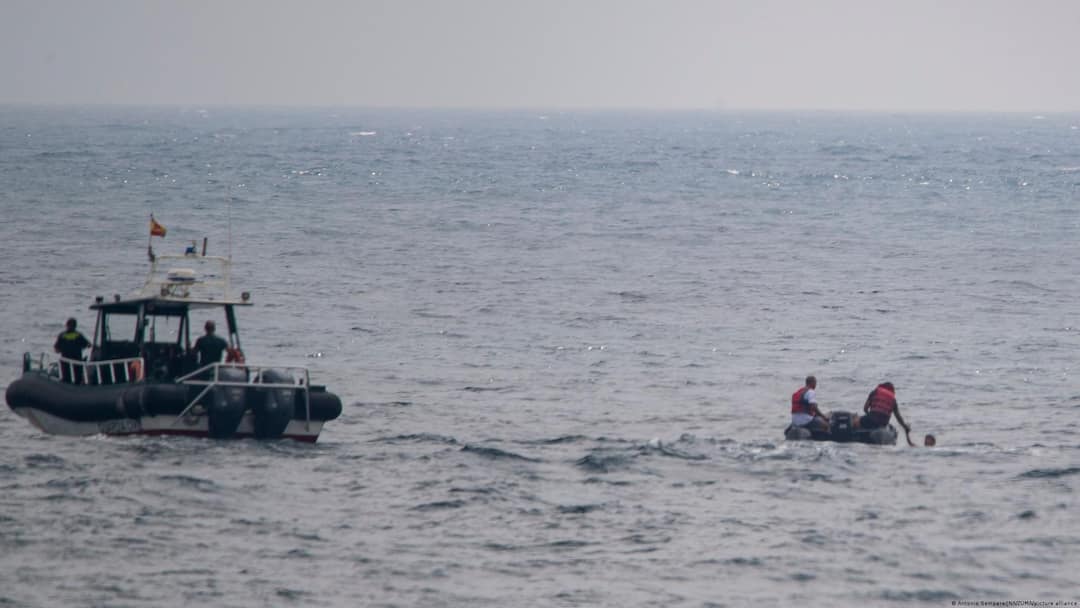

- Spanish officials called situation extraordinary, praised Moroccan cooperation.
Edited by: Rana Taha
Spanish authorities said on Wednesday that hundreds of migrants swam from Morocco attempting to reach the territory of Ceuta.
Border security was overwhelmed by the action, as it did not expect the surge.
What Do We Know About The Migrant Attempts To Reach Ceuta?
“In the last few days, more than 1,500 migrants, including adults and minors, have reached Ceuta by sea,” the leader of Ceuta’s government, Juan Jesus Vivas, told journalists.
“The reception centers are collapsed and saturated,” he added.
ALSO READ | US Attack Reported Near Iran’s Piranshahr Border, Tehran Blames Washington
Spain’s Civil Guard, maritime Rescue Services and the Red Cross reportedly rescued some 117 migrants from the water.
Moroccan authorities also reportedly grabbed dozens from the water on their way to Spanish waters.
Interior Minister Fernando Grande-Marlaska told Spanish television channel laSexta that authorities were facing “an extraordinary, exceptional situation.”
Grande-Marlaska added that “we are dealing with it with the means that we already have deployed there permanently.”
He praised Moroccan authorities for their involvement, saying they were cooperating and that the relationship with the kingdom was “close and based on loyalty.”
Mostly Moroccans Seeking To Swim Across
The Spanish government did not confirm exactly how many migrants had reached the territory by swimming.
It also remains unclear why so many people sought to swim toward Spanish territory.
The swimmers were mostly Moroccans, along with a small number of Algerians who had been living in Morocco while trying to migrate to Europe, according to activists in Morocco and Ceuta.
ALSO READ | Zelenskyy Holds Talks With Trump On Air Defence And Strategic Cooperation
The incident follows a Spanish Supreme Court ruling earlier this month which established that migrants arriving by sea cannot be immediately pushed back across the border without due process, unlike those crossing by land.
However, activists have discounted the probability that average Moroccans including those swimming toward Ceuta would be aware of such a ruling, dismissing a link between the ruling and the crossings.
Migrant arrivals in Spain through the Mediterranean enclaves Ceuta and Melilla, were lower this year compared to the same time last year, as many migrants have sought other routes like the Canary Islands.
(Disclaimer: This report first appeared on Deutsche Welle, and has been republished on ABP Live as part of a special arrangement. Apart from the headline, no changes have been made in the report by ABP Live.)