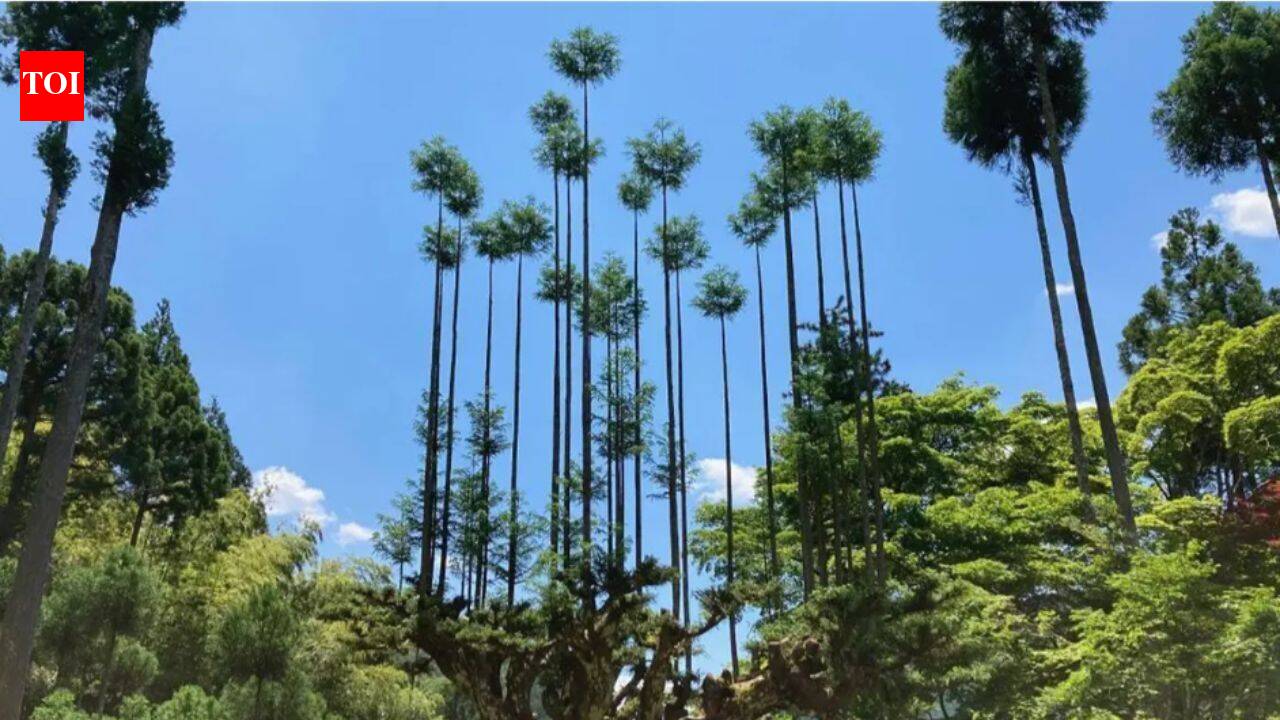

Japan’s 600-year-old Daisugi technique offers a unique way to produce timber without cutting down entire trees
Timber is one of the biggest reasons trees are cut down all over the world. However, in Japan, a country focused on sustainability, an ancient forestry technique called Daisugi harvests timber without cutting the tree.The method began around 14th century in Kyoto Prefecture. Foresters carefully prune the tree so that it keeps growing while producing new straight trunks that can later be cut down for timber.Daisugi was developed in Japan to solve the growing demand for tinder. But the country’s limited land area made it difficult to grow more cedar trees. Therefore, people found a way to make a single tree produce wood again and again.As countries look for ways to reduce deforestation, this traditional knowledge can help protect trees while also meeting the demand for wood.
Origins of Daisugi
Forests absorb carbon dioxide, help clean the air and water, provide homes for wildlife and support the livelihoods of millions of people.Despite their importance, forests continue to disappear. According to Lampoon magazine, global estimates show forests equal to around 30 football fields are lost every minute because of logging and land clearing. Since 1990, the world has lost more than 80 million hectares of primary forest. Over the last three decades, the total forest area has reduced by about 178 million hectares, roughly the size of Libya.Japan faced its own timber shortage centuries ago. The mountainous Kitayama region, about 20 kilometres north-west of Kyoto, has steep slopes and there was very little land where cedar trees could be planted.At the same time, wooden buildings were becoming more common, increasing the demand for high-quality timber. Builders wanted long, straight cedar logs for traditional Japanese teahouses, and local foresters developed Daisugi as a way to produce them without constantly planting new trees.
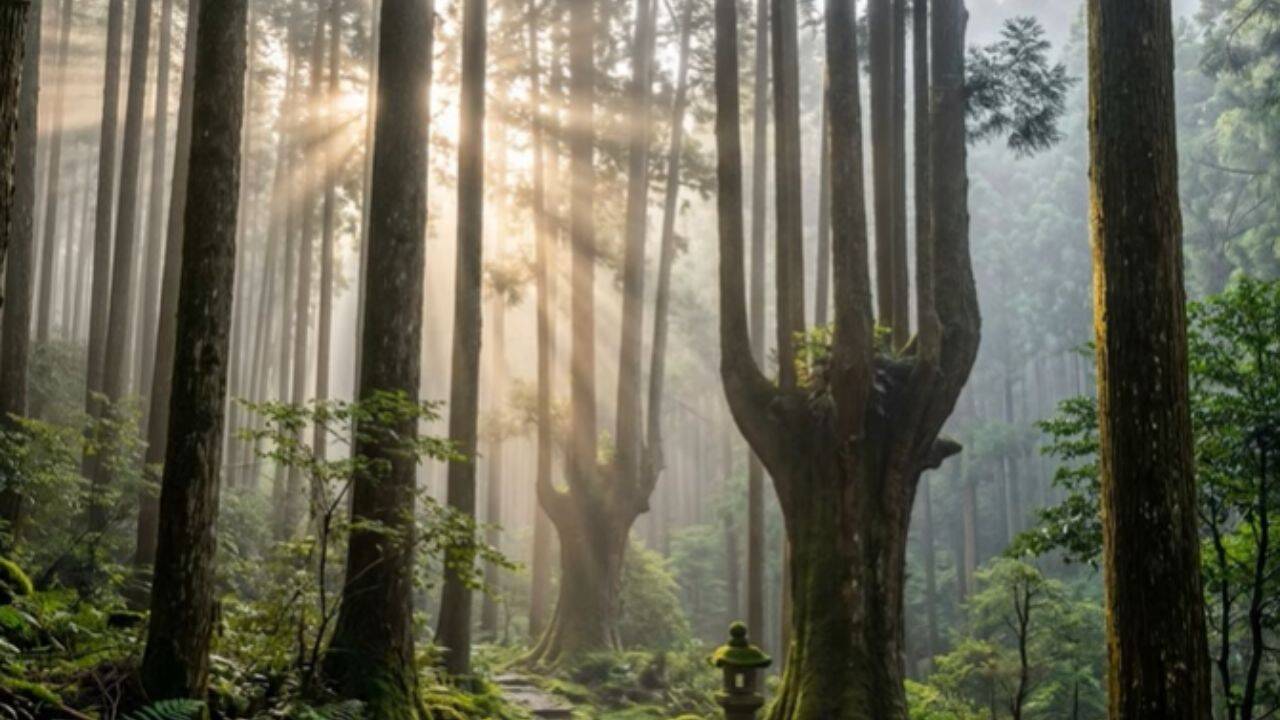
Foresters begin by pruning the branches of a mature cedar tree until only the upper part remains
How Daisugi works
The word Daisugi means platform cedar. The technique is somewhat similar to bonsai because both involve careful pruning. However, while bonsai keeps trees small, Daisugi encourages them to produce many tall, straight shoots.Foresters begin by pruning the branches of a mature cedar tree until only the upper part remains. This creates a flat platform-like top. From this platform, several new shoots begin growing straight upwards.Over the next few years, the shoots are guided using bamboo poles and ropes so that they grow vertically. Every two years, workers remove unwanted branches by hand leaving only the top growth. This helps the trunks stay straight and free from large knots.These vertical trunks are harvested after around 20 years. The main tree is not cut down, so it remains healthy and begins producing another set of shoots for future harvests.
One tree produces timber for centuries
One of the biggest advantages of Daisugi is that the original tree continues living after every harvest. Instead of producing just one trunk during its lifetime, a single tree can produce dozens or even hundreds of usable trunks over many generations.The parent tree can continue producing timber for around 200 to 300 years before its output begins to decline. Some Daisugi trees have reportedly grown to about 15 metres in diameter at the base after centuries of growth.The timber produced through this method is known as taruki. These straight, round cedar logs became popular for building the roofs and beams of traditional Japanese teahouses because of their uniform shape and appearance.Daisugi-grown cedar also has special properties. According to the report, the timber is around 200% denser and stronger than regular cedar and offers about 140% greater flexibility. These qualities made it suitable for traditional roof construction.Despite its benefits, Daisugi has its limitations. Kitayama cedar is a softwood and is not the best choice for many modern load-bearing structures. The technique also requires skilled workers, careful pruning and years of maintenance before timber can be harvested. Go to Source