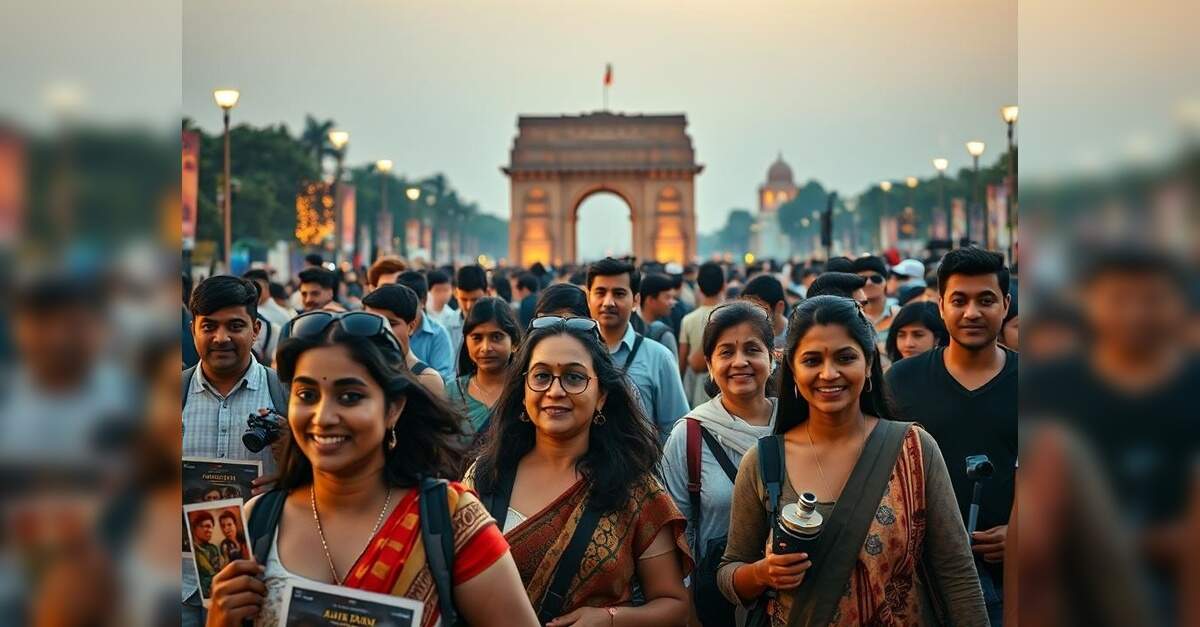

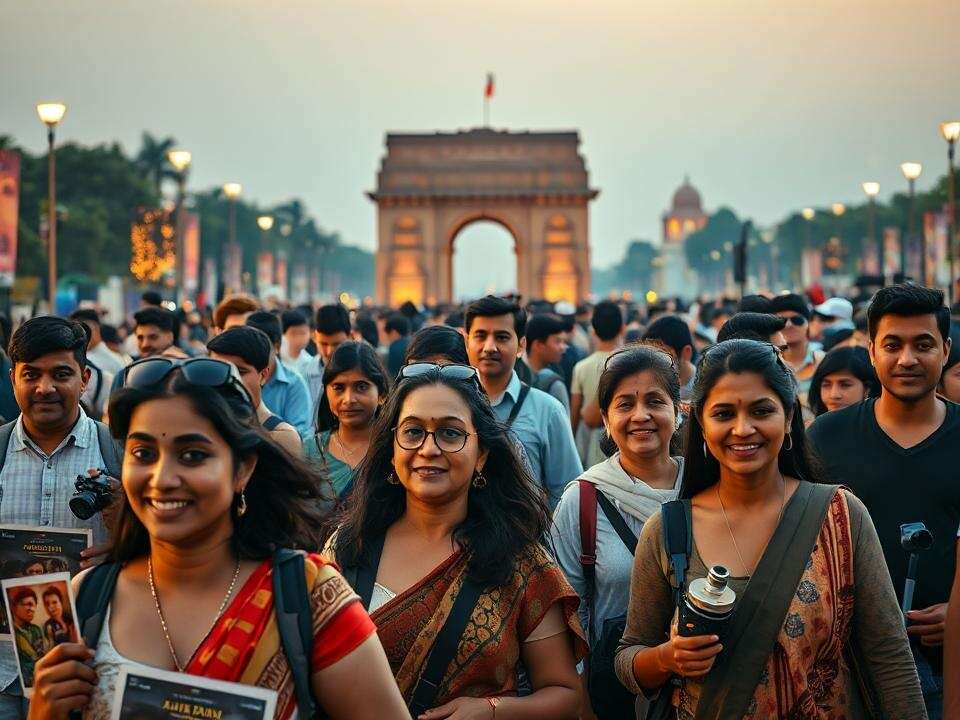
 I capture the vibrant energy of a Delhi film festival, with crowds, celebrities, and iconic landmarks bathed in golden hour light.
The International Film Festival of Delhi (IFFD) 2026 concluded on March 31, marking the successful close of its inaugural edition and signalling Delhi’s growing stature as a global destination for cinema and culture. Spanning multiple venues across the capital, the festival combined large-scale public participation with industry engagement, international collaborations and policy dialogue.
The festival opened with Sirât, directed by Olivier Laxe, setting an international tone, and continued with a diverse slate of screenings across the city. Bharat Mandapam served as the central hub, with consistently high occupancy across screenings. Films such as Lokmdo Dev Aniybodi, Shatak: Sangh ke 100 Varsh, Tanvi the Great and Krishna Sada Sahaayate attracted strong audience turnout, while Rang De Basanti recorded a full house. The closing film, Amoeba from Singapore, concluded the programme.
IFFD 2026 received 2,187 film entries from over 100 countries, including 1,372 international and 815 Indian submissions, reflecting strong global and domestic interest in its first edition. The final programme featured more than 125 films from 47 countries across 15 venues, with over 30,000 registrations recorded during the festival period.
The event saw participation from leading figures across the film industry, including Aamir Khan, Vicky Kaushal, Manoj Bajpayee, Bhumi Pednekar, Boman Irani, Divya Dutta, Arjun Kapoor and Kangana Ranaut, alongside international delegates such as Anthony Chen and Enrique Arce. The festival was led by Festival Director Rakeysh Omprakash Mehra and Artistic Director Vani Tripathi Tikoo.
IFFD extended beyond a single venue, with screenings hosted across multiplexes and public spaces, including PVR locations across Delhi, enabling wider audience access. The programming mix included Hindi, international and regional cinema, along with thematic categories such as children’s, spiritual and patriotic films.
Spain was featured as the Country of Focus under the India–Spain Dual Year 2026, with curated screenings and delegation participation strengthening cultural exchange. The festival also partnered with the Singapore International Film Festival, expanding opportunities for international collaboration.
Industry engagement formed a key pillar of the festival through platforms such as CineXchange and CineVerse Expo. These included pitch forums, producer labs, masterclasses and policy discussions involving filmmakers, studios and government stakeholders. The Expo featured participation from multiple states and institutions, highlighting film policies and production incentives.
A notable development was the signing of a Memorandum of Understanding between Delhi Tourism & Transport Development Corporation and Prasar Bharati for the development of a Delhi Film City, underlining the city’s long-term ambitions in media infrastructure.
Cultural programming, including live performances and retrospectives such as the Guru Dutt centenary showcase, complemented the screenings. The festival also hosted an AI filmmaking hackathon, recognising emerging formats and technologies in storytelling.
Commenting on the initiative, Chief Minister Rekha Gupta said, “This festival has brought together thousands of young people and given their creativity a meaningful platform. Cinema, at its best, reflects the reality of our society and encourages us to look within. With IFFD, we are not only celebrating films but also shaping a cultural identity for Delhi.”
Tourism Minister Kapil Mishra added, “The response to the first International Film Festival in Delhi has been truly outstanding… IFFD is set to become a significant global platform while also positioning Delhi as a hub for new cinema and creative technologies.”
The festival was organised by the Delhi Tourism & Transport Development Corporation, Government of NCT Delhi, with Wizcraft Entertainment Group as execution partner and KPMG as knowledge partner.