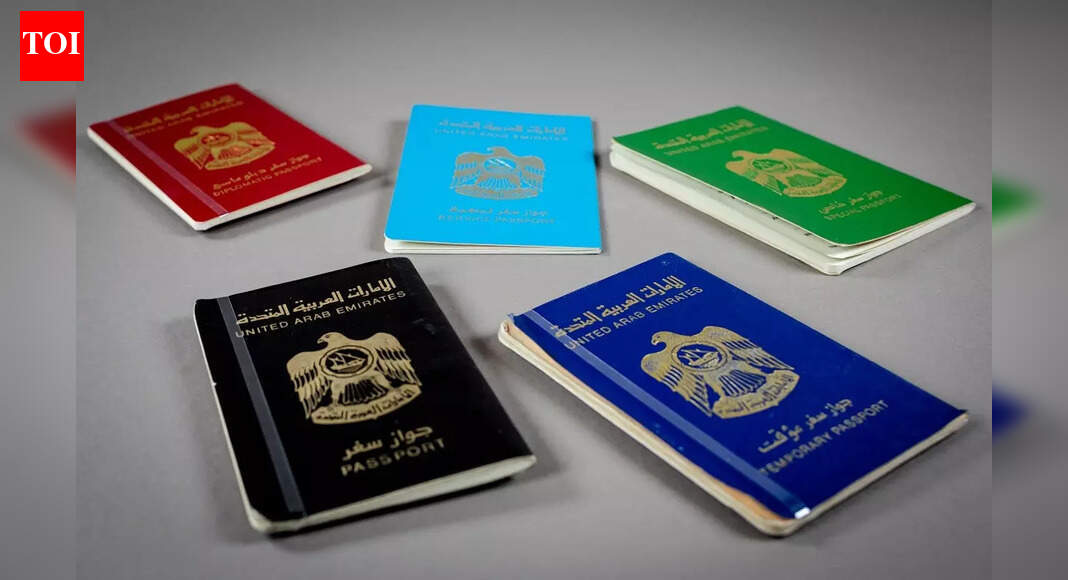

UAE secures top strength status, places seventh globally / Image: Google
The United Arab Emirates (UAE) passport has cemented its position as one of the most powerful travel documents worldwide, securing the 8th position globally in the authoritative Henley Passport Index (HPI) 2025. This prestigious ranking, compiled by Henley & Partners using data from the International Air Transport Association (IATA), measures the freedom citizens have to travel the globe. UAE passport holders can now enjoy visa-free or visa-on-arrival access to a staggering 184 destinations worldwide.This achievement confirms the UAE’s status as the strongest passport in the entire Middle East and the Gulf region, marking it as the only nation from the area to consistently place in the global Top 10. The UAE is tied for 8th place with established European powerhouses including the United Kingdom, Croatia, Estonia, Slovakia, and Slovenia.Christian H. Kaelin, Chairman of Henley & Partners, emphasized this point, stating that the UAE “serves as a model of effective diplomacy,” adding that its success “reflects years of dedicated efforts to sign reciprocal visa waiver agreements.”
Largest leap in history
The UAE’s current elite ranking is not a sudden jump but the culmination of a decade of intensive diplomatic effort. Just ten years ago, the UAE passport was ranked 42nd globally, granting its citizens visa-free access to only about 35 countries. Since then, the nation has engineered an extraordinary surge, climbing 34 spots to reach the 8th position today. This 34-spot jump is officially recorded as the largest improvement by any country since the Henley Index began monitoring global mobility trends 20 years ago. This success story is directly attributable to the country’s focused foreign policy, dedicated to signing numerous reciprocal visa waiver agreements across Europe, Asia, the Americas, and Africa, effectively building global bridges.
Why good for citizens?
A passport ranking is more than a vanity metric; it translates into immediate economic and social outcomes. For citizens, broader visa access cuts travel friction for work, education and medical travel. For business and investors, easier cross-border movement reduces transaction costs, speeds dealmaking, and enhances the UAE’s appeal as a regional headquarters. Policymakers see passport strength as part of a package, including the 10-year Golden Visa and targeted diplomacy, that converts soft power into inbound capital, talent and tourism. Observers also link the rise to the UAE’s rapid expansion of digital entry systems and bilateral visa waivers struck in recent years.
Access without a pre-approved visa
While the full list of 184 countries is extensive, it broadly includes access across all major continents. This freedom covers:
- The entire Schengen Area in Europe: This allows seamless, borderless travel across 27 European countries (like France, Germany, Italy, and Spain) for up to 90 days within any 180-day period.
- Major Economic Hubs: Direct access to key economies in Asia, including Japan, Singapore, South Korea, and China (for 30 days).
- The United Kingdom (UK): Visa-free entry for short stays.
- The Commonwealth of Independent States (CIS): Simplified or visa-free entry to several former Soviet nations, such as Russia, Georgia, and Kazakhstan.
- Latin America and the Caribbean: Extensive access to vibrant destinations like Brazil, Argentina, Chile, Mexico, Barbados, and Dominica.
- Island Paradises: Unrestricted entry to holiday hotspots like the Maldives, Seychelles, and Mauritius (often with a visa-on-arrival for a short duration).
This is not an isolated story: global mobility is re-ordering. Major long-standing passports (including the United States in recent Henley updates) have slipped in rankings, while Asian and Gulf passports have climbed, a trend commentators interpret as a redistribution of travel privileges grounded in changing diplomacy and technology (ETAs, e-travel systems).The result: increased competition among nations to offer ease of movement to attract talent and capital, and more diplomatic focus on bilateral visa deals. Expect faster policy moves, more ETA rollouts, and continued volatility in ranking news cycles. Go to Source