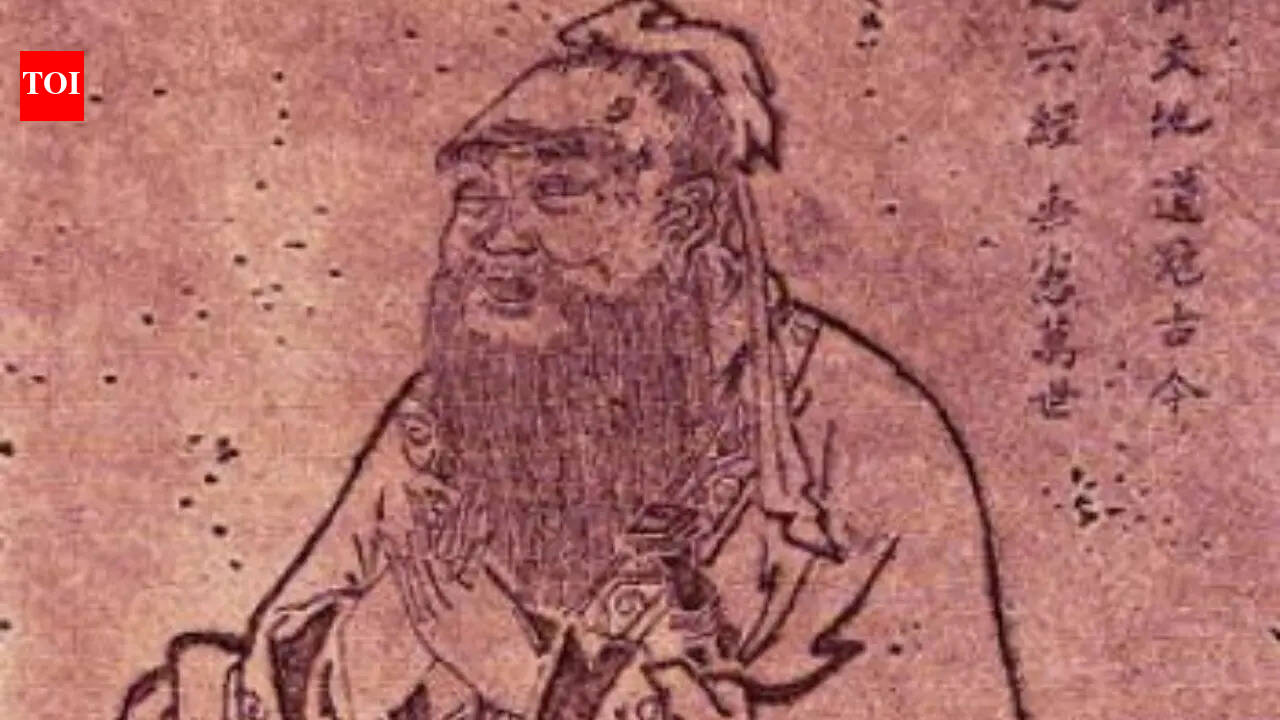

Confucius (Image: Wikipedia)
This Confucius line keeps resurfacing in articles about anger and decision-making. It is usually shared as a short warning, almost like a proverb that travels faster than its original context. The sentence is stark, and it does not try to soften what it is saying. Confucius is often associated with ideas of discipline and restraint, and this quote aligns with that tradition. It does not go into detailed explanations or philosophy. It simply places revenge and consequence in the same frame. Most readers pause on it because it sounds simple at first, but the meaning feels heavier the longer it sits. It is less about drama and more about what happens to a person internally when they decide to act on anger rather than step back from it.
Quote of the day by Confucius
“Before you embark on a journey of revenge, dig two graves.”
What is the meaning behind the quote by Confucius
The meaning of the quote is not really about burial or literal action. It points towards consequence, and more specifically, the cost that comes with revenge. The idea of “two graves” is often read as a way of saying that harm does not stay limited to one direction. The person targeted by revenge is not the only one affected. The person choosing it also carries damage, sometimes in ways that are not obvious at the start.It is less a rule and more a warning based on a pattern. Confucius, in the way his teachings are generally understood, often leaned towards restraint and steady behaviour rather than reactive emotion. This quote fits into that mindset. It suggests that revenge is not a clean act that restores balance. It tends to create a second layer of loss that follows the person who initiates it.There is also an emotional angle hidden inside it. Revenge usually begins in moments of hurt or anger. The quote quietly shifts attention from the original injury to what happens next, after the reaction takes over. That shift is where the warning sits.
Revenge rarely stays limited to the first action
In real life, situations driven by revenge tend to move beyond the first intention. What starts as a response to something painful can turn into a chain of reactions. One action leads to another, and before long, the original issue is no longer the only thing in play.The quote captures that sense of expansion. It does not describe the steps in detail, but it points to the idea that emotional reactions rarely stay contained. Once someone moves from feeling to action, the situation often changes shape.That is where the second “grave” becomes symbolic. It suggests that the outcome is not isolated. Something is carried forward, and not always in a visible way. The damage is not always immediate or direct, but it builds around the decision itself.
Emotional reaction and loss of control
At the centre of this saying is a simple idea about control. Revenge is usually not a planned or neutral decision. It comes from emotion, often when thinking is compressed by anger or frustration. In that moment, restraint is reduced, and reaction becomes more immediate.Confucius’ warning sits exactly in that gap. It does not deny emotion. It focuses on what happens when emotion becomes action without pause. The cost is not described in detail, but it is implied through consequence.This is why the quote still appears in modern writing. It speaks to situations where people act first and understand later. The structure is familiar even in small everyday conflicts, not just extreme cases.
Modern situations still reflect the same pattern
The idea behind the quote is not limited to historical or philosophical settings. It shows up in everyday behaviour in more ordinary ways. Conflicts in relationships, workplaces, or even online spaces often follow a similar path.A reaction to harm can escalate quickly. What begins as a single response can turn into a back-and-forth that was not intended at the start. The original issue becomes secondary as the exchange continues.The quote reflects that pattern without describing it directly. It simply points to the outcome, where the person who starts the cycle often ends up carrying more than expected. Not always in a physical sense, but in emotional weight and long-term consequence.
Misreading it as only moral advice misses the point
This quote is often treated as a simple moral instruction against revenge, but that reading can be too narrow. It is not only saying that revenge is wrong. It focuses more on what it does to the person involved.The emphasis is on consequence rather than judgment. It does not need a moral label to make sense. It works as a description of how emotional decisions tend to unfold over time.It also does not suggest that people should ignore feelings or suppress them completely. The point is more about awareness before action. Once emotion becomes action, the outcome is no longer controlled in the same way.
Other famous quotes attributed to Confucius
- “It does not matter how slowly you go as long as you do not stop.”
- “When anger rises, think of the consequences.”
- “Life is really simple, but we insist on making it complicated.”
- “The man who moves a mountain begins by carrying away small stones.”
- “The superior man understands what is right; the inferior man understands what will sell.”