
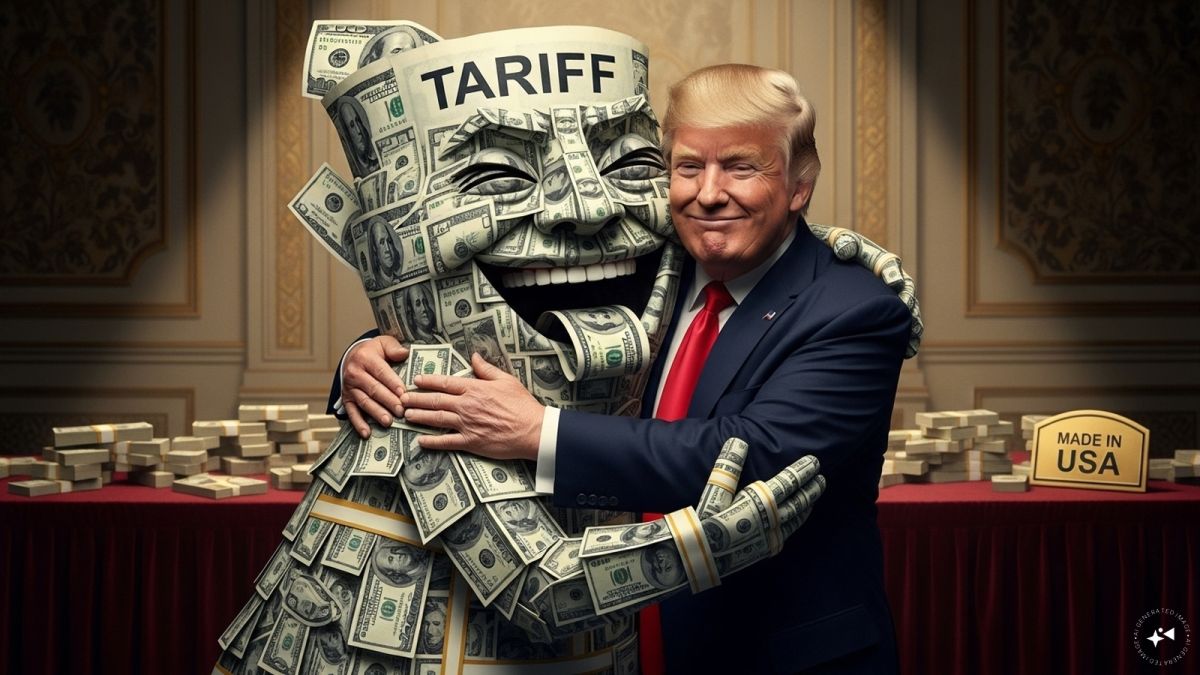
 "<div>Tariff tiff a catalyst: China mouthpiece says rift with US ‘a wake-up call’ for India, ‘its beyond numbers’</div>")

The imposition of steep 50 per cent tariffs on Indian exports by the United States has significantly shaken up the bilateral ties, prompting New Delhi to reflect and recalibrate its trade relations with America, and rest of the world. The move, which came into effect on Wednesday, positions India among the countries whose exports to the US invite maximum tariffs.
The US considers its measures as punitive linking it to the import of Russian oil by India. Some experts have cited uncertainty among Indian exporters about their business prospects. However, the Indian government has indicated that it is working with nearly 50 countries to diversity exports, and also assured of strategic support to exporters during the interim phase of potential impact of the US tariffs.
Yet beyond the numbers, the tariffs have touched a deeper nerve. They have stirred nationalist sentiments within India, prompting calls for self-reliance and stronger domestic consumption. The country has urged its citizens to prioritise products made at home, echoing the government’s longstanding “Make in India” push, Global Times, reported.
The sense of betrayal is particularly acute because India has been a key partner in Washington’s Indo-Pacific strategy, long courted as a counterweight to Beijing.
‘A wake-up call’
Interestingly, China’s state-backed media has seized on the moment to argue that the rift represents not just an economic dispute but a wake-up call for India.
Views reported in the Global Times are in the line of what Niti Aayog chief Amitabh Kant said, describing the tariff “not a threat but a catalyst”. Kant urged the nation to seize the crisis as an opportunity for bold reforms.
Kant described the episode as a galvanising moment, insisting that India’s long-term trajectory is resilient and that US tariffs should serve as a trigger for modernisation and structural reform rather than despair, News18 reported.
This convergence of Chinese commentary and Indian reformist thinking shows an evolving paradox: Washington’s strategy, intended to pressure New Delhi, is instead strengthening arguments for autonomy and recalibration. Far from isolating India, the tariffs have broadened its space for manoeuvre in a multipolar world.
Modi in Tianjin: Symbolism and strategy
Prime Minister Narendra Modi will be visiting China’s Tianjin for the Shanghai Cooperation Organisation (SCO) summit. This is his first visit to China since 2018, a striking development given the prolonged border tensions and deadly clashes that defined bilateral ties in recent years. In the shadow of Trump’s tariff escalation, PM Modi’s handshake with China’s Xi Jinping could convey weighty symbolism.
The SCO meeting, attended by leaders including Vladimir Putin, is more than another multilateral gathering. Against the backdrop of US coercion, it could be seen as signal of hedging strategy by countries impacted by Trump’s unilateral push to rejig global trade order.
While engaging with the SCO, India has maintained that its policy of strategic autonomy remains unchanged. By engaging with China and Russia on a shared stage, New Delhi does not aim to abandon the US, but sends out a clear signal that it retains options outside the Western orbit.
Strategic costs for Washington
The broader implications of the tariff confrontation stretch into geopolitics. For decades, US administrations have heavily depended on India in their search for a partner to counter-balance China. But Trump with his new tariff moves has blurred the distinction between friend and rival, say experts.
This blurring carries costs. It also challenges the vision of India as a key player in the Quad alliance with the US, Japan and Australia as other partners.
A double standard that rankles
The perception of double standards compounds Indian frustration. While the US singles out India for importing Russian oil, China continues to purchase far larger quantities without facing equivalent secondary tariffs. To Indian observers, the discrepancy highlights selective enforcement and fuels scepticism about the reliability of the US as a partner.
The tariffs have come despite India doubling its purchases of US energy exports this year, raising questions about the fairness and consistency of American policy, Politico reported.
Rather than deterring India from Russia, the measures could bring New Delhi, Beijing and Moscow closer, reviving the trilateral cooperation among Russia, India and China (RIC). Reports already indicate movement in this direction, including an anticipated resumption of direct flights between India and China and discussions of joint ventures in technology sectors.
Pragmatism, not realignment
Despite the optics, India’s shift should not be mistaken for a wholesale abandonment of the US. The Modi government remains committed to strategic autonomy, avoiding overdependence on any single partner. The recalibration is pragmatic — designed to widen India’s choices and reduce vulnerability to unilateral coercion.
Whether the SCO summit yields sweeping breakthroughs or not, its significance is already being seen in symbolism. The image of PM Modi and Xi sharing a stage after years could be a moment of recalibration, punctuated by Trump’s tariff antics. For the Global South, the summit offers a potent narrative: Washington’s coercion can drive cooperation among diverse powers, even rivals, in pursuit of greater autonomy.
Rather than bending India’s choices, the US has pushed New Delhi to explore new alignments and revive dormant partnerships. More importantly, it has emboldened reformist voices within India who see the crisis as a chance to accelerate modernisation and strengthen resilience.
Kant’s framing of the moment as “not merely India’s decade but India’s century” captures the mood of opportunity amid disruption. By treating the tariff shock as a catalyst, India may emerge more assertive and dependent, and better positioned to navigate a shifting global order. For Washington, however, the lesson is sobering.
End of Article

&description=Tariff+tiff+a+catalyst%3A+China+mouthpiece+says+rift+with+US+%E2%80%98a+wake-up+call%E2%80%99+for+India%2C+%E2%80%98it%E2%80%99s+beyond+numbers%E2%80%99)