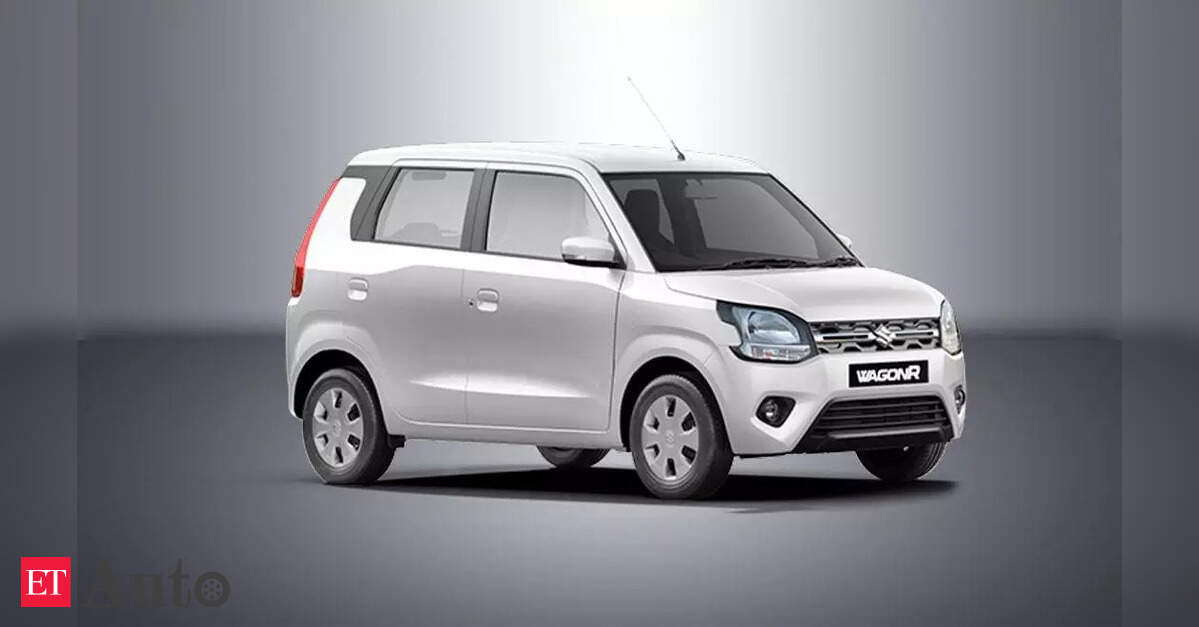

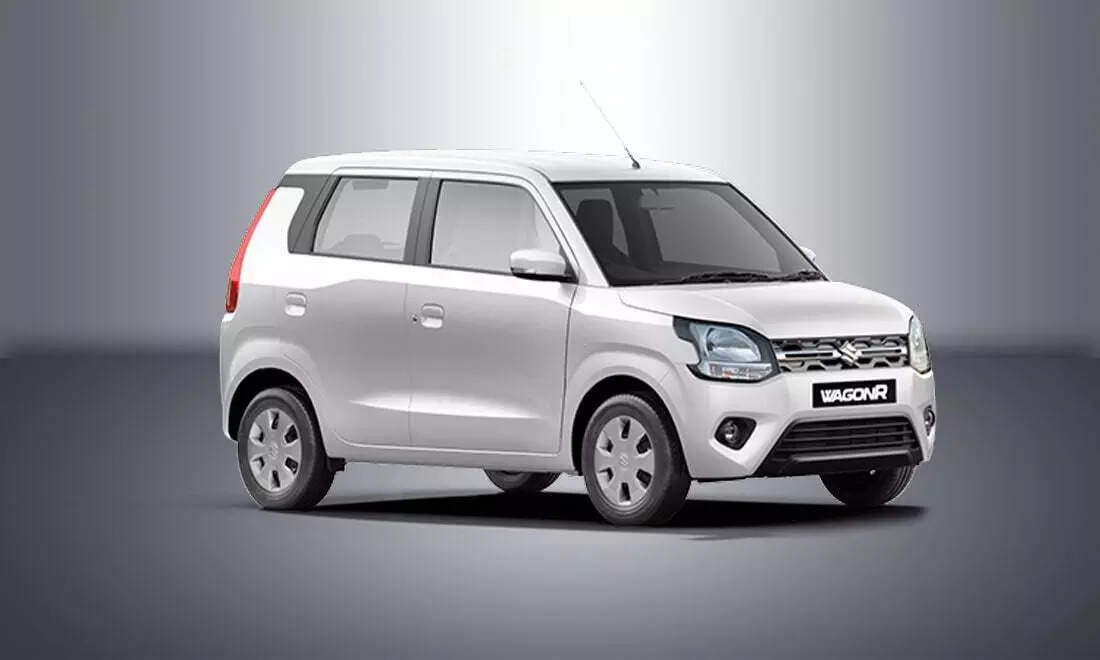
 WagonR, one of the flagship models for the carmaker, currently has more than a month’s waiting period.
Maruti Suzuki India continues to struggle with capacity crunch post GST 2.0, finding it difficult to manage demand across segments.
The country’s largest carmaker, which reported its highest-ever monthly sales with total sales of 2.14 lakh units, is currently operating above its installed production capacity. “Our production capacity is 24 lakh units annually, but we are currently operating at more than 100 per cent..So 2.14 lakhs in 28 days is something very close to almost 26 lakhs,” said Partho Banerjee, Senior Executive Officer– Marketing and Sales, during monthly sales calls with the media.
However, the company reported a decline in its mini and compact segment by 7.86 per cent with 76,624 units sold in February 2026, compared to 83,168 units in the same time period last year. This was a result of capacity constraints, because of which the company is rotating production across segments each month to balance waiting periods. “We are calibrating our production month-on-month so that no model has a very long waiting period,” Banerjee added.
WagonR, one of the flagship models for the carmaker, currently has more than a month’s waiting period. “We produced more WagonR units last month, while in December we focused on mini segment cars such as Alto and S-Presso. Our effort is to serve customers across all segments without increasing waiting periods for any sub-segment,” he added. This month the company is focusing on utility vehicles, and has reported market share in the mid-SUV segment rose from 12.8 per cent to 19 per cent.
Currently, the company has dealer network stock of 12 days, of which 7 days are vehicles in transit.
Post GST 2.0, the company is working at full capacity, where production teams are working on Sundays and holidays to meet demand. A new production line will be commissioned in April, helping improve supply from May onwards.
Exports surpass yearly targets
Exports overall saved the game for the company as its overseas shipments rose 56.48 per cent year-on-year to 39,155 units, compared with 25,021 units in February last year. Otherwise, across segments, the automaker reported either minute or muted growth. The company, in the starting of fiscal year, announced its target to ship more than 4 lakh units in FY26, however, it has already crossed it within 11 months. “Our export performance has been strong this year, supported by a diversified presence across nearly 100 markets, which helps us manage regional risks better,” said Senior Executive Director for Corporate Affairs, Rahul Bharti.
The key driver for this surge in shipments is its first electric vehicle, e Vitara. Maruti Suzuki exports to around 100 countries, reducing geopolitical risk exposure. As per the management, the electric e-Vitara is receiving over 2,000 inquiries per day, with dealers requesting more test drive vehicles due to strong interest.