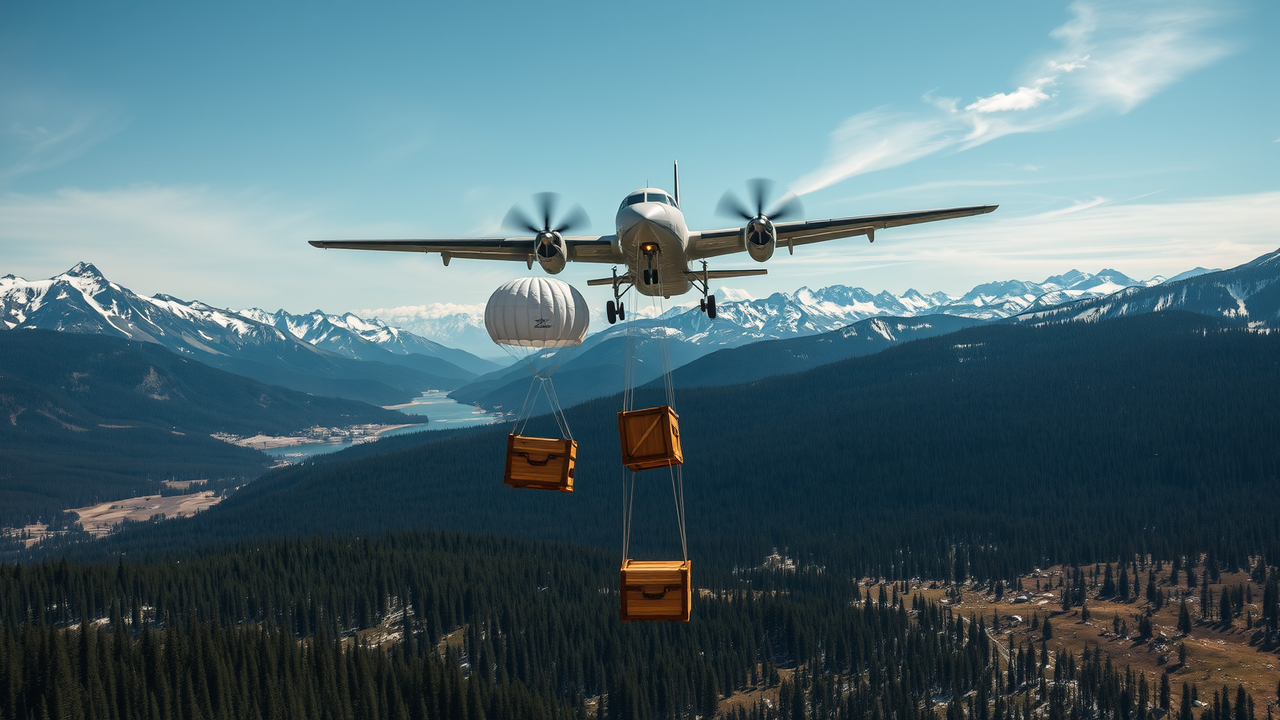

In the autumn of 1948, a twin-engine plane flew low over the remote Chamberlain Basin in central Idaho and released a series of wooden crates, each fitted with a parachute and carrying a live beaver, into the wilderness below. It was not a stunt or an accident; it was a deliberate wildlife management experiment devised by Elmo W. Heter of the Idaho Department of Fish and Game, meant to solve a genuinely awkward logistical problem, how to move dozens of beavers from populated lowland areas where they had become a nuisance into a roadless, mountainous backcountry where their dam building would actually help the local habitat. Remarkably, the plan worked, and the story of how it came together and why it made sense at the time remains one of the more unusual chapters in the history of American wildlife conservation. Most of the relocated beavers survived the journey and quickly established new colonies, building dams that created wetlands, slowed water flow and improved habitats for fish, birds and other wildlife. The project has since become one of the best-known examples of innovative wildlife relocation in the United States.
Why Idaho had a beaver problem in the first place
According to Heter’s own 1950 account of the project, published in the Journal of Wildlife Management, beavers exist in abundance in parts of Idaho and may cause damage to irrigation systems, orchards and other plantings, a problem that intensified after the Second World War as more people moved into rural areas around towns like McCall and Payette Lake. Fish and Game officials had already been trapping and relocating these nuisance beavers for years, moving them into more remote habitat where their engineering skills could genuinely benefit fish and wildlife rather than causing a headache for landowners. The trouble was getting the animals into that remote habitat in the first place, since the Chamberlain Basin in central Idaho’s backcountry had virtually no roads at all.
Why the old relocation method was failing so badly
Before parachutes entered the picture, transporting beavers meant loading them onto horses or mules and hauling them for days through rugged terrain, a method Heter himself described in blunt terms. According to a peer reviewed summary of the study published by Conservation Evidence, a database maintained to track evidence-based conservation interventions, this earlier approach had proven arduous, prolonged and expensive, with high mortality among the beavers themselves. Pack animals grew skittish and difficult to handle when loaded with agitated, foul-smelling beavers, and the animals often could not eat properly during the exhausting, multi-day trip, arriving weakened, increasingly aggressive, or in some cases simply not surviving the journey at all. The search for a safer and more efficient alternative ultimately led to one of the most unusual wildlife relocation experiments in conservation history.
How Heter arrived at parachutes as the actual solution
Faced with this problem, Heter turned to a resource that happened to be widely available in the years right after the war, surplus military parachutes. He determined that boxes carrying beaver pairs needed to be heavy enough to trigger parachute deployment immediately after release, and settled on 7.3-metre rayon parachutes from wartime surplus stock as the most reliable option available. Each box was built in two sections that fit together like a suitcase, fitted with small ventilation holes, and rigged so that the impact of landing, paired with the parachute’s own collapse, would automatically snap the box open and let the beaver walk straight out into its new surroundings without needing anyone to intervene.
Meet Geronimo, the beaver who tested the whole system
Before risking any live animal on an actual mission, Heter and his team ran repeated test drops using dummy weights, and once satisfied with the basic mechanics, they turned to one particular beaver for the final round of live testing. Heter wrote that one old male beaver, fondly named Geronimo, was dropped again and again on the flying field, with someone on hand each time to retrieve him once he scrambled out of the box. Geronimo reportedly grew so accustomed to the process that he eventually stopped resisting and would simply crawl back into his box once approached, ready to be sent aloft again, a track record that earned him a place on the very first official mission, alongside three female beavers, when the real relocation flights finally began.
What happened when the beavers actually took flight
The first official drop took place on August 14, 1948, when a twin-engine Beechcraft carrying eight crates of beavers, a pilot and a conservation officer flew out over the Chamberlain Basin. According to the Conservation Evidence summary of the study, 76 beavers in total were dropped from the air using parachutes over the course of the project, and all but one survived the descent. The single casualty occurred when a box’s securing lashing broke mid-flight, allowing an agitated beaver to partly climb out and fall the final stretch to the ground rather than riding the box down safely, a lone mishap in an otherwise smoothly executed operation.
Why is the experiment still cited by conservationists today
Beyond the surviving 75 beavers, the project’s real measure of success came from what happened after the animals landed. Follow-up observations made roughly a year later found that the relocated beavers had gone on to build dams and construct lodges in their new habitat, evidence that the animals had genuinely settled into the Chamberlain Basin rather than simply surviving the drop and wandering off. The project has since become a recurring reference point in discussions of wildlife translocation methods more broadly, cited alongside later techniques like helicopter transport for animals such as black rhinos and mountain goats, as an early example of finding an unconventional but genuinely effective way to move animals into difficult-to-reach terrain without subjecting them to the prolonged stress of overland travel. Go to Source