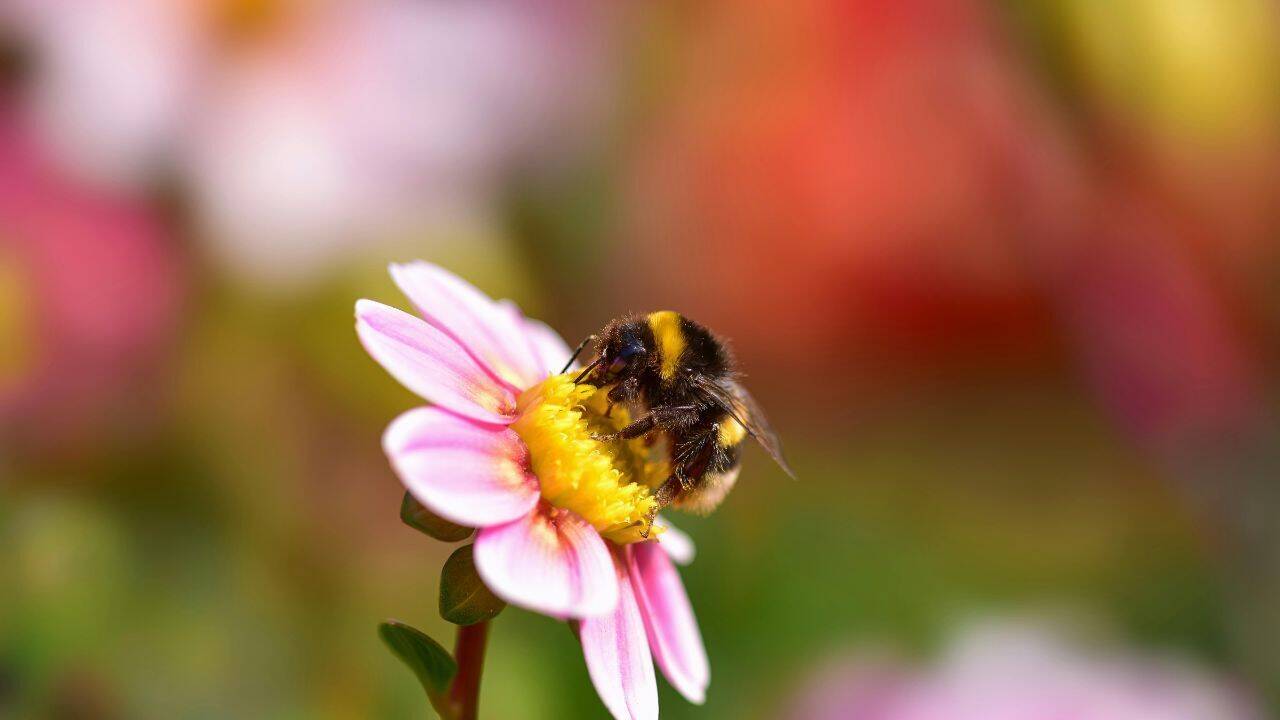


pc: Canva
Bumblebees may be carrying a far heavier burden of toxic metals than honeybees, even when both species forage in the same countryside. The research found that pollen collected by bumblebees contained between two and seven times higher concentrations of several harmful metals, including arsenic, chromium, lead and tin, compared with pollen gathered by nearby honeybees. According to a study published in the journal Ecological Entomology, titled “Eusocial bee species are exposed to different toxic element profiles despite foraging within the same landscape”, different bee species can experience very different levels of exposure to environmental contaminants despite sharing the same landscape.
Toxic metal pollution affects bumblebees more than honeybees
Heavy metals occur naturally in the environment, but many are also linked to farming, industry, traffic emissions and historical pollution. Once present in soil, dust or water, these elements can enter flowering plants and eventually reach pollinators.The study examined colonies of buff-tailed bumblebees (Bombus terrestris) and western honeybees (Apis mellifera) placed within the same locations in Cambridgeshire, England. In many cases, the colonies were positioned less than 50 metres apart. Despite this proximity, the two species were not collecting the same levels of contamination.According to the researchers, bumblebee-collected pollen contained significantly higher concentrations of arsenic, chromium, cobalt, lead and tin than pollen gathered by honeybees. Adult bumblebees also carried higher metal loads within their bodies than honeybee workers.The result is striking because honeybees are often used by scientists as indicators of environmental pollution. If different bee species are exposed to contaminants in different ways, relying on honeybees alone could provide an incomplete picture of pollution risks faced by wild pollinators.
The dilution effect: Why honeybees carry few toxic metals
Part of the explanation may lie in how the two insects live and forage. Honeybee colonies can contain tens of thousands of workers and routinely forage across large areas. A single colony may collect resources from many different patches of flowers spread across several kilometres. This broad foraging network may dilute contamination gathered from individual hotspots.Bumblebees operate differently. Their colonies are much smaller, often numbering only a few hundred individuals, and their foraging range is generally more limited. If a bumblebee colony happens to exploit flowers growing in an area with elevated contamination, there are fewer opportunities for cleaner pollen from elsewhere to offset that exposure.As per the study, this “dilution effect” may partly explain why metal concentrations in honeybee pollen remained comparatively stable while bumblebee pollen showed larger fluctuations and higher peaks.There may also be differences in floral preferences. Although both species visit many of the same plants, they do not use landscapes in the same way. Variations in tongue length, body size, foraging behaviour and flower choice can lead them towards different plant communities, potentially exposing them to different contaminant sources.
How body hair may make bumblebees more vulnerable to toxic metals
Another possibility involves something as simple as body hair. Bumblebees are noticeably hairier than honeybees. Their dense coat helps them collect pollen efficiently and allows them to fly in cooler conditions. Yet that same feature may also make them more likely to accumulate contaminated dust particles while moving through the environment.According to the study, airborne particles carrying trace metals can adhere to insects during flight. Bumblebees not only possess longer and denser hairs but also tend to carry a stronger positive electrical charge than honeybees. This charge may attract negatively charged dust particles, increasing the likelihood that metal-containing particles become attached to their bodies.Once back at the nest, those particles can be transferred into stored pollen through grooming behaviour, creating another pathway for contamination.
Why toxic metal exposure could threaten long-term bee health
The concentrations measured in the study were generally below levels known to cause immediate death. That does not necessarily mean the exposure is harmless.Previous research has linked lower levels of metal exposure to changes in learning ability, memory, navigation, brood development and reproductive success in bees. These effects can be subtle, making them harder to detect than outright mortality, but they may still influence the long-term health of colonies.The authors emphasise that metal contamination is not only an issue in heavily polluted industrial regions. Their work detected exposure in landscapes considered relatively low in contamination, indicating that pollinators can encounter toxic elements even in seemingly ordinary rural environments.According to the researchers, the findings show that “honey bees are not reliable proxies for assessing contaminant burdens in other bee species.” Go to Source