
Image: Wikipedia
The introduction of a species of invasive flies to Fiji as a means of pest control has turned out to be one such example, which now serves as a warning in conservation studies. Since the Fijian authorities cooked their own goose by trying to conserve their coconut plantations by introducing the parasitic flies, they ended up making the native species of insects extinct. Thus, the introduction of invasive species and biological pest control measures poses threats not only to the ecosystem but also leads to the extinction of species. Such cases have recently come into focus among those who study the conservation of species extinction, ecology, and the environment.
How the biological control programme designed to protect coconut crops failed
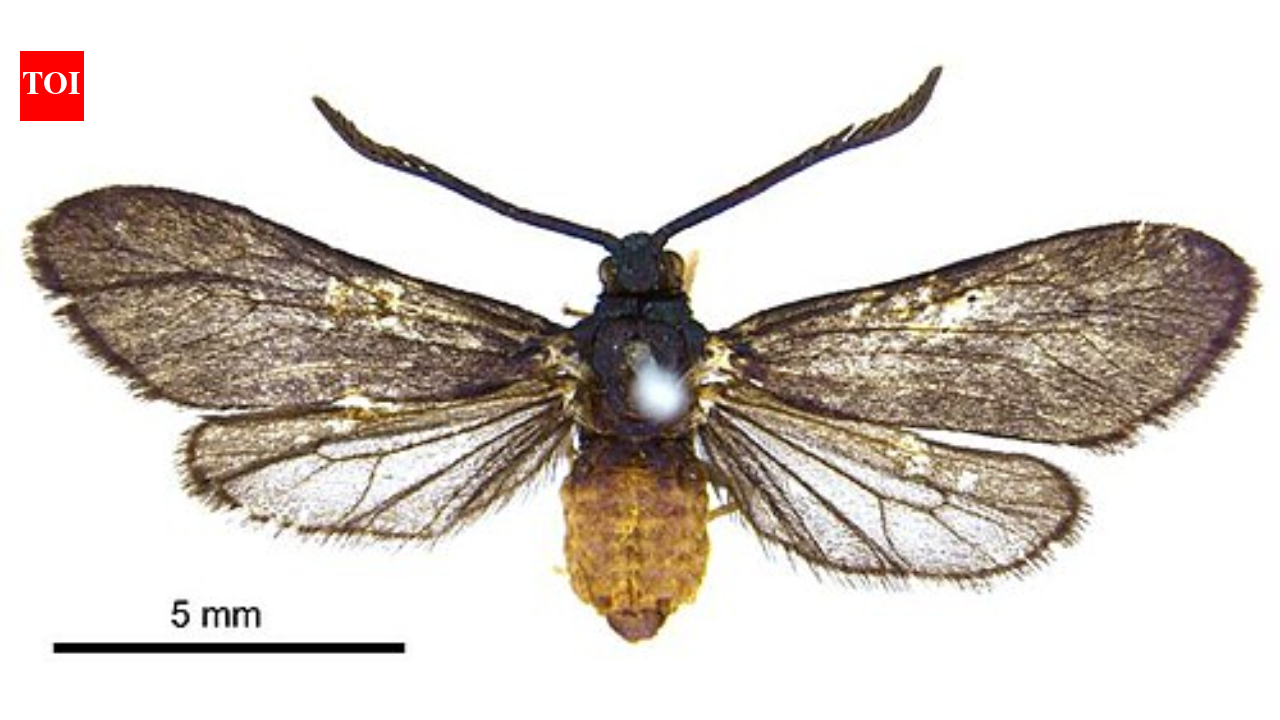
In the twentieth century, there were many problems in Fiji’s coconut industry as a result of the attack on the coconuts by insects, which resulted in poor yields of crops. Scientists decided to introduce Bessa remota, a parasitic fly, as part of a solution to the problem.Mark Hoddle, who was a scientist, Extension Specialist and Director of the Centre for Invasive Species Research, noted in his report that the purpose of the introduction of Bessa remota was to eliminate Levuana iridescens, a species of moth that had caterpillars that ate leaves of the coconuts. According to initial studies, the biological control program proved highly effective since there was a dramatic reduction in the population of the moths, and recovery of coconut plantations. However, years later, there emerged doubts about whether the program paid its ecological price.
The extinction of the Fiji Coconut Moth
A study entitled “Phylogenetic position of the ‘extinct’ Fijian coconut moth, Levuana iridescens (Lepidoptera: Zygaenidae)” analysed historical data, museum specimens, and ecological information about the Levuana iridescens.It was found that the moth probably went extinct due to the introduction of Bessa remota.As cited by the scientists:”Strong evidence is provided that Levuana iridescens is extinct and that biological control was the cause of the extinction.”What makes the extinction special is that it is one of the few known instances when a biological control agent seems to have driven a targeted species to extinction.Researchers pointed out that although numerous efforts were made, there are no recent records of the moth. The situation is rare since biological control programs typically try to reduce but not eradicate pest populations.
Why are island ecosystems especially vulnerable
Oftentimes, island ecosystems have plants and animals unique to that particular region only. Since these species develop without any form of external threats for quite some time, their defence systems against new predators, parasites and other species are almost always lacking.According to the International Union for Conservation of Nature (IUCN), invasive alien species are among the top factors causing biodiversity loss around the world.For instance, in Fiji Island, introduction of a single parasite species disrupted centuries-old ecosystems. An attempt to use this parasite species as part of agricultural activity turned out to be an ecologically destructive mistake, and one from which there is no turning back.It is not uncommon for those carrying out research on invasive species to emphasise islands.
Lessons for modern conservation and pest management
The history of Levuana iridescens still influences debates on the topic of biological control in modern times.Presently, there is significantly more testing of biological control programs compared to past introductions, where scientists assess the specific host, ecological consequences, and risks before introducing an agent into the wild.As noted by conservation biologist Mark Hoddle:”Control of the target pests is aimed at reducing population densities below a harmful threshold and does not seek total eradication.”In terms of the Fiji example, while it is essential to protect the crops, conservationists have realised the importance of taking other considerations into account as well.Ecological risks, among others, are an integral part of modern biological control programs.
A lasting reminder of unintended consequences
In this context, the extinction of the Fiji coconut moth acts as a good example of how environmental actions can result in unpredictable results. This is because while trying to protect coconut farms, people ended up losing a distinctively unique species.This is a particularly important lesson for researchers, conservation activists, and policy makers when it comes to pest eradication. In addition to providing quick fixes, pest control calls for a comprehensive knowledge of the interconnections within ecosystems.Given the current concern regarding invasions by alien species, loss of biological diversity, and overall ecosystem resilience, the story of Fiji flies has become a very good case study for conservation biology. Go to Source