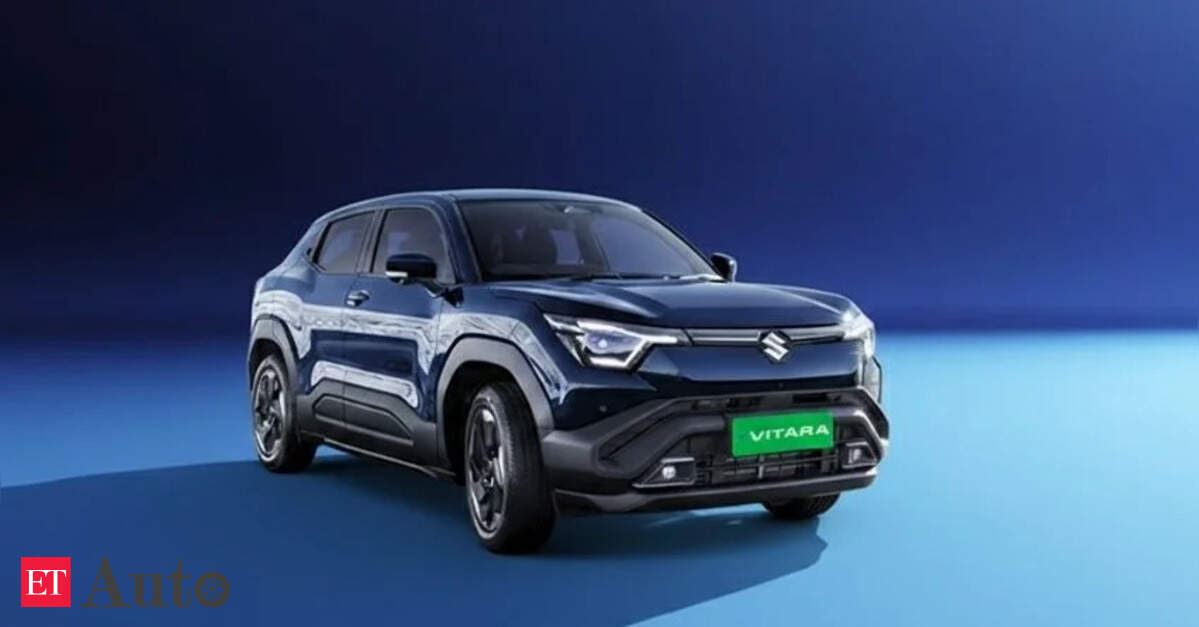

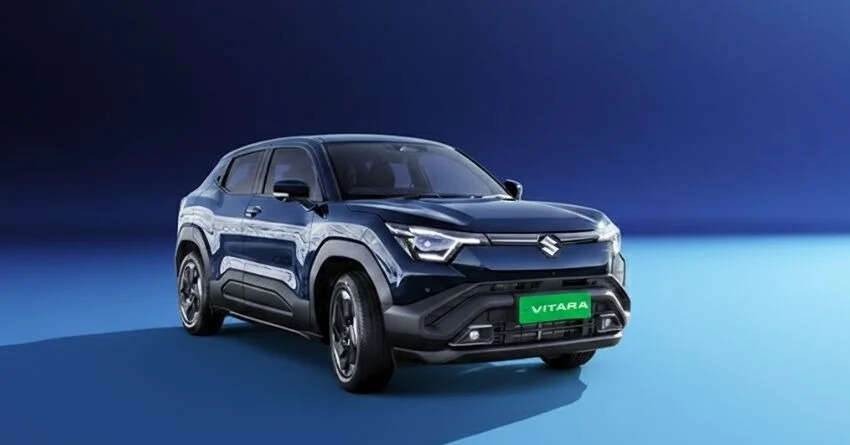
 e-Vitara bookings doubled to 4,000 units, while rural sales jumped 55 per cent amid higher production capacity and wider market reach.
“/>
India’s largest carmaker, Maruti Suzuki India, reported a 40 per cent growth in CNG vehicle sales in May 2026, with volumes reaching a record 78,000 units, as consumers increasingly opted for lower running-cost alternatives amid elevated fuel prices.
The company says traction is very strong and that it is registering significant growth in the entry-level hatchback segment, where its long-standing sales champion, WagonR, is positioned, as well as in the mid-size SUV category, where MSIL launched the Victoris SUV last year.
“After the announcement made by the Prime Minister on May 11 to conserve petrol and diesel, demand for CNG vehicles has grown 1.4X. People have started shifting more towards greener vehicles, and daily bookings for our CNG models have gone up by almost 40 per cent,” said Partho Banerjee, Senior Executive Officer, Sales & Marketing, MSIL, on Tuesday in the company’s monthly business update briefing.
The company’s top executive explained that, despite recent increases in fuel prices, the total cost of ownership (TCO) of CNG is much lower than that of gasoline and that CNG’s traction, particularly in the entry-level segment, is increasing.
“The interest for CNG variants in the WagonR is at 50 per cent, for instance,” Banerjee pointed out in a virtual press conference.
He added that even in the mid-size SUV segment, its Victoris SUV is witnessing robust customer traction due to its underbody CNG tank, which does not compromise on the boot space.
“Several customers coming to the Maruti Suzuki fold are diesel customers, and the Victoris is enabling us to strengthen our market share in the mid-size SUV segment,” Banerjee said.
The company, which increased its PV market share to 42 per cent in April 2026, is confident it can grow that number further, as it estimates overall industry volumes at 4.4 lakh units in May, against MSIL’s domestic sales of 190,337 units (+40 per cent) last month. Maruti Suzuki sells a host of CNG-equipped models, such as the Alto, WagonR, Dzire, Swift, Fronx, Baleno, XL6, Ertiga, Grand Vitara, and Victoris.
e-Vitara bookings double
MSIL has also reported a doubling in bookings for its maiden EV, the e-Vitara, with the number reaching 4,000 units last month. The e-SUV, sold exclusively through the carmaker’s premium Nexa outlets, was launched in February 2026 and had garnered nearly 2,000 bookings in April 2026, after a slow start.
“The bookings for our EV have doubled, and we are seeing healthy traction in the sales of the e-Vitara,” Banerjee said.
Despite doubling the number, the company cautioned that domestic supplies for the e-Vitara would remain constrained until September 2026. “We need to wait till August or September,” he added while discussing streamlining of supplies for the EV.
Rural demand gains traction
The company says that with the second plant at its Kharkhoda site in Haryana coming on stream on May 18, 2026, its production capacity has received a shot in the arm, unlocking an additional 2.5 lakh units. MSIL believes this will enable it to cater to the growing segments of the market in the coming months.
Banerjee pointed out, “After GST 2.0, we were very confident that if the value proposition is correct, there is a huge demand for small cars, considering there are 27 million two-wheeler customers in India aiming to switch to a four-wheeler.”
“While we had been saying that we were short of vehicles in Q4 FY26, the latest Kharkhoda plant getting commissioned is now giving us more cars to sell in the market. Our retails are also going very strong on the back of the initiatives taken in upcountry markets, and with our focus on the mid-size SUV segment, we are gaining market share in mid-size SUVs,” he added.
Furthermore, MSIL registered a 55 per cent growth in rural markets in May, deepening its rural market penetration by 2 per cent to now stand at 53.2 per cent.
According to Banerjee, “In the last two years, we have opened one touchpoint every year across the country. Thanks to GST 2.0, we are seeing that the rural market is responding very well.”