
 The Tata–Stellantis partnership enters a new phase with joint Jeep development amid evolving global auto alliances.
When Stellantis announced it would jointly develop a new global Jeep model with Tata Motors, it marked yet another important chapter in a 20-year alliance.
What began in 2006 between the then Fiat Auto and Tata Motors was announced with much fanfare at the Delhi Auto Expo. The Italian automaker had been struggling in India since it opened shop in 1995 with the Uno, in a partnership with Premier Auto, its ally of over four decades.
Tata Motors, likewise, had entered into an alliance with Mercedes-Benz in the late 1990s but later decided to go it alone to focus on its own project, the Indica. At the time of its partnership with Fiat, it was developing the Nano, better known to the world as the ₹1-lakh car.
The architects of this alliance are no longer around. Sergio Marchionne, the CEO of Fiat Auto, passed away in 2018 at the relatively young age of 66, while Ratan Tata, the Chairman of the Tata Group, bid adieu more recently in 2024. Both were charismatic leaders who were keen to go the extra mile and position their companies as formidable brands to reckon with in the global market.
Sergio Marchionne on Ratan Tata
It was sometime in 2008 when a fortuitous meeting with Marchionne gave this writer a tremendous insight into his forever ticking brain. Asked about the Tata partnership, he said, “It has certainly set the example of pretty ambitious projects like the Nano, which, according to me, is not about the price tag alone.” According to the Fiat CEO, some of the things that the Tatas had done, not only on the car side but in terms of their industrial holdings, were “incredibly courageous” and very long-term. “They have been able to do that without losing the contact of day-to-day life and have yet been a force to reckon with in the market,” he added.
Their approach to globalisation is interesting… the vision and commitment they have to nation building in India which somehow the rest of the world has forgottenSergio Marchionne
As Marchionne put it, “Their approach to globalisation is interesting and one of the great things that I found about Tatas is the vision and commitment they have to nation building in India which somehow the rest of the world has forgotten.” This, in his view, was an important issue for all industrial players across the world and the ability to combine that commitment, as part of a vision, with the desire to be a strong and recognised global player, was a “very interesting” act.
Acquired statesmanship
“What I found in Ratan Tata is the wisdom to try and manage both objectives with the elegance and smoothness that only comes about with a result of acquired statesmanship,” said Marchionne.
On his rapport with Tata, he replied, “It is a pleasure for me to work with him because we have never had a disagreement. Sure, we have had differences of view which have been quickly reconciled, but never a fundamental disagreement. There are times I discuss the weirdest things with Ratan, but that is the way we are; we are friends first and businessmen second.”
There were more generous words coming from the Fiat CEO on the Indian business titan. “I have a lot of respect for him and do see his group being one of the pillars of international expansion of Fiat by helping us here. Equally, there are things we could do for them, like engine technology, etc.”
Relationships of that calibre, he said, required time to mature. “We don’t rush into them and I expect a lot more from the Tatas in the future where we could even look at options beyond cars.”
JLR and Chrysler buyouts
Things had also changed for the two companies during this period of the global slowdown, which began with the Lehman crisis. Both Tata Motors and Fiat increased their business bandwidth with the acquisition of Jaguar Land Rover and Chrysler, respectively.
Less than four years later, the joint retail model was discontinued in 2012, but the manufacturing agreement continued at the Ranjangaon facility near Pune. Jeep became the calling card for Fiat Chrysler Automobiles (FCA), and the Fiat brand, which had spawned promising products like Uno and Palio in India, was soon relegated to oblivion.
It is a massive accolade for India that a global brand like Jeep has chosen it as a manufacturing hub for exports to advanced marketsTop FCA executive
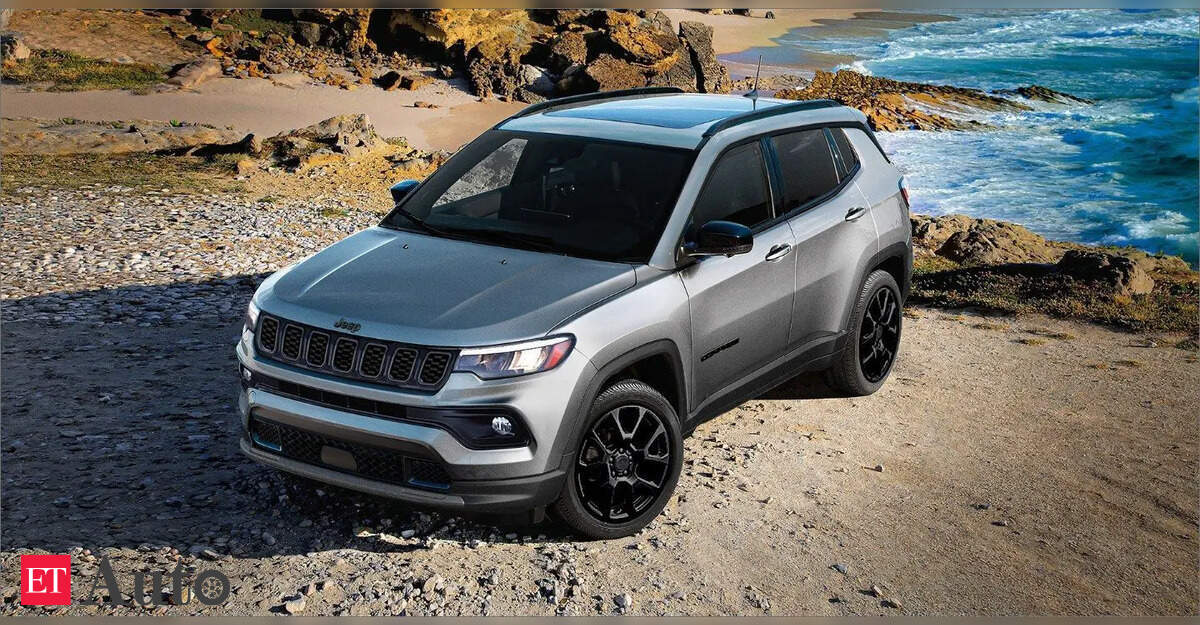
It was in 2017 that the first Jeep Compass rolled off the Ranjangaon plant assembly line, marking a proud moment for the employees who had worked relentlessly around the clock to make it happen.
A key member of the leadership team at Fiat India Automobiles, the Tata Motors and FCA joint venture, told this writer, “As a manufacturing facility, we are right there with other plants on efficiency and quality. We are one of the unique automobile facilities which also has a full-fledged powertrain unit in a single complex.”
Sole hub for RHD markets
The Ranjangaon plant was now the sole manufacturing hub for all right-hand-drive markets of the Compass. It was also touted as among the highest-quality products exported from India. The SUV was targeted at markets such as the UK, South Africa, and Australia and positioned as a premium brand, manufactured at one of FCA’s best global plants.
“We are incredibly proud and honoured to be given the trust. It is a massive accolade for India that a global brand like Jeep has chosen it as a manufacturing hub for exports to advanced markets,” said a top executive.
He was confident that the Compass would move FCA to another level and burst out laughing when asked if it would be a do-or-die product. “It is a do, and there is no die about it. There is no question of dying, and we are positive about India. We have had difficulties over the years, but are well-positioned now,” he told this writer.
With the business plan envisaging a healthy mix of exports and domestic sales, this ensured production even if there was some cyclicality in certain markets. A downturn in South Africa, for instance, could be offset by buoyant business in Australia or India.
One is to ensure that it is a tremendous success here in India and also ensure that we export right-hand-drives to top quality marketsFCA executive
Multiple responsibilities
“This is a project that can stack up for us and can be a real turnaround for the organisation. There are multiple responsibilities that come with this product. One is to ensure that it is a tremendous success here in India and also ensure that we export right-hand-drives to top quality markets,” said the executive
India was among four global hubs for the production of the Compass, along with Brazil, China and Mexico. In the years that have gone by, sales of Compass have dwindled in India, though it had got off to a good start.
Following Marchionne’s death, the same year which saw the dramatic arrest of Carlos Ghosn, the CEO of Renault-Nissan, another makeover was imminent for FCA. Groupe PSA, the maker of Peugeot and Citroën brands, had turned the corner under the leadership of Carlos Tavares and was now keen on growing even further.
It had acquired Opel and Vauxhall from General Motors in 2017 and then began merger talks with FCA, which had earlier reached out to Renault. PSA and FCA came together in 2021 to form Stellantis, a gigantic entity with a host of brands in its portfolio.
PSA had already announced its entry into India two years earlier with the Citroën brand, a clear signal that it wanted to steer clear of the earlier Peugeot association, which had lasted barely three years before an abrupt exit way back in 1997. The new plant in Tiruvallur near Chennai would be home for Citroën, and a powertrain facility in Hosur, a critical part of the exports plan.
Robust alliance with Tata
During a visit to India in 2022, Tavares spoke of the manufacturing partnership with Tata Motors at Ranjangaon near Pune and reiterated that it was working “very well,” with no need to change the script.
“In our very chaotic automotive industry, there is a saying…if it is not broken, don’t try to fix it,” he added. From his point of view, the partnership was working well — “So far, so good and delivering what we expected from it.”
By this time, Tata Motors had begun to fire on all cylinders and was moving quickly into the electric space as well. Today, along with Mahindra & Mahindra, it has moved up in the rankings, ahead of Hyundai, which was Maruti’s closest challenger for decades.
Tavares quit Stellantis in 2024, and the new leadership will now have its task cut out, balancing a whole lot of brands and staying comfortably afloat in an extremely volatile world.
Chinese growth levers
Two important growth levers, and both Chinese brands in the form of Leapmotor and Dongfeng, will play a big role here, and Stellantis will doubtless be relieved since they will offer the twin advantages of competitive costs and top-class quality.
Leapmotor’s products have already been earmarked for India, and it is logical to assume that they will also be shipped out to ASEAN and Latin America. The new global Jeep developed with Tata Motors will, in all likelihood, pursue this path too, and it will be interesting to see how the script pans out in tandem with that of JLR and Stellantis in North America.
A Chinese fusion will clearly add greater flavour to the business plan, and the stage is now for a new dimension to the Tata-Stellantis partnership. In today’s rapidly changing automotive landscape, only partnerships will work by the end of the day.