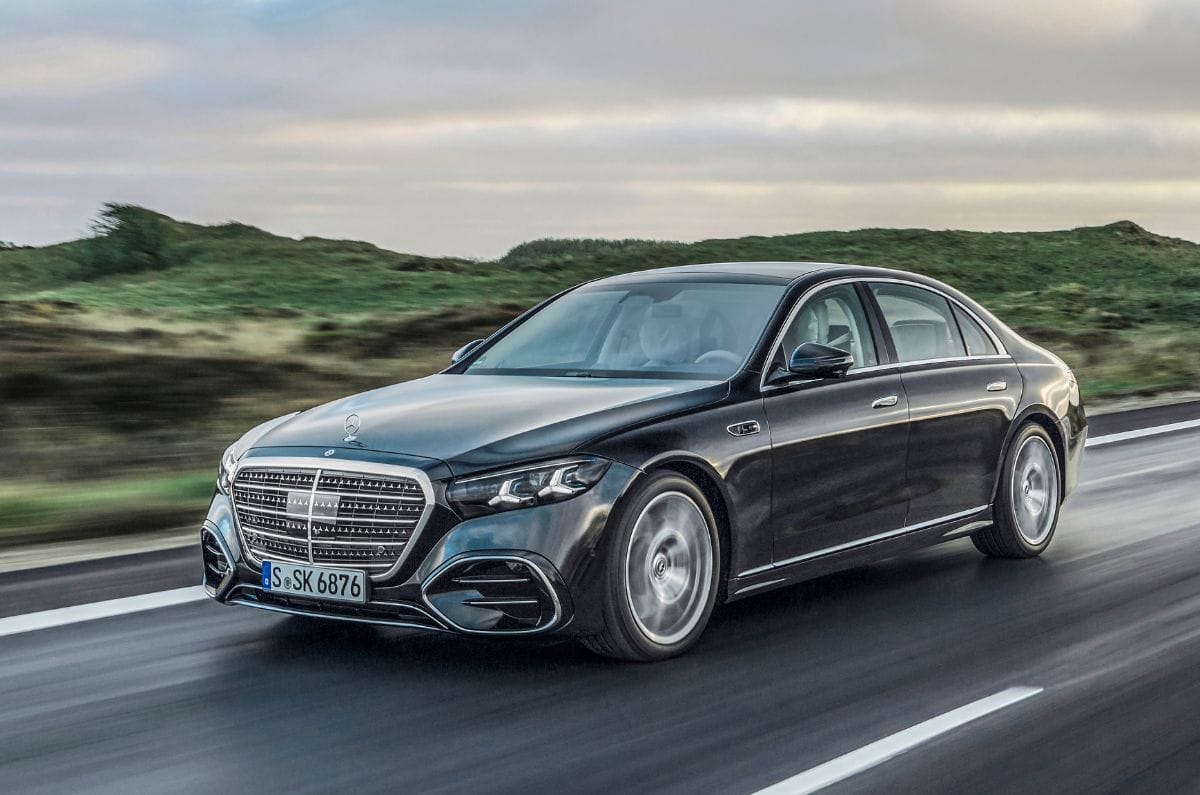

Mercedes-Benz has given the S-Class what it calls its most comprehensive facelift yet, with the company claiming that around half the components are new. The focus is on a new electronic architecture, updated engines and a more assertive design rather than any radical mechanical overhaul.
2026 Mercedes-Benz S-Class Exterior Design
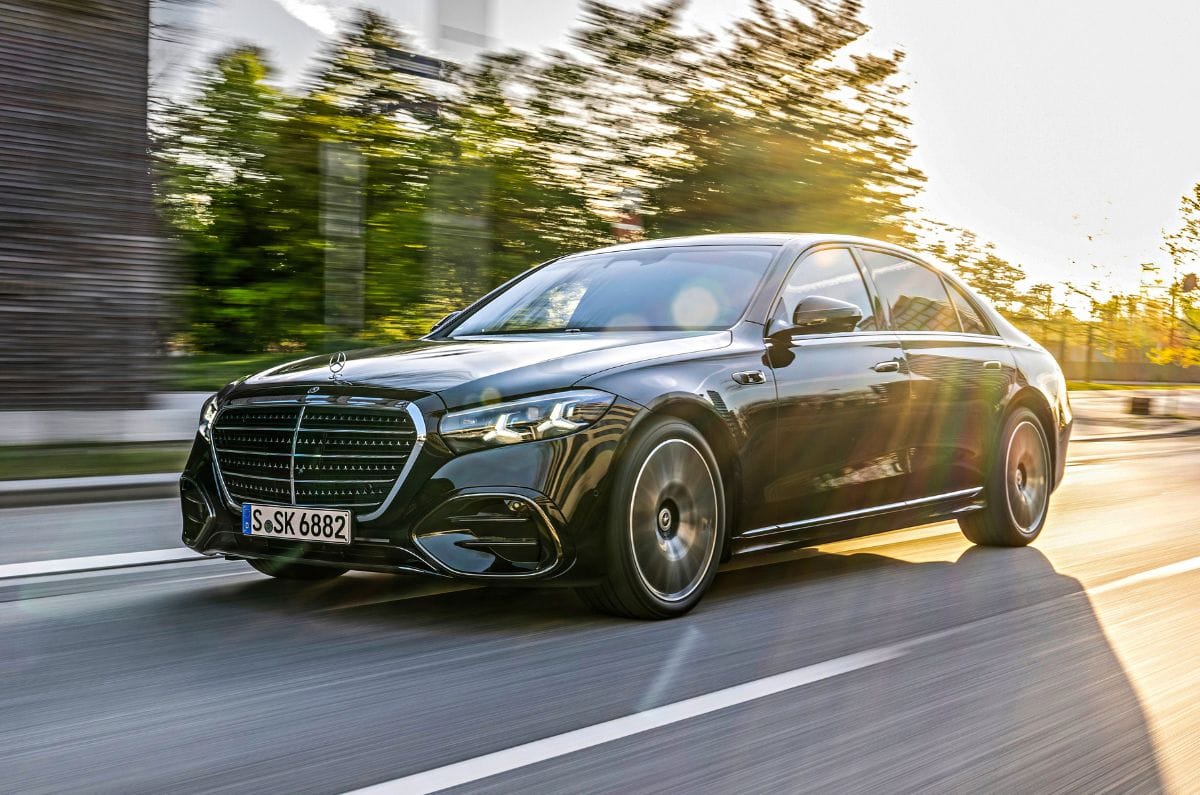
The most visible change is the grille. It’s significantly larger than before and filled with a pattern of small three-pointed stars which can be illuminated, giving the car a more extroverted look than the relatively understated front end of the pre-facelift car. Traditionalists will be relieved to see the return of the standing three-pointed star on the bonnet, which will be offered in India but not in some other markets because of crash norms.
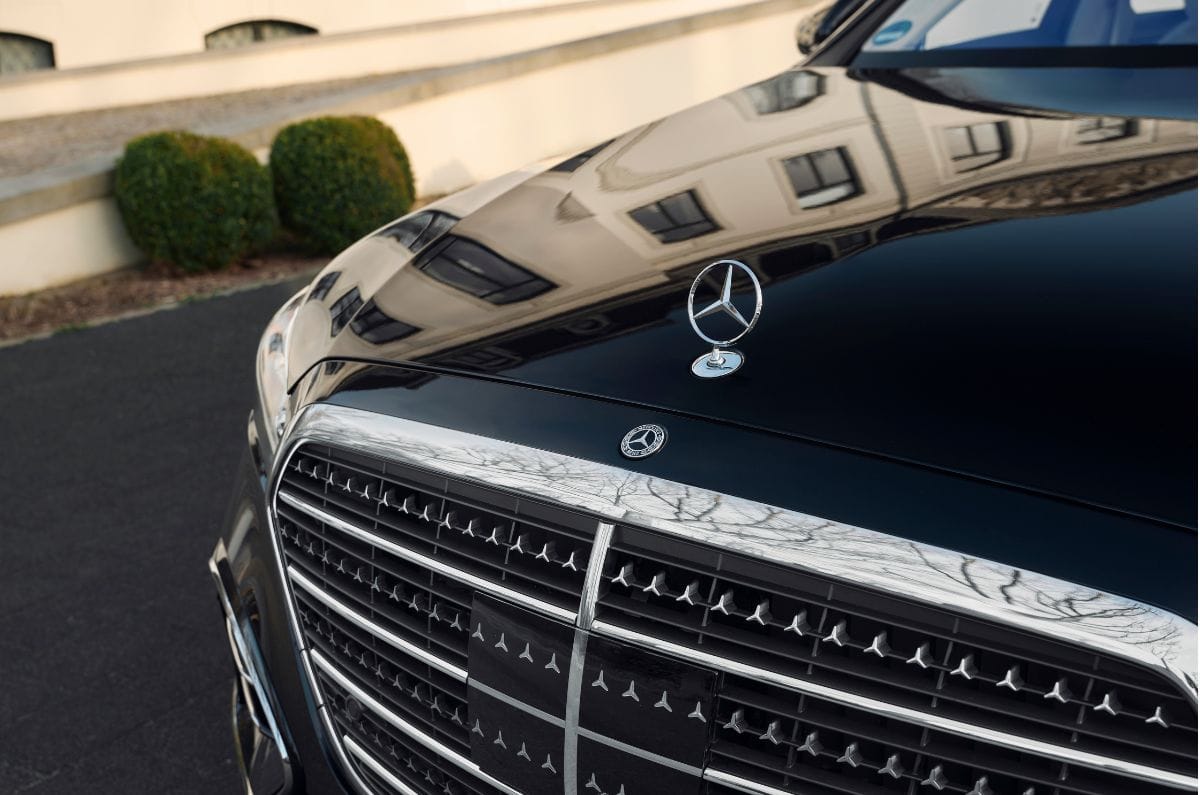
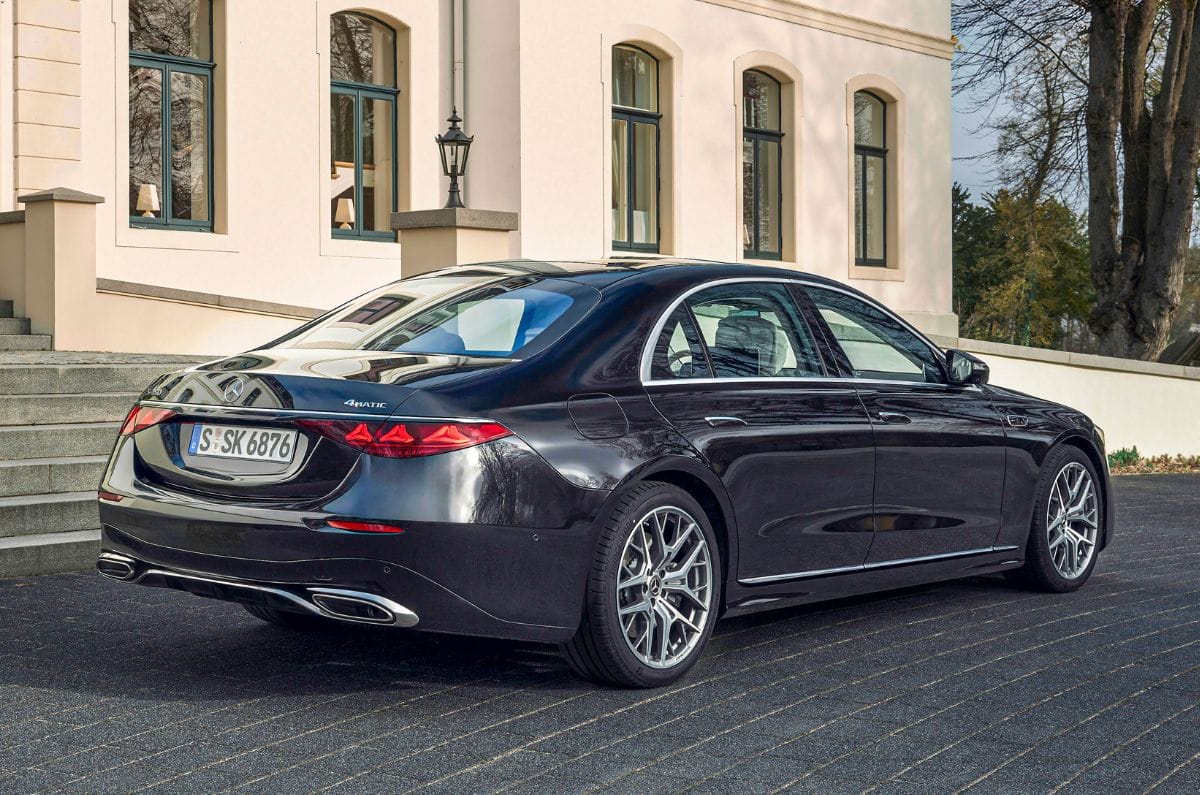
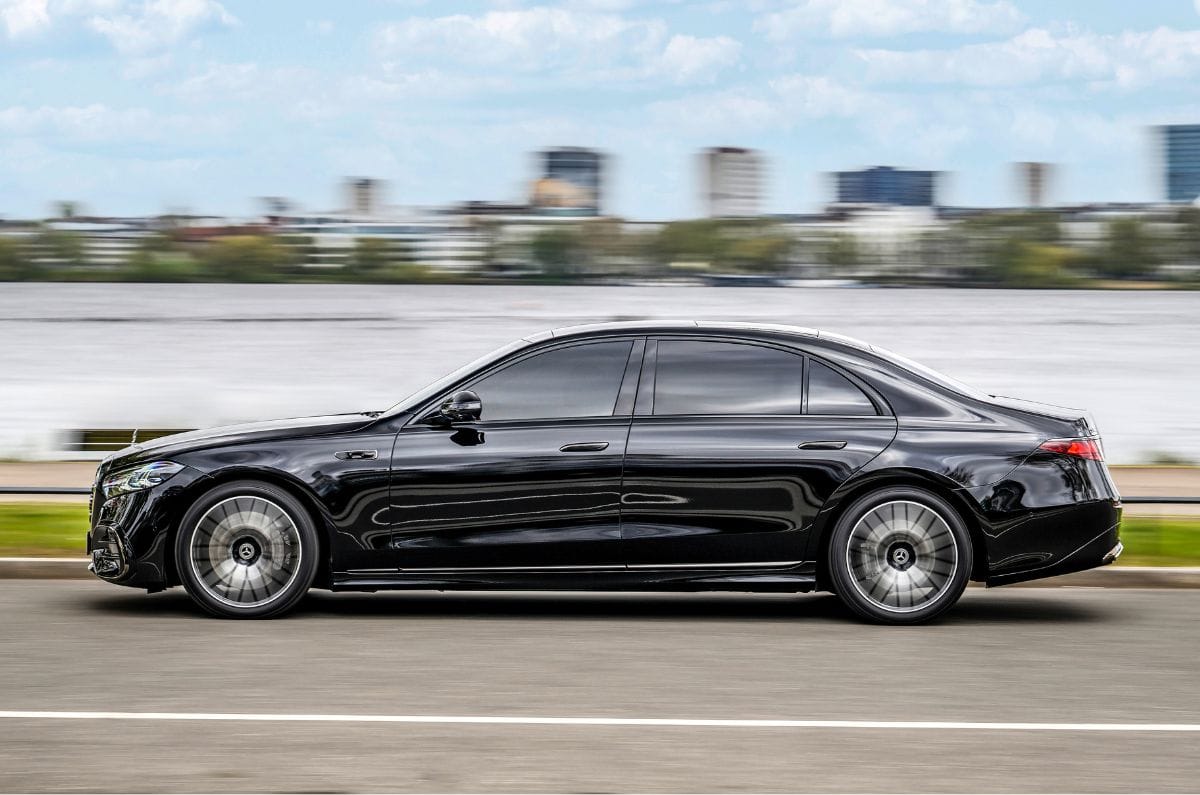
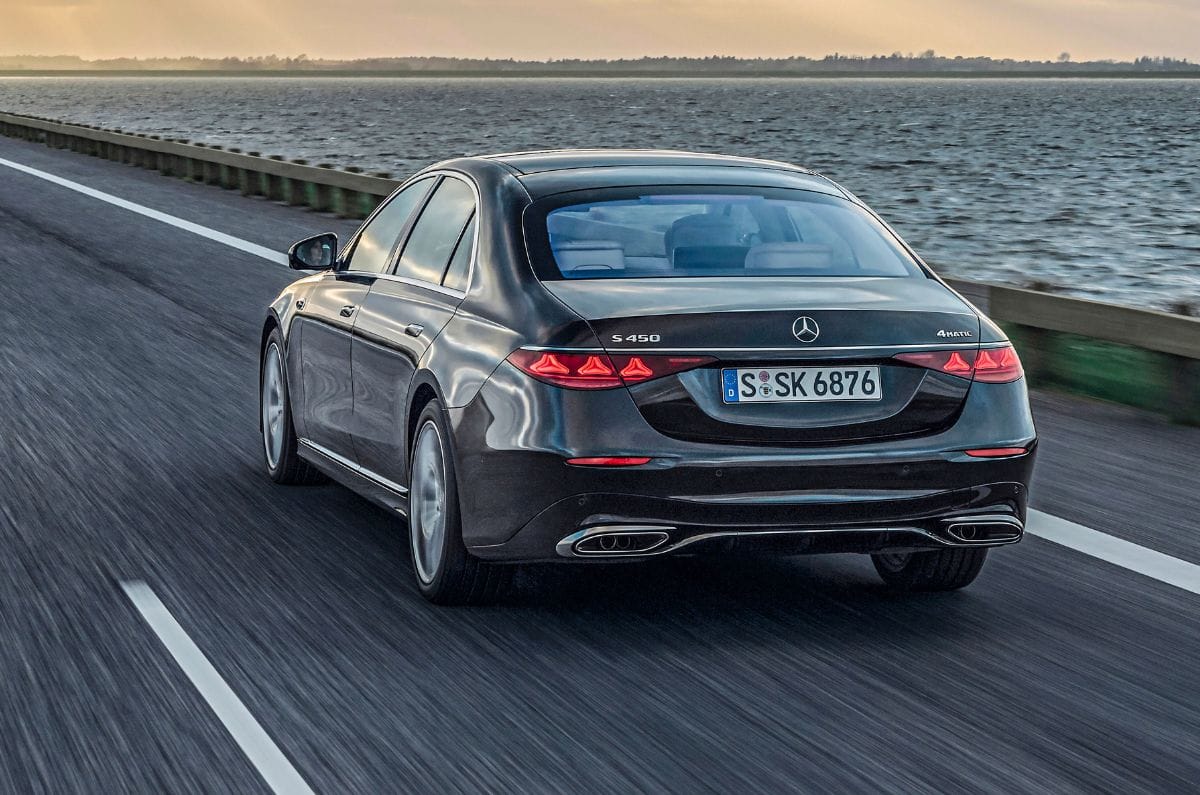
The lighting has been reworked too. The headlamps now incorporate star-shaped elements and new micro-LED technology that promises stronger, more precise illumination. The tail-lamps echo this theme with three distinct lighting elements, a visual cue Mercedes uses to underscore the S-Class’ place at the top of its range. In profile, the car is largely unchanged, with the same flowing proportions, though there are new designd for the alloy wheels. For India, expect slightly higher-profile rubber to better cope with our road conditions.
2026 Mercedes-Benz S-Class Features and Safety
Beneath the skin, the biggest change is the completely new electronic backbone. The S-Class now runs on Mercedes’ latest operating system, MB.OS, powered by a central high-performance computer that consolidates many of the control units that were previously spread across the car. The computing hardware is powerful enough to require water cooling, and the idea is to support more advanced driver assistance and infotainment features, as well as keep the car up to date via over-the-air software updates through its life cycle.
This centralised architecture ties into an expanded sensor suite that includes multiple external cameras, radar units and ultrasonic sensors. These feed a new generation of driver-assistance features that the company describes as level 2++ which is beyond conventional Level 2. There is steering assistance, lane-change assist and evasive steering support, and one particularly useful function is an automated reverse manoeuvre system which can retrace the exact path the car took into a tight spot, helping the driver back out of narrow lanes or dead ends.
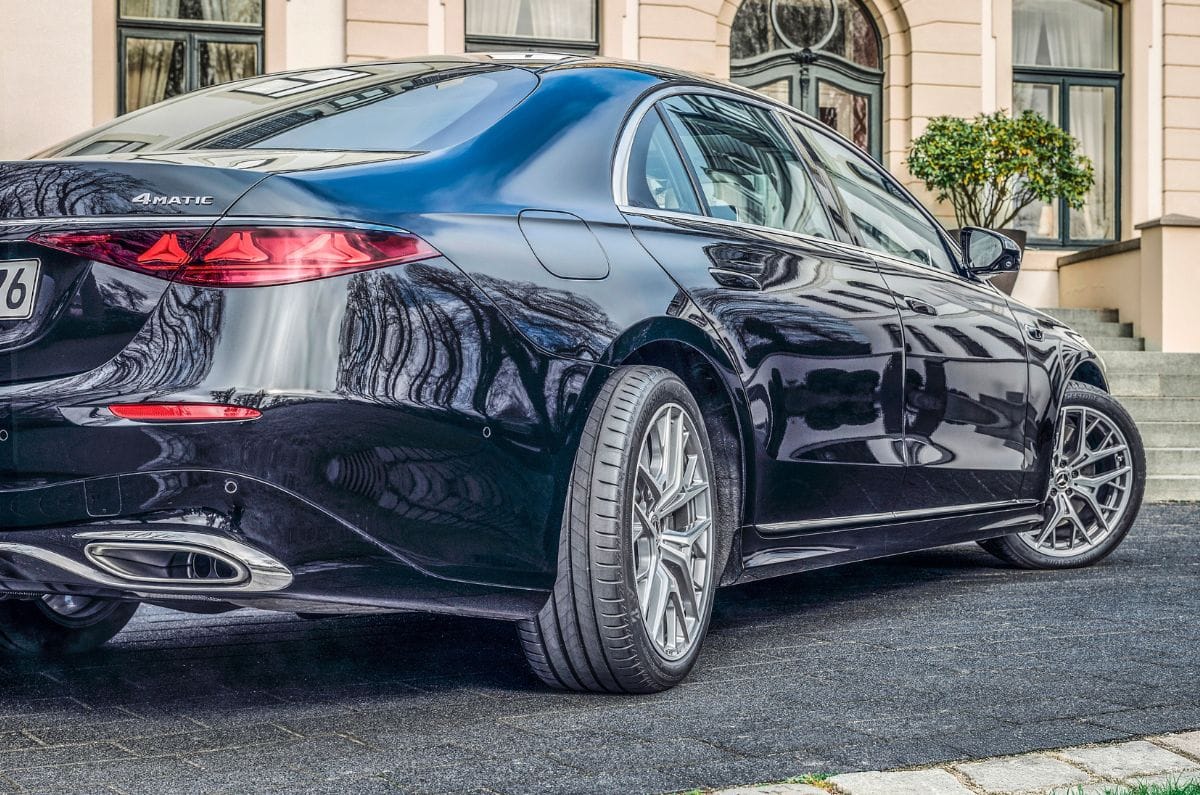
The parking assistant has also been upgraded. It can identify and park in available spaces without needing to drive past them or rely on clearly marked bays, taking much of the effort out of manoeuvring a long-wheelbase limousine in congested areas. Rear-axle steering is available with either 4 degrees or 10 degrees of steering angle depending on specification, reducing the turning circle by up to around 2 metres and making the S-Class easier to thread through tight city streets than its size would suggest. There are also smaller convenience features, such as an intensive cleaning mode for the wipers that increases wash-wipe action, which is likely to be useful in heavy monsoon conditions.
2026 Mercedes-Benz S-Class Interior Space and Comfort
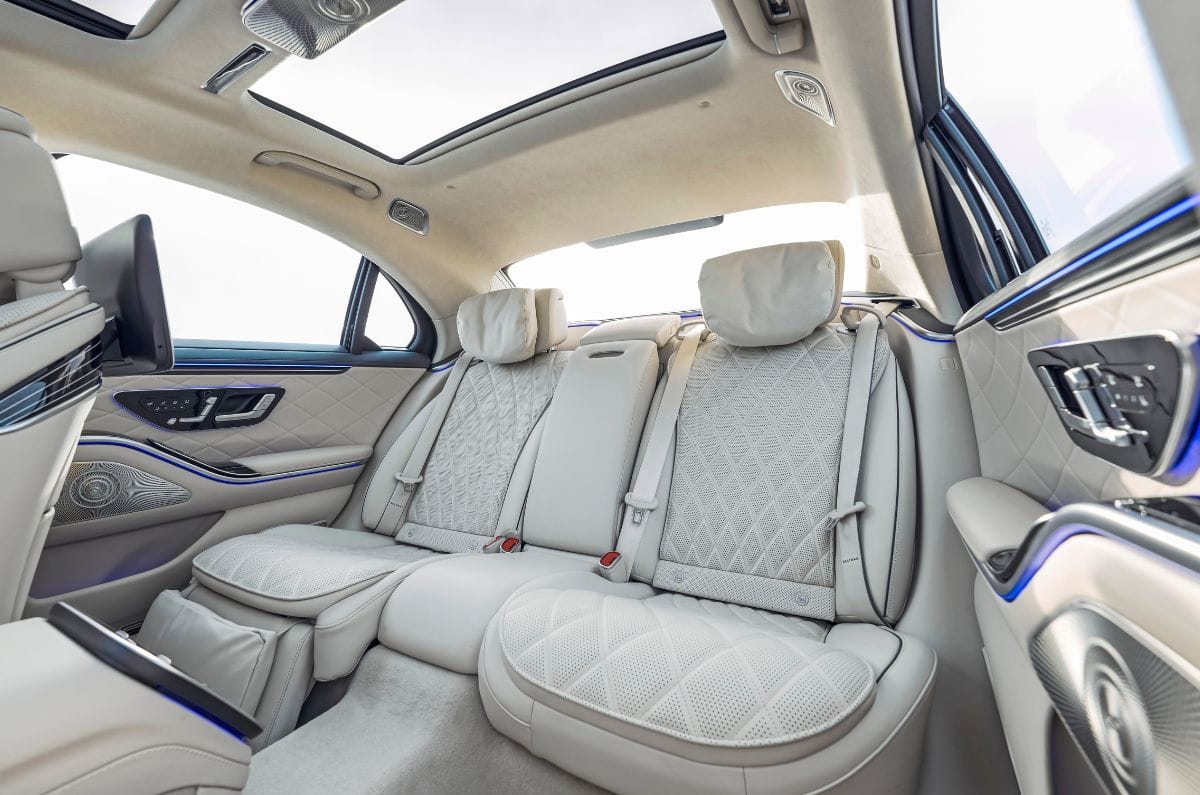
For most S-Class buyers in India, the rear seat remains the primary focus, and Mercedes has understandably not interfered too much with a layout that already worked very well. The overall packaging and seat architecture are familiar, with generous legroom, excellent under-thigh support and a wide range of adjustments. Mercedes says the cushions have been optimised, but the basic formula is unchanged: a soft, absorbent ride and seats that allow the occupants to relax and stretch out.
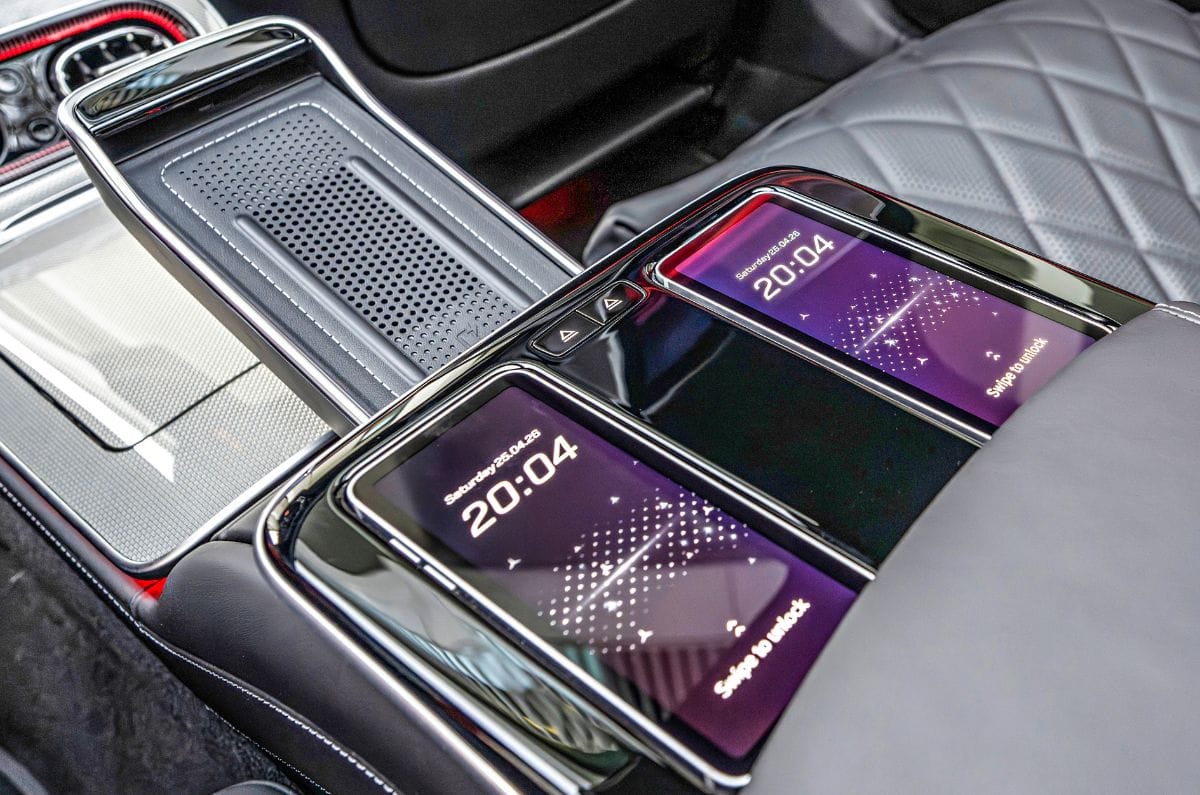
One notable change is in the way rear passengers interact with the car’s functions. The earlier fixed control panel in the rear has been replaced by a removable, smartphone-style remote. This handheld unit can be used to adjust settings, control media, stream video, join video conferences and even operate the in-cabin cameras for selfies. The climate control system, with its high-efficiency air filter, can also be adjusted from the rear.
In terms of comfort, the combination of supple air suspension, careful seat tuning and effective noise insulation still makes the S-Class hard to beat as a long-distance luxury car. On the smooth German roads where the car was sampled, the ride was impressively plush and well controlled. How much of that translates to Indian conditions will depend on the local suspension and tyre specification, but the fundamentals are sound.
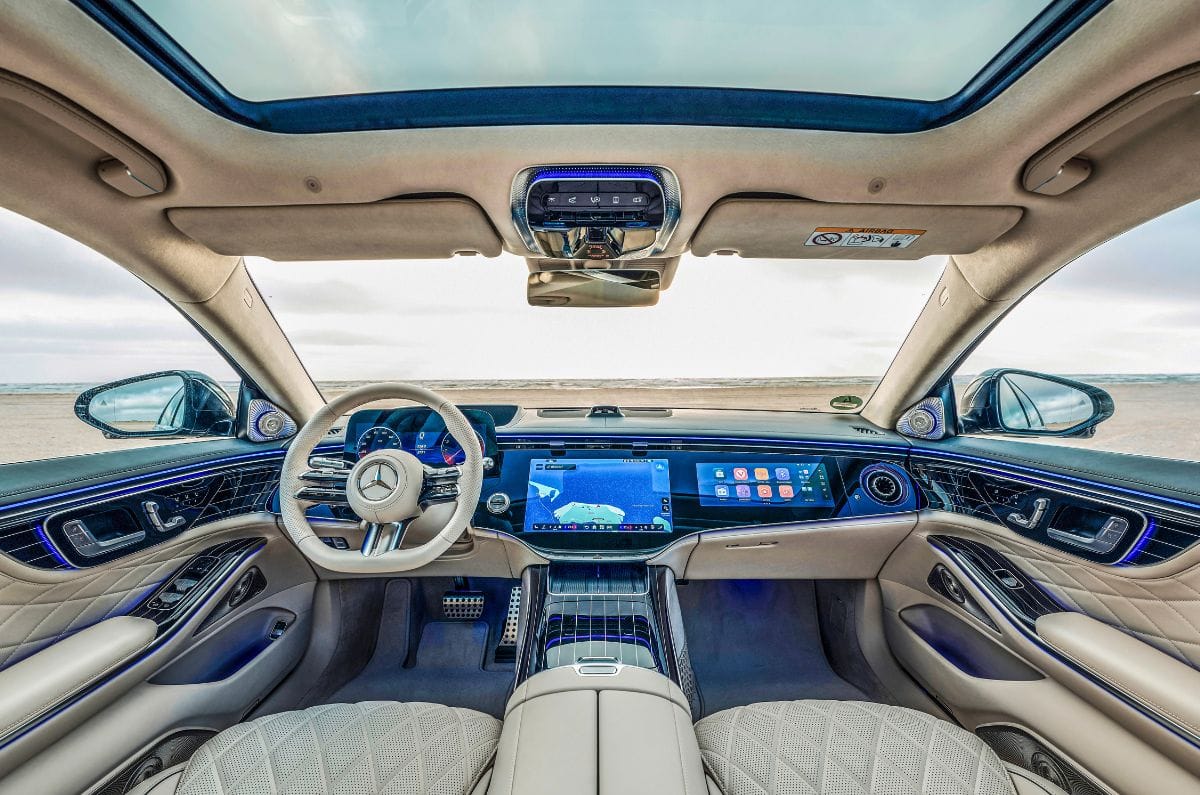
More dramatic changes are visible from the driver’s seat. The old portrait-style central screen has made way for a “Superscreen” layout which is a 12.3-inch digital instrument cluster, a 14.4-inch central touchscreen and a 12.3-inch passenger display mounted behind a single glass surface. All of this runs on the new MB.OS software, with revamped graphics and noticeably snappier responses thanks to the more powerful hardware.
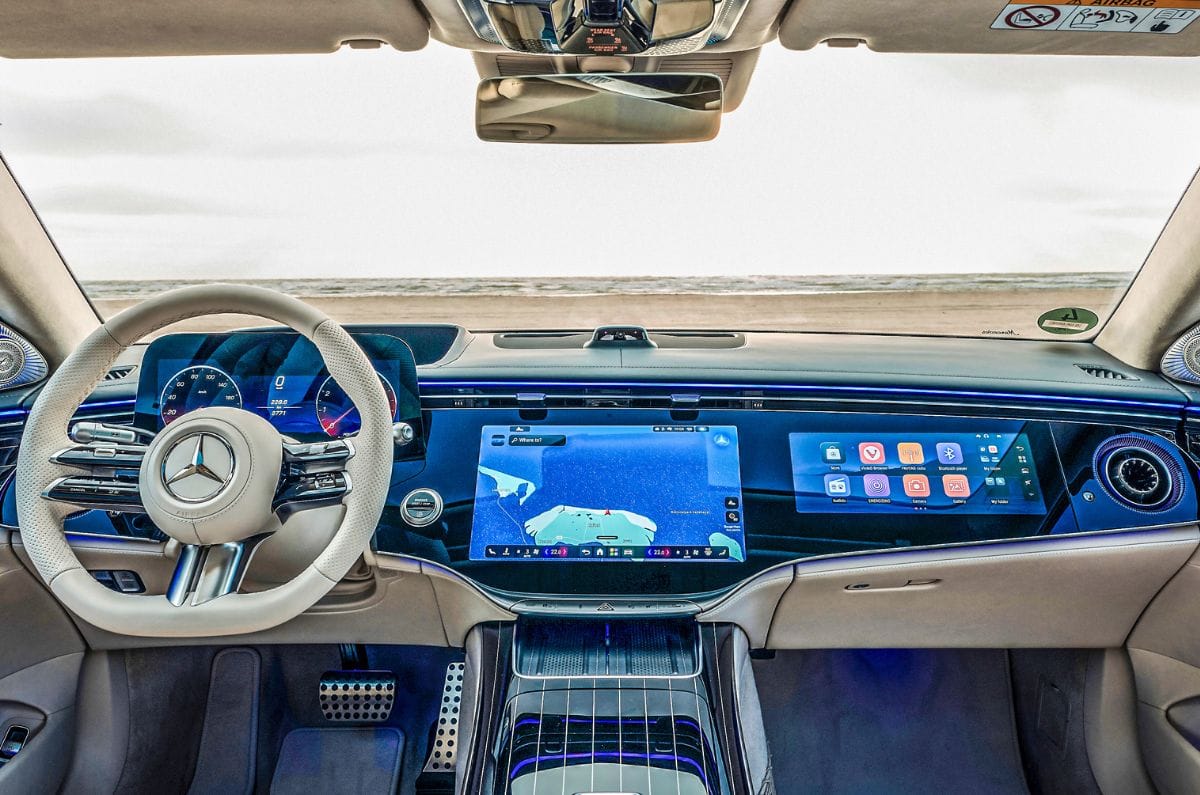
There is an extensive feature set built into the system, including customisable themes, a wide palette of ambient lighting colours and in-car apps and games. However, some core functions are now buried deeper in the screen. The climate controls and even the adjustment of the central air vents are handled via the touchscreen, which can be less intuitive than physical knobs and sliders, especially on the move. The side vents, at least, remain manually adjustable and can be fully shut off.
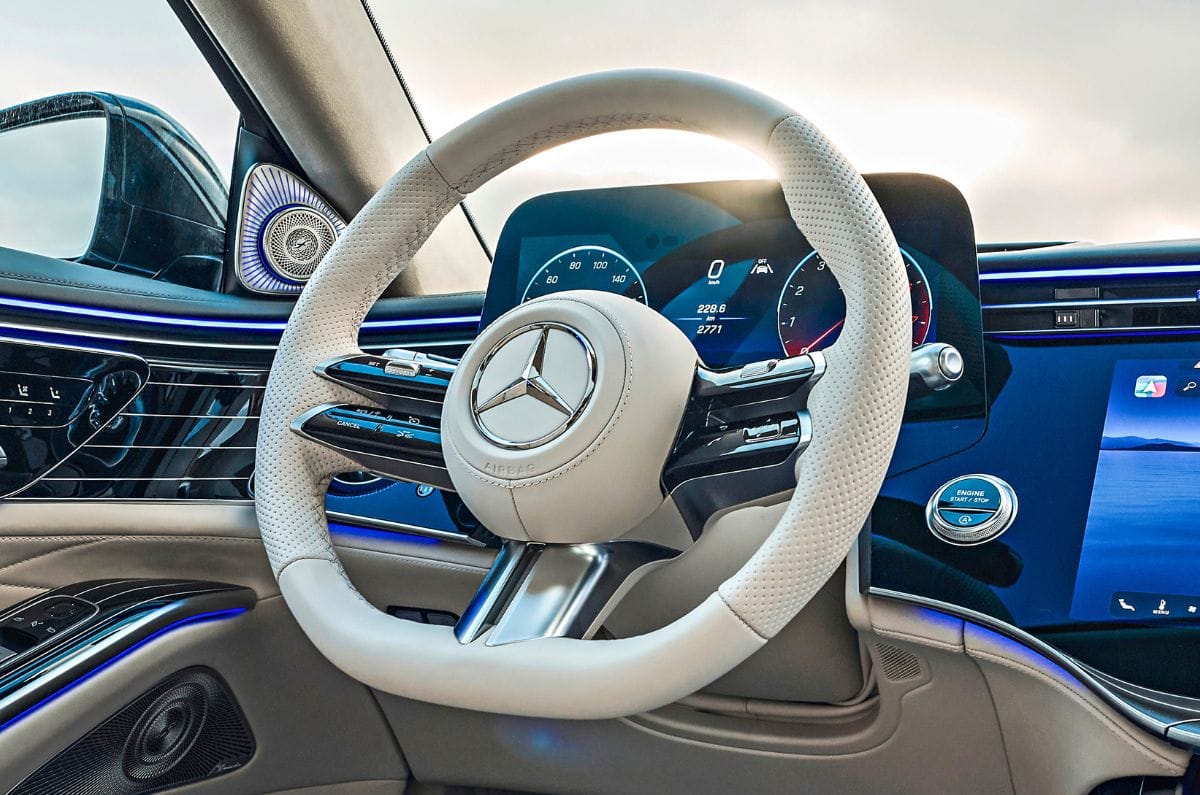
Mercedes has responded to criticism of its earlier all-touch approach by bringing back a few physical controls. The volume roller, cruise control toggle and some key shortcuts now have proper tactile feedback, which is a step in the right direction. The steering-wheel touchpads have also been refined and are less fiddly than before, though they still demand a little acclimatisation. On the plus side, the voice assistant works well and can be used to bypass menus for common tasks, reducing the need to dig through layers of the interface.
2026 Mercedes-Benz S-Class Performance and Refinement
Under the bonnet, the facelifted S-Class gets a revised family of six-cylinder engines and a stronger push towards electrification. For India, the headline will be the new S 450e plug-in hybrid, which will be offered with the facelift. It pairs a turbocharged 3.0-litre inline-six with an electric motor for a combined output of 435hp and 680Nm, and uses a 22kWh battery that is claimed to deliver up to 100km of pure electric range uin ideal conditions.
That figure is significant, because it allows the car to be used as an EV for most urban commutes while retaining the flexibility of an engine for longer runs. Above this sits the S 580e in some markets, with a higher combined power output, but this variant is not expected to come to India. The plug-in system itself is smooth in operation, with the transition between electric and combustion modes handled unobtrusively, and it also serves a strategic purpose for Mercedes in India, offering a low-emissions flagship alternative at a time when the EQS has not met expectations in the market. We only drove the 580e which was absurdly fast and gathered so rapidly and smoothly that you almost don’t notice how fast you are going. The 450e which is coming to India maybe less potent but will have the same mix of delivering cheek pressing acceleration in a linear and stepless way
Alongside the plug-in hybrid, the S-Class continues with conventional petrol and diesel power, though its unclear if the diesel will make it to showrooms in India.
The S 450 petrol which will be the main stay of the range uses a 3.0-litre six-cylinder mild hybrid engine producing a healthy 404hp in its latest guise, updated to meet upcoming EU7 and future BS7 emission norms. It remains characteristically smooth and quiet, delivering its performance in a measured, progressive way rather than with aggressive bursts of acceleration. At typical highway speeds, the engine is barely audible and spins at low revs, reinforcing the S-Class’ brief as a low-stress luxury car. Road and powertrain noise are very well contained, though there is still a trace of wind rustle around the A-pillars at higher Autobahn speeds.
2026 Mercedes-Benz S-Class Expected Price and Verdict
For India, the combination of a high-spec plug-in hybrid system and a large-capacity six-cylinder engine comes with a cost implication. The hardware is complex and heavy, and hybrids currently do not enjoy any tax breaks here, unlike full EVs. As a result, the S 450e is likely to be positioned considerably higher than standard petrol and diesel S-Class, with indicative estimates placing the facelifted range in the Rs 1.85–2 crore ex-showroom band once it arrives here.
However, in the rarefied segment the S-Class operates in, that increase is unlikely to be a deal-breaker. For many owners, the additional outlay over the outgoing car will amount to little more than pocket change, especially when weighed against the extra technology, capability and perceived status of having the latest model.
What this facelift does, essentially, is move the S-Class further down the path of being a highly digital, software-defined luxury car, while keeping its core strengths of comfort, refinement and rear-seat luxury intact. Purists may miss the simpler, more analogue interface of older generations, and not everyone will warm to the larger, more ornate grille. But for buyers looking for cutting-edge tech and a genuinely cosseting back seat in one package, the updated S-Class still remains the reference point and benchmark for luxury sedans.