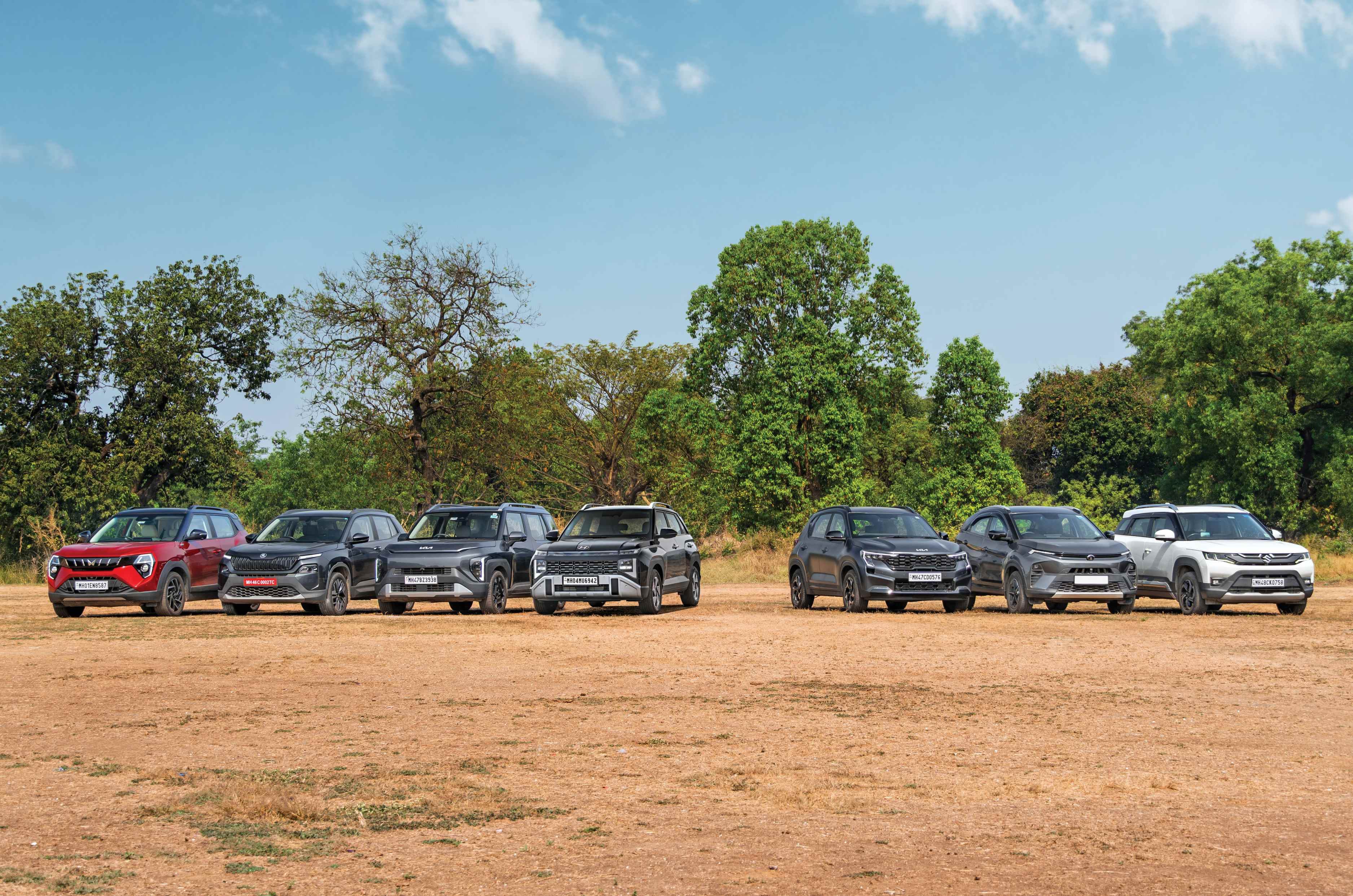

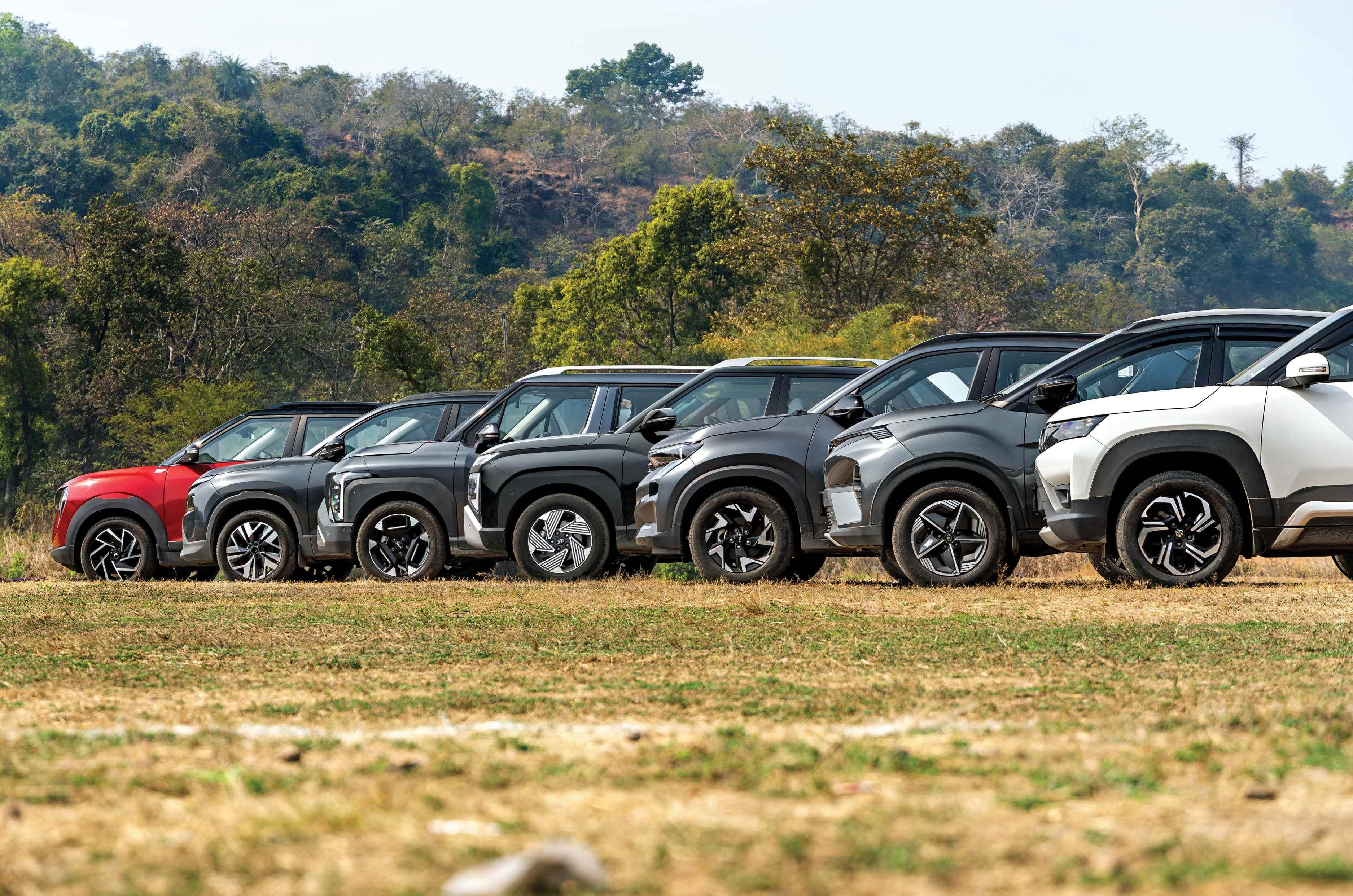
The compact SUV space is India’s most crowded segment, with no fewer than seven contenders measuring just under four metres in length. Largely owner-driven, these cars are expected to be practical, user friendly and feature packed, while also delivering a strong dose of aspirational appeal. Hyundai has now introduced the second-generation Venue, built on an all-new platform and designed to build upon the strengths of its predecessor. But does it stand tall against its fiercest rivals? To find out, we’ve lined it up against the Maruti Brezza, Tata Nexon, Kia Sonet, Skoda Kylaq, Mahindra XUV 3XO and Kia Syros.
Compact SUV comparison: Dimensions and price
Dimensionally, the differences between these SUVs are marginal. The Brezza is the tallest of the lot, while the XUV 3XO is the widest and boasts the longest wheelbase. Ground clearance honours go to the Nexon at 208mm, with the Kia Sonet close behind at 205mm.
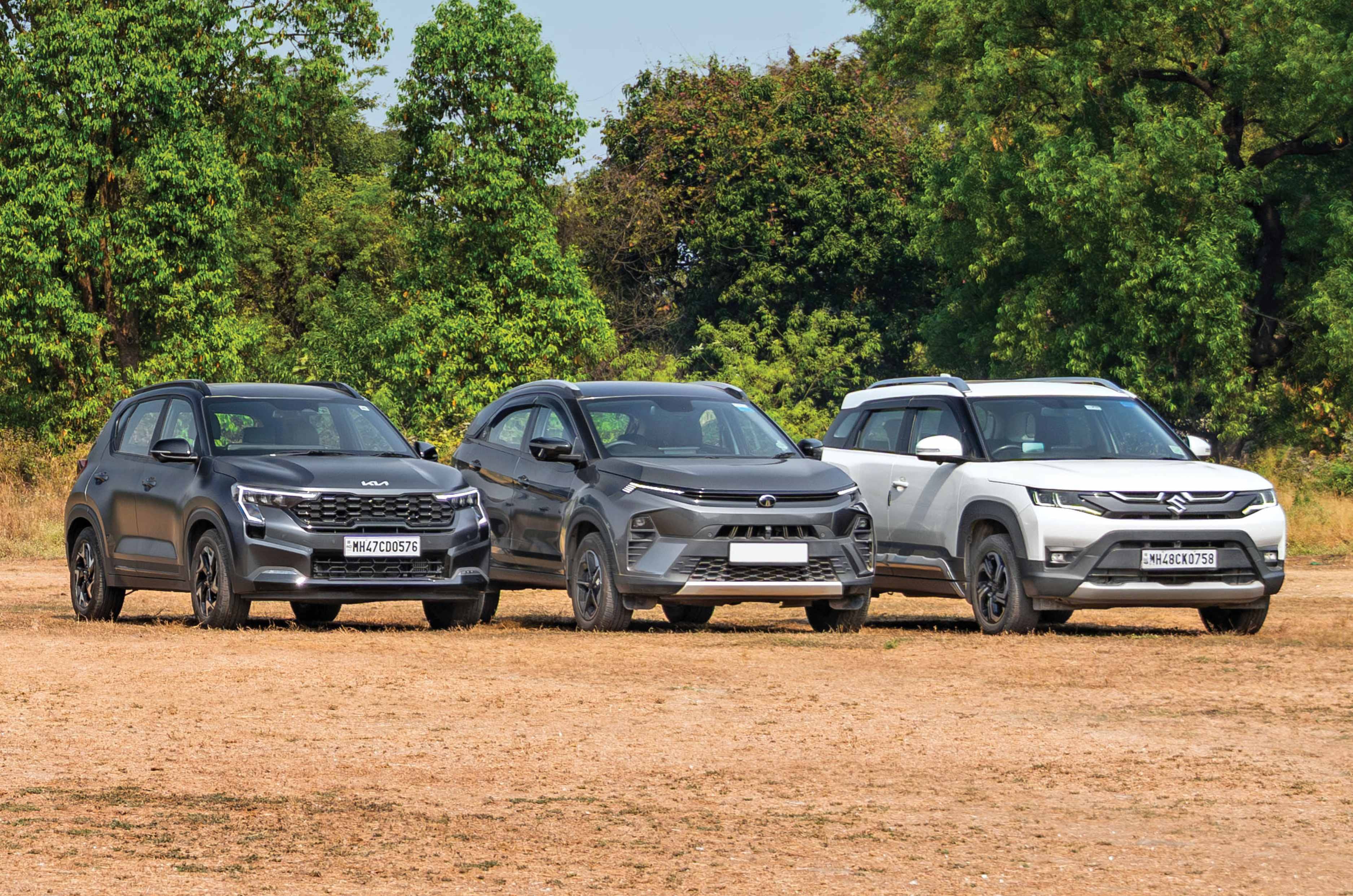
The Tata Nexon is the most affordable of these turbo-petrol automatic SUVs. While it can be had with a 6-speed AMT, priced between Rs 8.78 lakh and Rs 10.98 lakh, we’ve chosen the more premium 7-speed dual-clutch automatic for this comparison, which costs between Rs 11.16 lakh and Rs 13.53 lakh. The Skoda Kylaq undercuts most of the rest with an attractive automatic starting price of Rs 9.25 lakh, topping out at just Rs 12.99 lakh.
Mahindra has also managed to keep the XUV 3XO automatic’s starting price under Rs 10 lakh, at Rs 9.71 lakh, though that’s for the less powerful MPI turbo-petrol engine paired with a 6-speed torque converter. The more potent GDI turbo AT we’re testing is priced between Rs 12.84 lakh and Rs 14.55 lakh, placing it among the pricier options here.
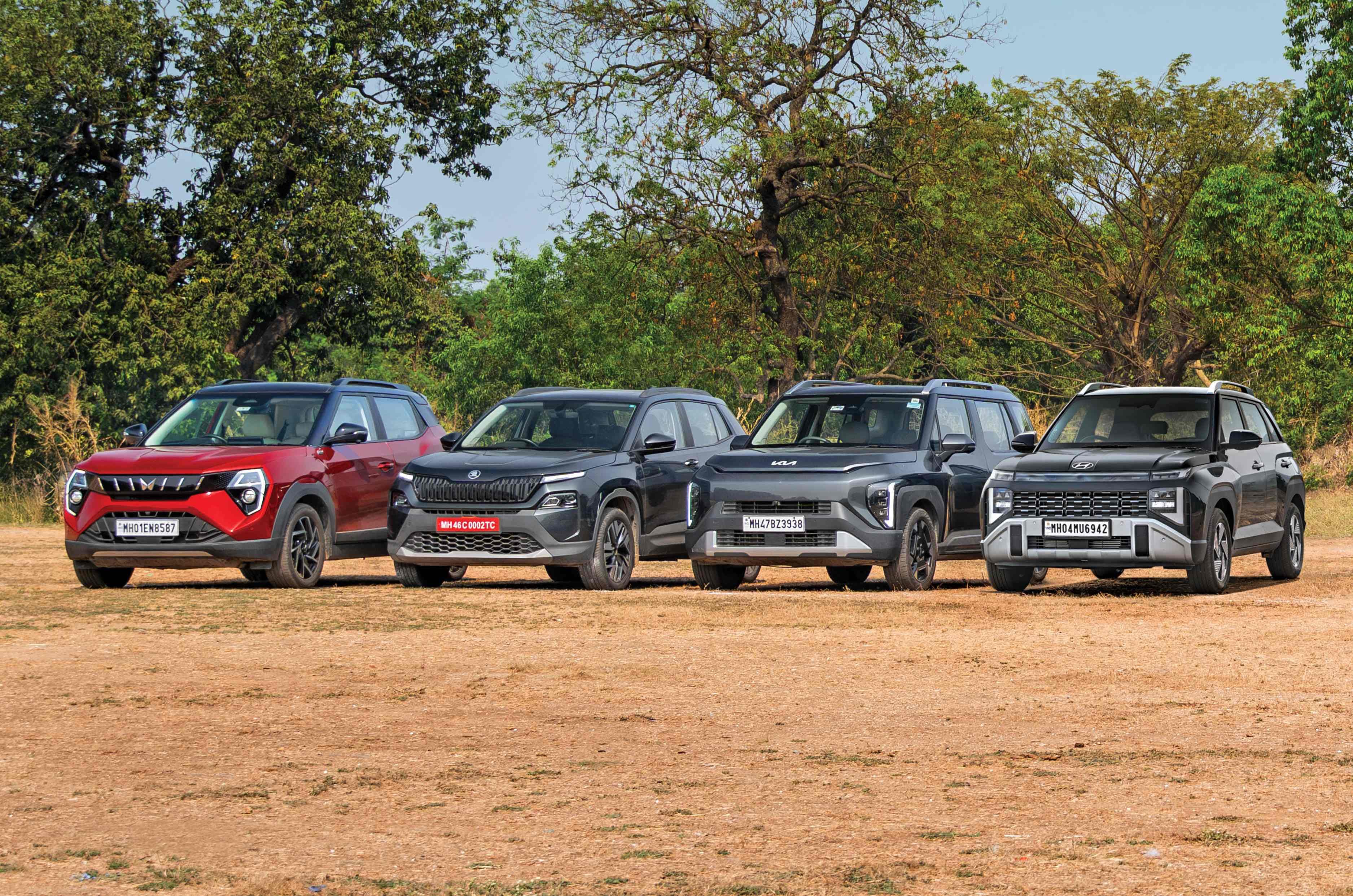
Thanks to its larger 1.5-litre petrol engine and the resulting higher tax bracket, the Maruti Brezza’s automatic variants are priced between Rs 10.60 lakh and Rs 12.85 lakh.
The Hyundai Venue, the newest entrant in this comparison, is offered in both standard and N Line guises, though both share the same 1.0-litre turbo-petrol engine and 7-speed dual-clutch automatic. For this test, we’ve chosen the standard version, priced between Rs 10.82 lakh and Rs 14.56 lakh.
The Kia siblings command the highest starting prices. The Sonet turbo-DCT begins at Rs 9.89 lakh and tops out at Rs 13.65 lakh, while the Syros starts at Rs 11.93 lakh and stretches all the way to Rs 15.29 lakh, making it the most expensive SUV here, and Rs 73,000 pricier than the top-spec Venue.
Compact SUV comparison: Interior
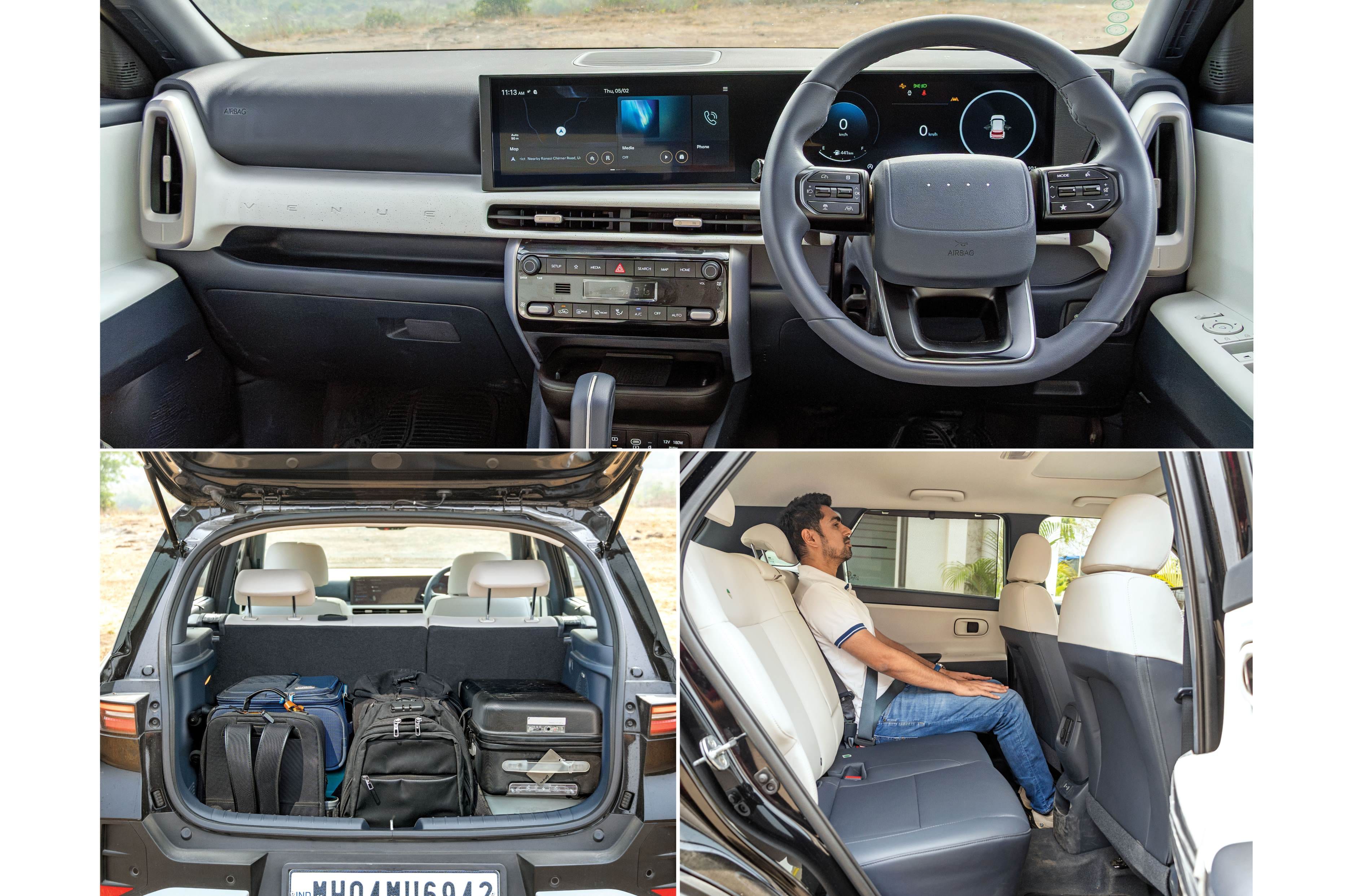
The Venue’s interior ambience has significantly improved over the outgoing version, with a noticeable step up in quality, fit and finish. Its new twin-screen setup is thoroughly modern, and thanks to better packaging and a 20mm longer wheelbase, its cabin feels more spacious than before, particularly at the rear. 6-footers can sit one behind another in reasonable comfort.
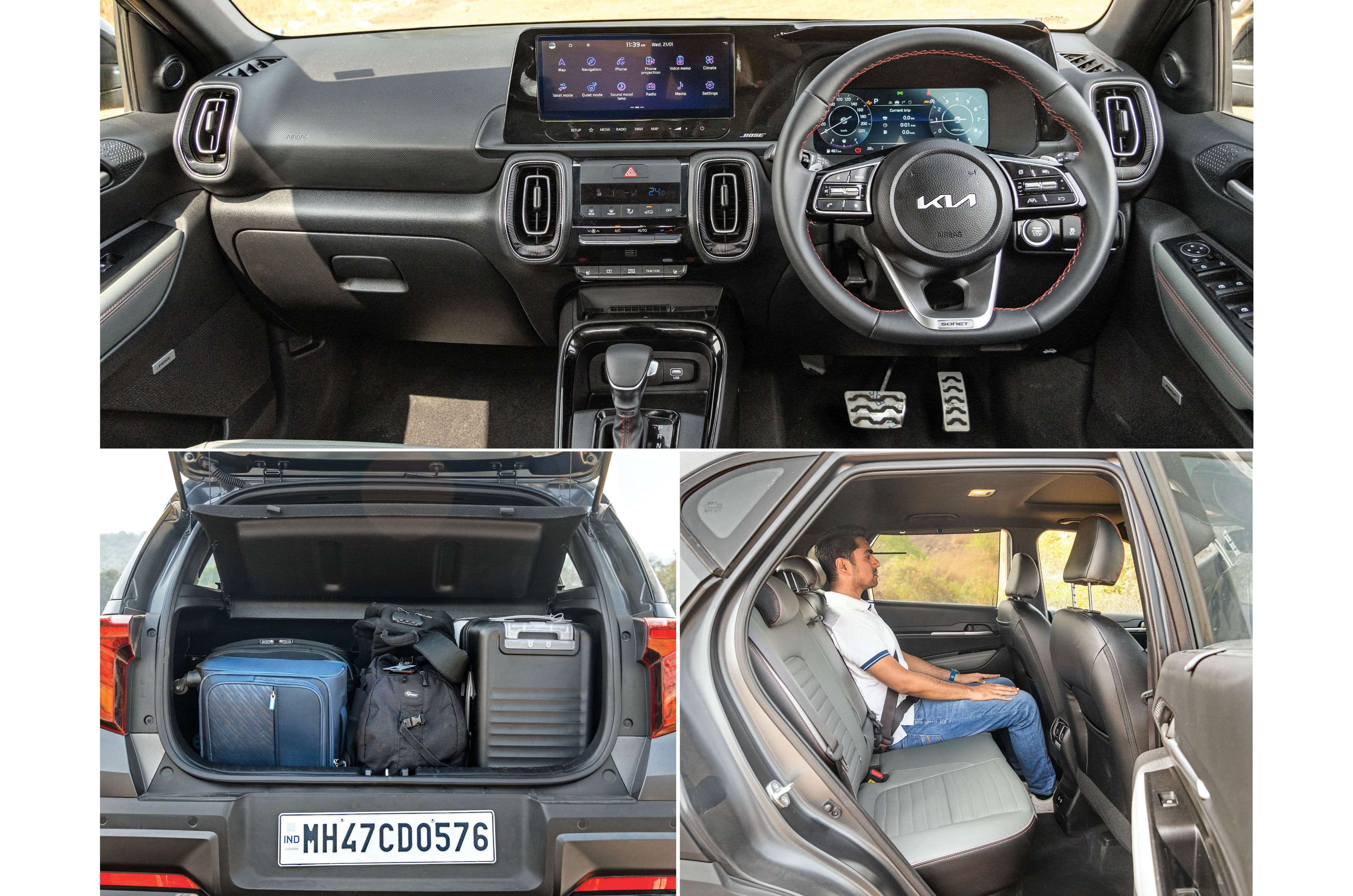
The Kia siblings, however, have a distinct edge in terms of sheer cabin quality and an overall premium feel. When it comes to the tactility of switches, buttons and controls, the feel of the air vents, and just cabin finesse overall, the Syros and Sonet are hard to beat. The Syros’ newer Electrical/Electronic (E/E) architecture (shared with the Venue) gives it a considerable edge, as do its boxy dimensions. The space and even the sense of space can match cars from a class above, and its largest-in-class panoramic sunroof exacerbates that effect. Its flexible rear seat, which slides and reclines, makes it the winner on space and comfort. Shoulder room is the most, and the seat is comfy to seat three abreast, although the centre seat doesn’t get an adjustable head restraint.
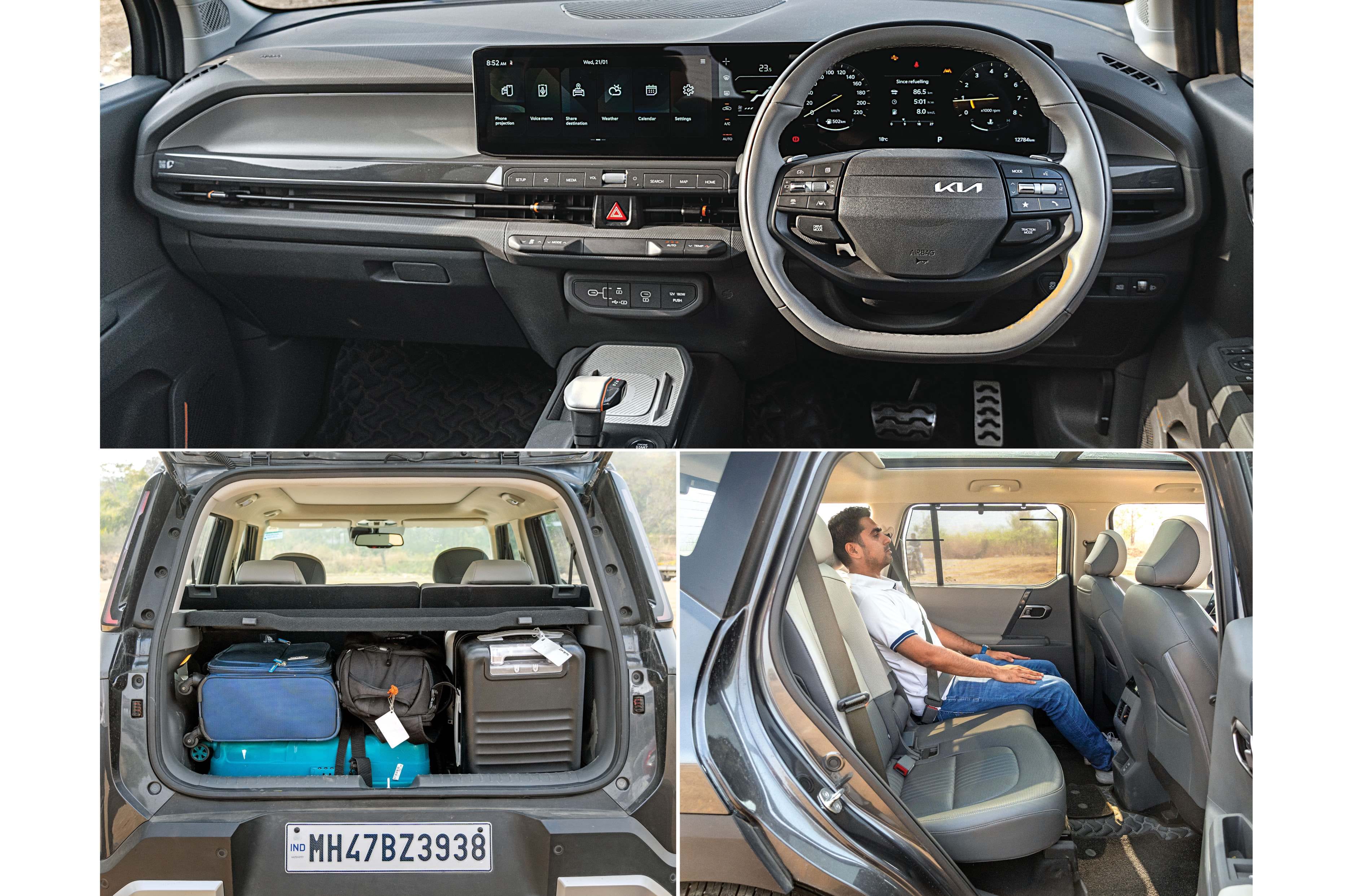
Mahindra has dressed up the XUV 3XO’s cabin with light upholstery and soft-touch materials, which add to its premium appeal. However, its dashboard design reveals the age of the underlying platform. Its front seats aren’t large enough to support those with broader frames, but on the other hand, its back seat is among the comfiest, particularly to accommodate three adults abreast.
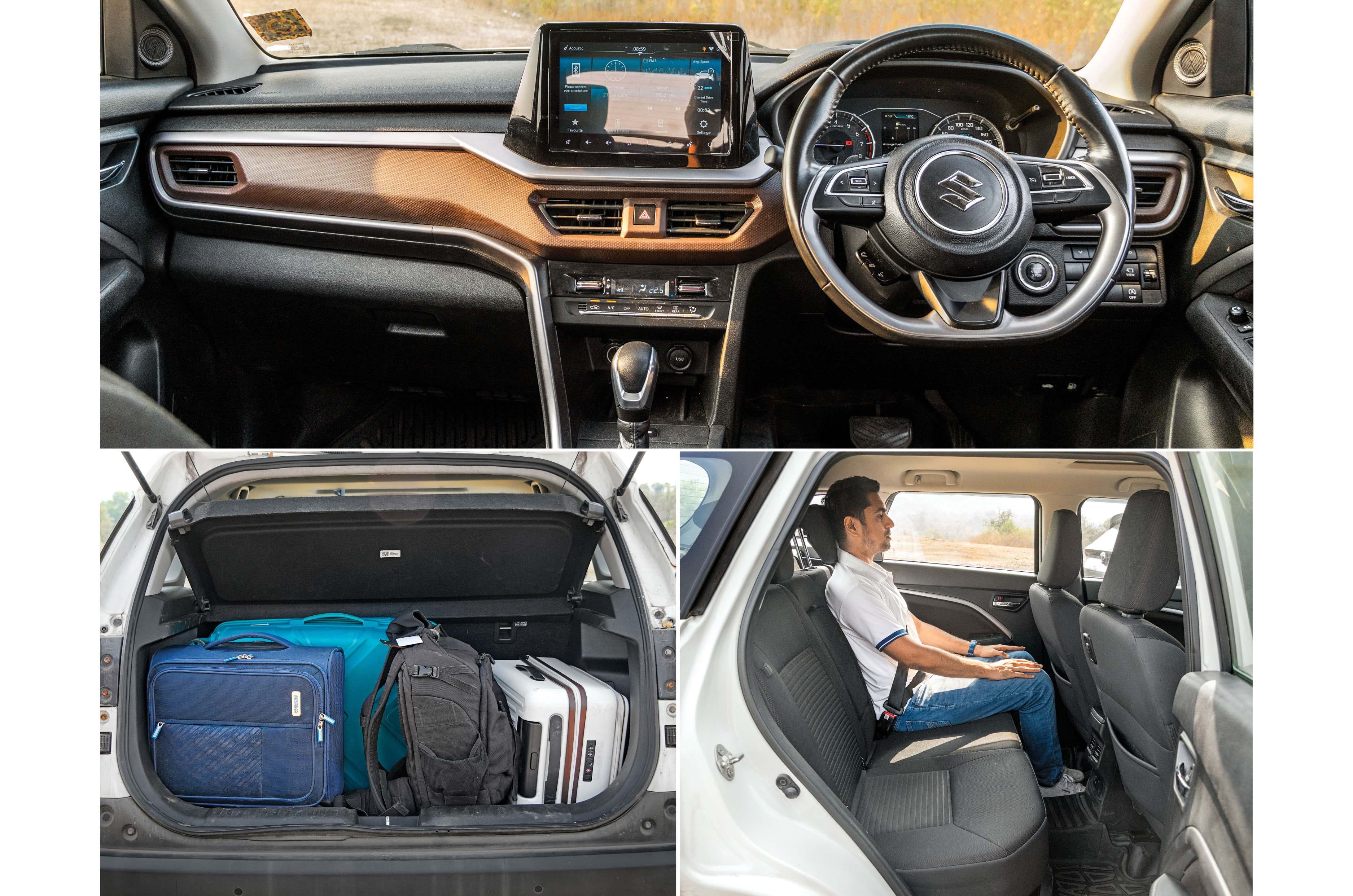
Skoda’s Kylaq delivers that familiar European solidity, right down to the reassuring door thud. Several bits are borrowed from its larger, pricier siblings – the Kushaq and Slavia – such as the steering, instrument cluster, touchscreen, as well as the climate control console with touch sliders. Its front seats are among the nicest and the most supportive in this company, and even though the heavily sculpted rear seats themselves are very comfortable for two adults, space at the back is the least.
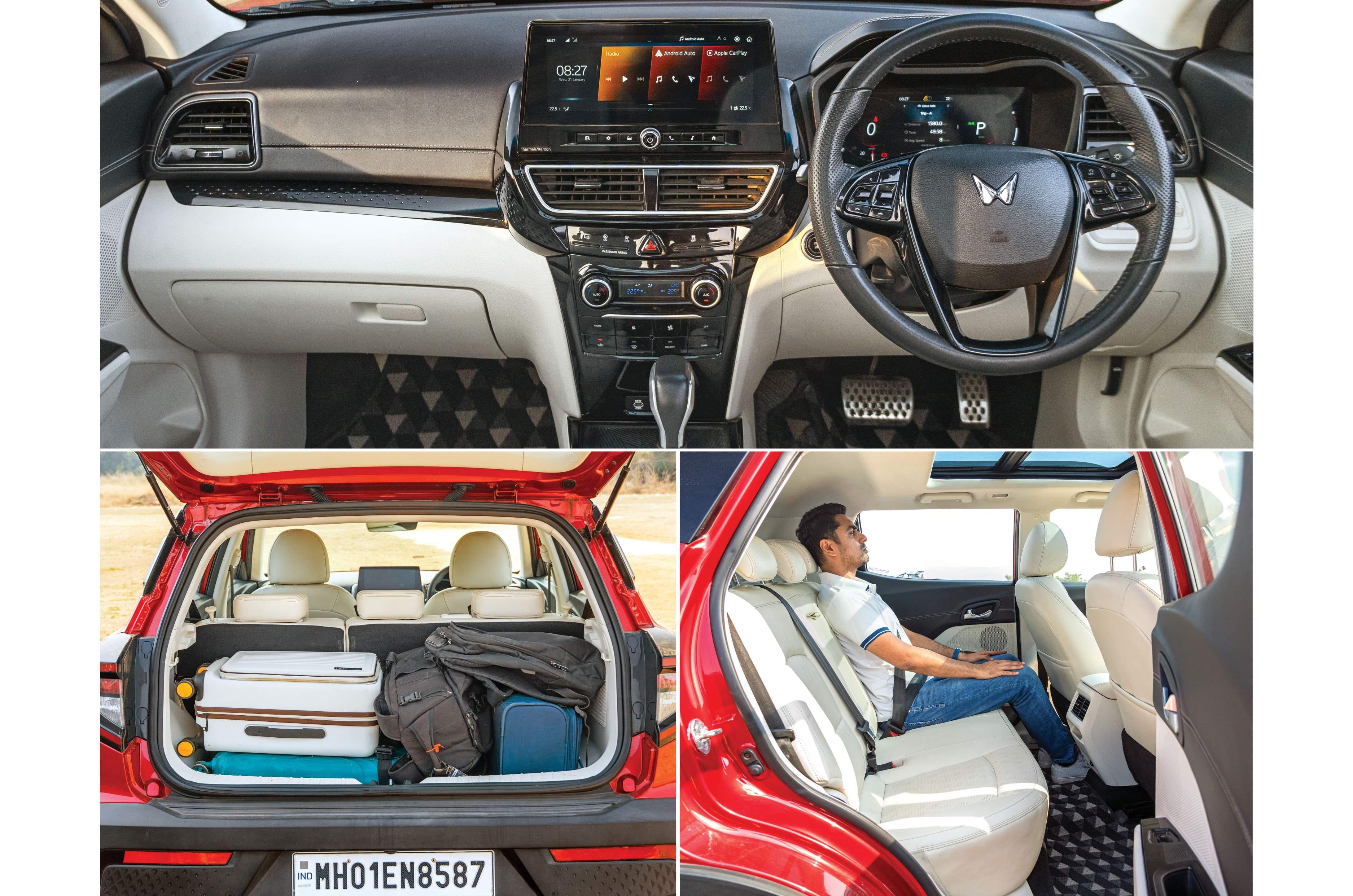
Tata has worked consistently to keep the Nexon relevant, borrowing several elements from its newer, more premium offerings. While this does elevate its appeal, limited storage, average seat support and some ergonomic shortcomings stand out in this comparison. The sloping roofline and dark interior further reduce the sense of space, and although width is adequate, the sculpted rear backrest makes it more comfortable for two rather than three adults.
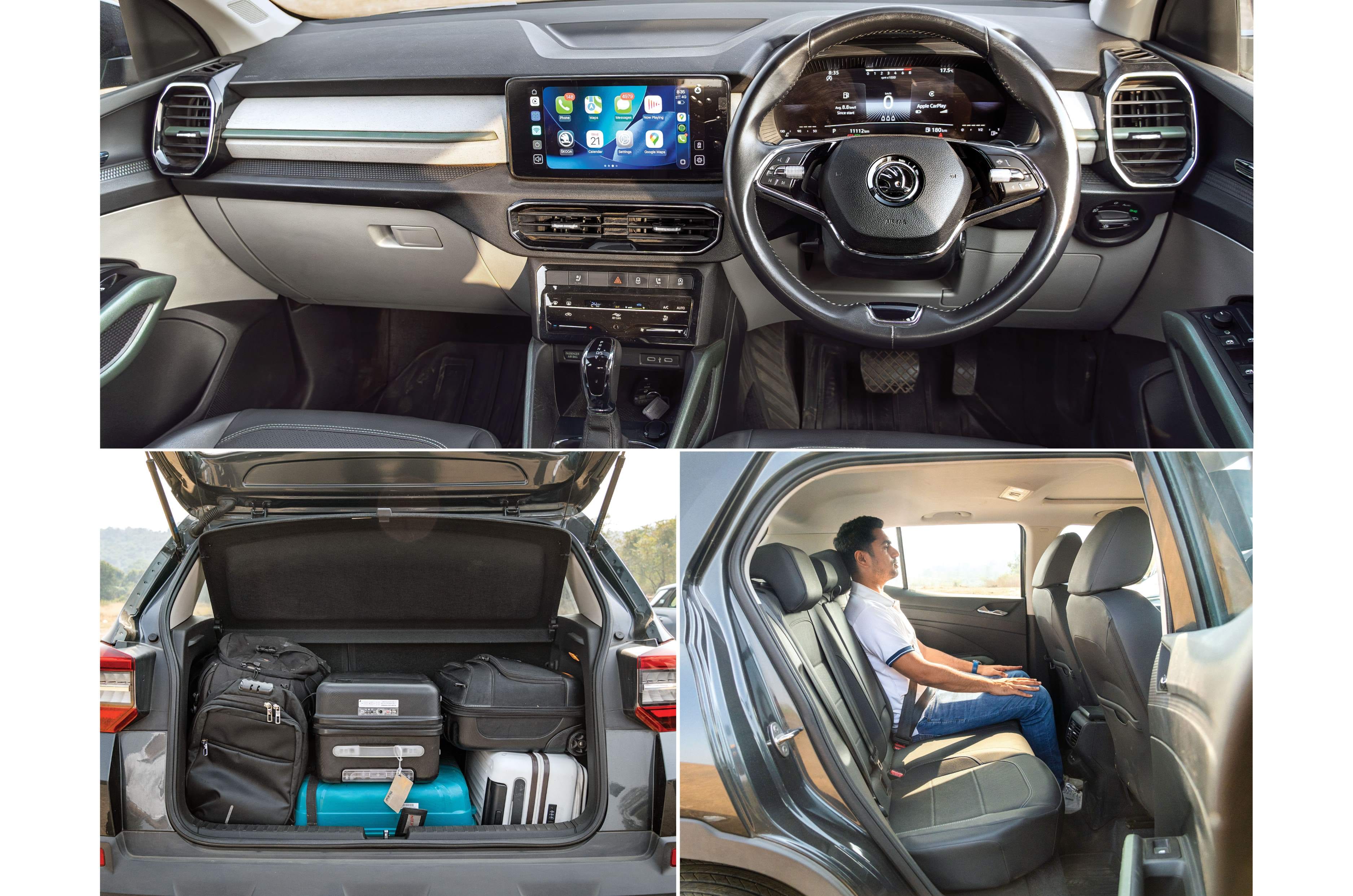
The Brezza takes a more functional, fuss-free approach. It may not dazzle with technology, but its excellent ergonomics, large and comfortable seats and generous rear space make it one of the most user-friendly cabins here. It can seat three abreast comfortably, although it lacks a centre head restraint.
Compact SUV comparison: Boot space
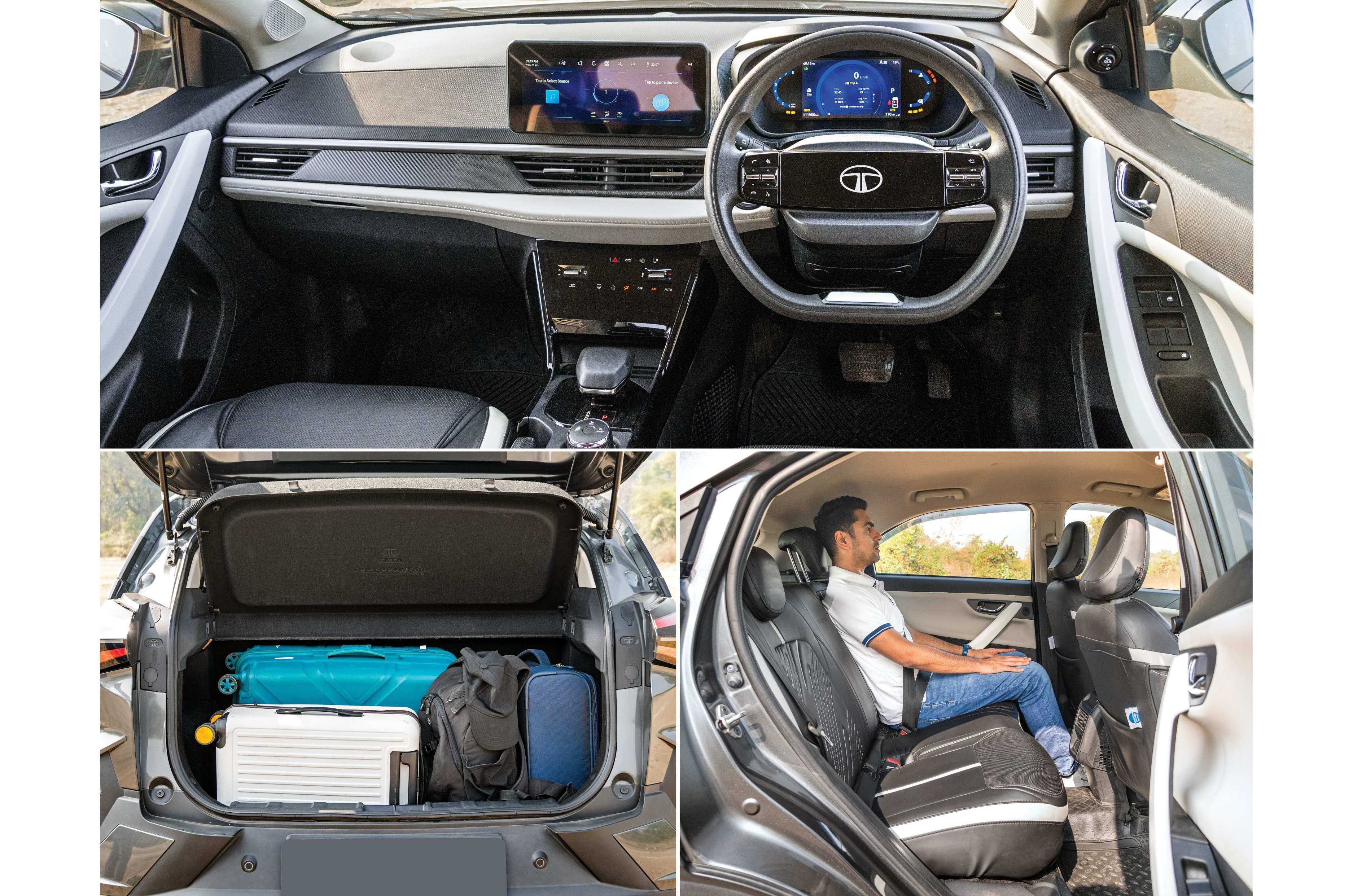
On paper, the Syros offers the largest boot thanks to its sliding rear seats. Our measurements reveal that it has the deepest boot, the Venue’s is the widest, and the Kylaq offers the most height up to the parcel shelf. The Kylaq also has the lowest loading lip, making it the easiest to load heavy luggage into.
In a real-world luggage test, the Syros, Sonet, Venue and Kylaq impressed by accommodating one medium suitcase, four cabin bags, a backpack and a laptop bag. The remaining SUVs couldn’t match this haul but still managed to fit a medium suitcase, two cabin bags and a backpack.
Compact SUV comparison: Features
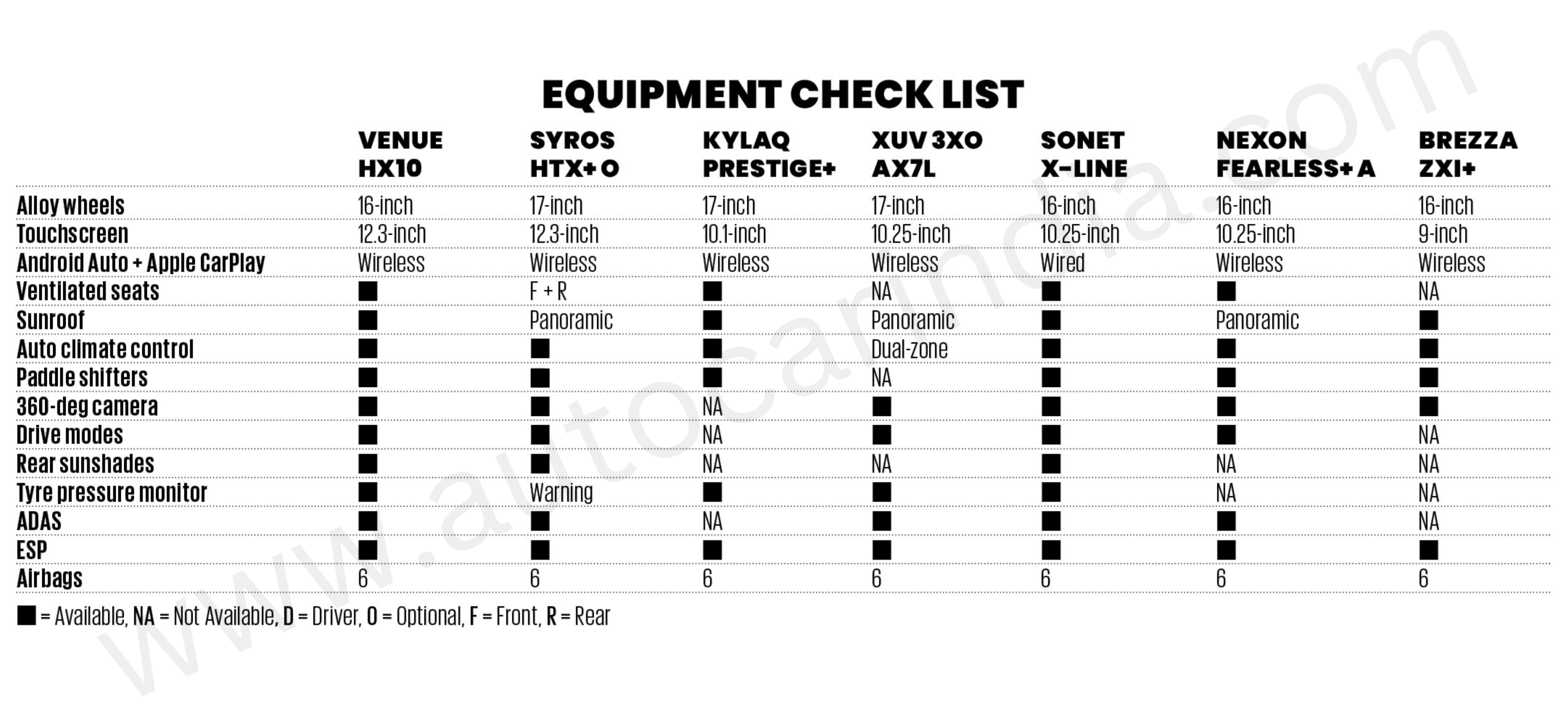
At the top-spec level, feature lists are broadly similar (see box), but the details set them apart. The Kia Syros emerges as the most comprehensively equipped, thanks to highlights such as rear seat ventilation and adjustable rear seating. While even the XUV 3XO and Nexon offer panoramic sunroofs, the Kia’s is the largest. The Brezza and XUV 3XO miss out on ventilated seats, the Kylaq lacks a 360-degree camera and has a sub-par reversing camera display, and while all others offer wireless connectivity, the Sonet still gets wired Android Auto and Apple CarPlay. Paddle shifters are absent on the XUV 3XO, while ADAS is missing on the Kylaq and Brezza.
Compact SUV comparison: Performance
The Hyundai Venue, Kia Sonet and Kia Syros share their 120hp, 172Nm 1.0-litre 3-cyl turbo-petrol engine and 7-speed dual-clutch automatic transmission. This is a friendly powertrain option that’s smooth, refined, and feels at home on the open road. In bumper-to-bumper traffic, though, the gearbox can feel a touch hesitant, particularly while downshifting. Thankfully, all three cars get paddle shifters for manual control. All three cars also get drive modes (Eco, Normal and Sport) to alter performance.
As far as acceleration times go, the Venue and Sonet perform similarly and rank at number four and three, respectively, in this company. The Syros is around 90kg heavier than the Sonet, and its outright acceleration feels noticeably blunted; as a result, the Syros accelerates to 100kph from a standstill in 13.62sec – 2.1sec slower than the Sonet, and ranks sixth out of seven here.
The quickest car in this company is unsurprisingly the Mahindra XUV 3XO, which is powered by a 131hp 230Nm 1.2-litre turbo-petrol engine mated to a 6-speed torque converter. A hallmark of Mahindra SUVs, throttle responses feel sharp, and even though this engine doesn’t feel as rev-happy as some others here, its strong mid-range performance lends it an enjoyable and effortless character. This 3-cylinder unit’s refinement further impresses. The automatic is smooth in its operation, although downshifts are quite conservative, and that’s when you’d long for paddle shifters for manual control; it does at least get a tiptronic mode. The XUV 3XO completes the 0-100kph sprint in just 11.10sec.
The Kylaq, with its 115hp 178Nm 1.0-litre turbo-petrol and 6-speed torque converter, is just 0.2sec slower. Its TSI engine punches above its weight and feels significantly stronger than its numbers suggest. Furthermore, its strong mid-range and paddle shifters add to the engagement. However, compared to the Mahindra, this powertrain doesn’t feel as responsive, especially at low speeds. Also, the Kylaq’s engine is noticeably noisier in comparison.
Interestingly, Tata’s 120hp 1.2-litre turbo-petrol and 7-speed dual-clutch automatic combination accounts for less than 4 percent of total Nexon sales. It is a shame, because this is the nicest and smoothest version of the Nexon. The gearbox nicely complements the engine’s character and irons out the inconsistencies in its power delivery well. Sporty, it isn’t, and it’ll hesitate before downshifting to avoid any sudden spikes in performance. And even if you use the paddles, it will not oblige with aggressive downshifts. Refinement isn’t the Nexon’s strong suit either, and you can feel vibrations inside the cabin at idle and at low speeds.
Going against the tide, the Brezza is the only one to be equipped with a 1.5-litre four-cylinder naturally aspirated petrol engine, and while it produces the lowest output – 103hp and 137Nm – as far as drivability goes, it does a fine job. This engine is responsive in urban conditions, and the 6-speed torque converter makes for a seamless drive experience. That said, demand more of it, and its weakness shows. Mid-range performance is flat, especially in this company of turbo-petrol offerings, and while this motor feels quite rev-happy, it gets very vocal, which detracts from its otherwise refined nature. Outright acceleration, too, is the slowest here.
Compact SUV comparison: Ride and handling
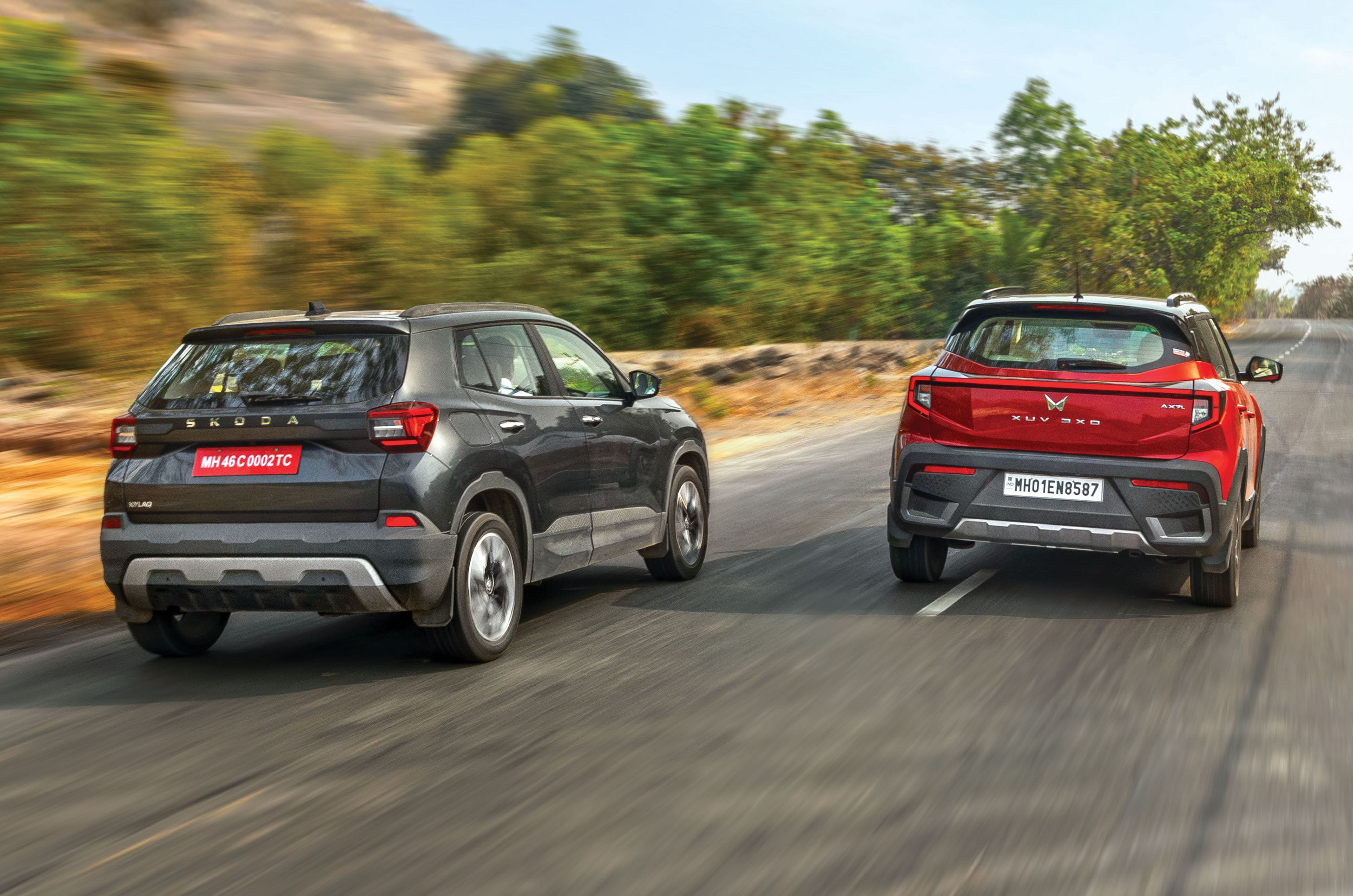
Mahindra has nailed the XUV 3XO’s ride and handling balance, lending it mature driving manners. A hallmark of a Mahindra SUV, the XUV feels tough, and is most capable of taking a beating. Its squat stance and good mechanical grip make it handle well, although its inert steering feel hampers the sporty feel to some extent.
Speaking of sporty, it is the Kylaq that is clearly the better driving car in this company. Its chassis feels taut, suspension feels well balanced, and its steering weighs up reasonably well to infuse confidence in the driver while pushing hard around corners.
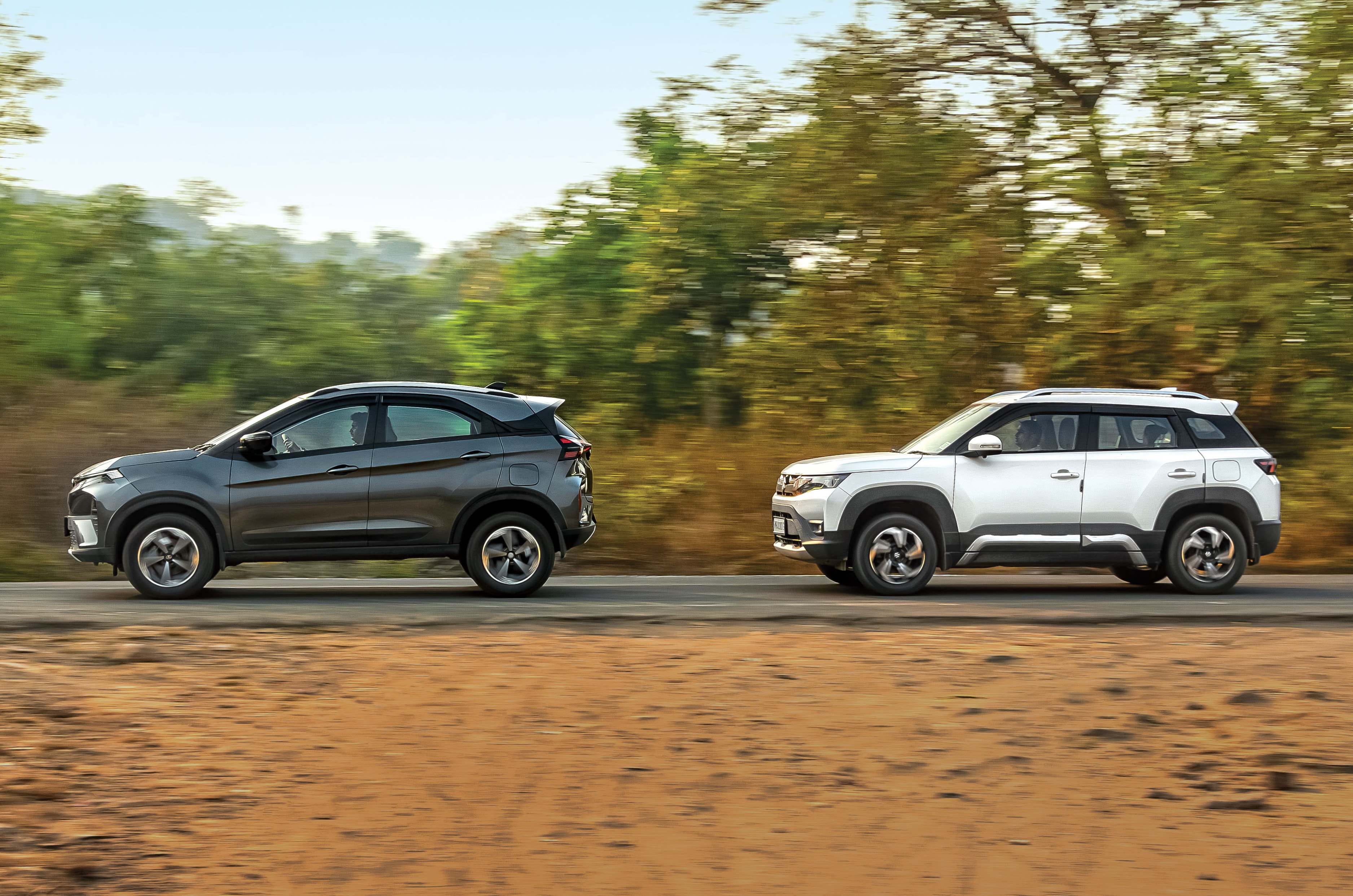
Both the Brezza and Nexon exude an inherent toughness, which becomes apparent while tackling bad and broken roads. But while the Brezza’s low-speed ride comfort and bump-absorption capability are impressive, the Tata feels firm and a bit jittery. On the flip side, the Nexon feels very stable at high speeds, although its steering feels overly sharp, especially for the highway.
Even though the Venue and Sonet are built on different platforms, both feel very similar to drive, exuding an underlying firmness at low speeds and a composed ride at high speeds. The Syros’ setup feels a touch softer than the Venue’s and seems like it is tuned more towards comfort than sportiness. That said, the suspension of these three cars doesn’t feel as well-cushioned as the other four rivals. As far as handling goes, they feel quite predictable, with the Syros exhibiting a bit more body roll around corners on account of its tall stature and softer setup.
Compact SUV comparison: Verdict
Being among the oldest models in this group, the Maruti Brezza is beginning to show its age. And while it remains very user friendly, thanks to its excellent ride quality, spacious cabin and friendly power delivery, its naturally aspirated engine simply can’t match the performance or effortless cruising ability of its turbocharged rivals. Still, the Brezza remains one of the most practical options here, and with Maruti’s widespread service network backing it up, it’s a car you can rarely go wrong with. Plus, with a facelift inbound soon, its appeal is sure to go up.
There’s little the Tata Nexon does wrong, too. It remains the only car here with the widest powertrain choices – turbo-petrol, CNG, diesel and even electric. But from the ICE range, it feels best with the turbo-DCT combination. Over the years, the Nexon has evolved well, now packing in modern must-haves like large screens, seat ventilation and a panoramic sunroof. Despite this, like the Brezza, its design and cabin now feel a touch dated in this company.
The Kia Sonet may also have been around for a while, but it continues to feel among the most polished and sophisticated offerings here. Interior quality, features list, boot space and powertrain performance are all strong points, and the Sonet exudes a sense of finesse. The only real drawback is its relatively tight rear seat, which could be a deal-breaker for family buyers.
The XUV 3XO is on the pricier side. But typical of a Mahindra, not only does it feel tough and well-built, its ride and handling balance feels spot on. The cabin is among the most spacious here, and its outright performance is the strongest of the lot. While the XUV is one of the few cars to get a panoramic sunroof, it still misses ventilated seats and paddle shifters, and even though it has two screens, they don’t look as contemporary as rivals’.
For those who want ‘big-car-like space’ in a sub-4-metre footprint, the Syros is an impressive package. Space and practicality are its strengths, and features like sliding and reclining rear seats with ventilation, along with the largest panoramic sunroof here, make it the best-equipped car of this group. While its performance isn’t as strong as others, what could deter buyers are its exorbitant price tag – the loftiest here, as well as its design, which isn’t universally appealing.
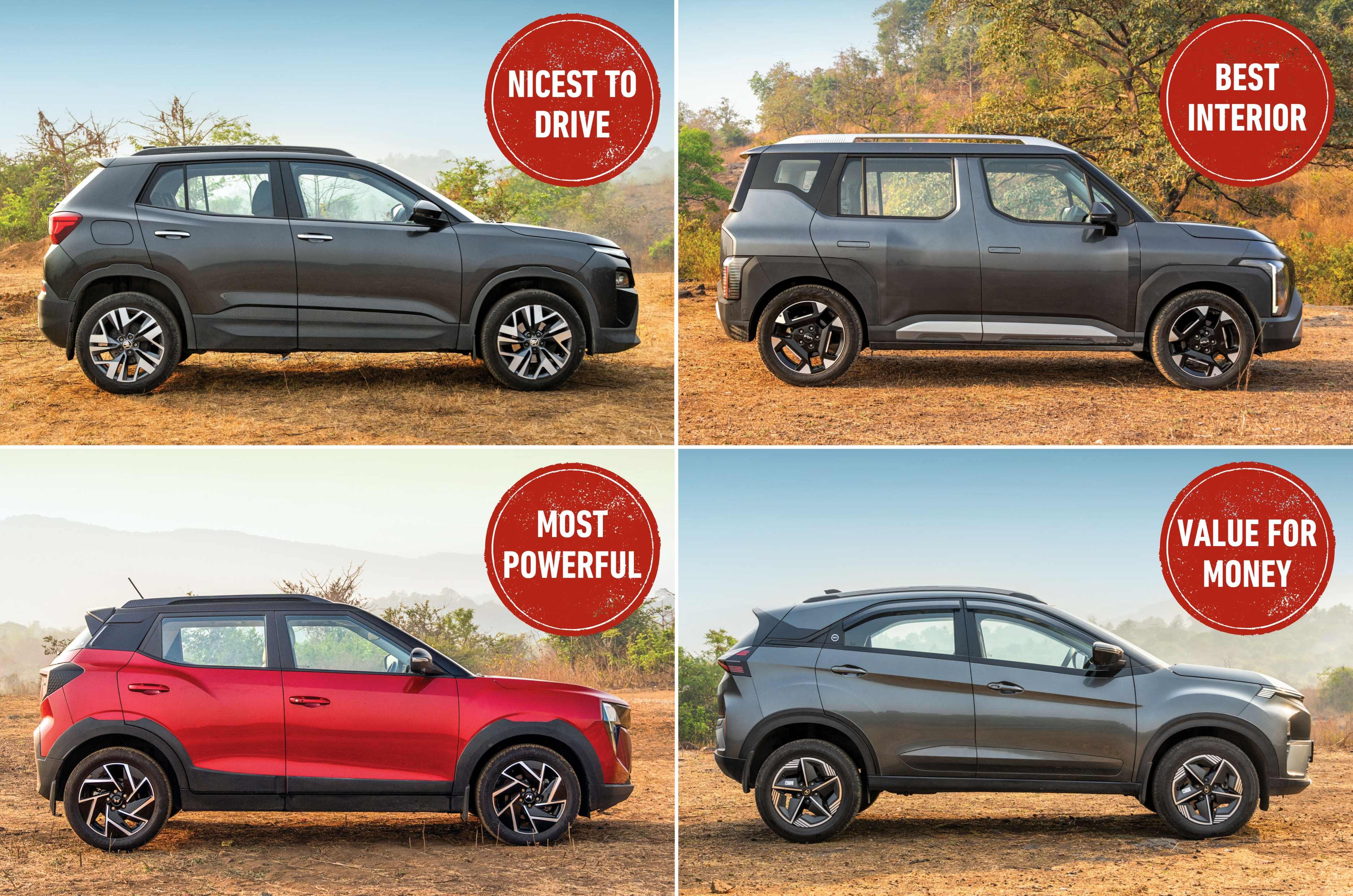
The Skoda Kylaq’s excellent dynamics will make it appeal to those who enjoy driving. Its tidy handling, strong engine-gearbox pairing and well-judged ride make it enjoyable behind the wheel. The front seats are among the best here, and while the rear seat is very comfortable for two adults, accommodating three will be a squeeze. Its top-spec variant is also the most affordable of the group, though it misses out on ADAS and a few other features.
The new Venue is a big step over the outgoing version, and as a result, its pricing has increased, making it among the pricier cars in this company. But the good news is that along with the latest tech and features, Hyundai has addressed one of the outgoing model’s biggest shortcomings, cabin space. Rear seat room is now on par with most rivals, boot space is generous, performance is adequate, and it drives well, too. The Venue may not pull out a huge lead over the others in any single area, but it does everything superbly. A true jack of all trades, its well-rounded nature makes it the winner of this comparison.
|
Hyundai Venue HX10 (Our choice) |
Skoda Kylaq Prestige+ |
Kia Syros HTX+(O) |
Mahindra XUV 3XO AX7L T-GDi |
Kia Sonet X Line |
Tata Nexon Fearless+ A PS |
Maruti Brezza ZXI+ |
|
|
Verdict |
A well-rounded, modern offering |
It is solidly built and easily the most fun to drive. |
Big on space and features, but is priciest too. |
Excellent ride-handling balance and has the strongest engine |
High-quality interiors make it feel like the most sophisticated here. |
Despite its age its cabin and features bring it up to speed with the times. |
Low on frills, but high on user-friendliness and practicality |
|
Rating |
8/10 |
8/10 |
8/10 |
8/10 |
8/10 |
7/10 |
7/10 |
|
L/W/H (mm) |
3995/1800/1665 |
3885/1783/1619 |
3995/1805/1680 |
3990/1821/1647 |
3995/1790/1642 |
3995/1804/1602 |
3995/1790/1685 |
|
Wheelbase (mm) |
2520 |
2566 |
2550 |
2600 |
2500 |
2498 |
2500 |
|
Boot capacity (litres) |
375 |
360 |
390 |
295 |
385 |
382 |
328 |
|
Engine |
3cyls, 997cc, turbo-petrol |
3cyls, 999cc, turbo-petrol |
3cyls, 997cc, turbo-petrol |
3cyls, 1197cc, turbo-petrol |
3cyls, 997cc, turbo-petrol |
3cyls, 1199cc turbo-petrol |
4cyls, 1462cc, petrol |
|
Power |
120hp at 6000rpm |
115hp at 5000-55000rpm |
120hp at 6000rpm |
131hp at 5000rpm |
120hp at 6000rpm |
120hp at 5500rpm |
103hp at 6000rpm |
|
Torque |
172Nm at 1500-4000rpm |
178Nm at 1750-4000rpm |
172Nm at 1500-4000rpm |
230Nm at 1500-3750rpm |
172Nm at 1500-4000rpm |
170Nm at 1750-4000rpm |
137Nm at 4400rpm |
|
Transmission |
7-speed dual-cluch auto |
6-speed auto |
7-speed dual-cluch auto |
6-speed auto |
7-speed dual-cluch auto |
7-speed dual-cluch auto |
6-speed auto |
|
Ground clearance (mm) |
190 |
189 |
189 |
201 |
205 |
208 |
198 |
|
Acceleration from rest |
|||||||
|
Kph |
Sec |
||||||