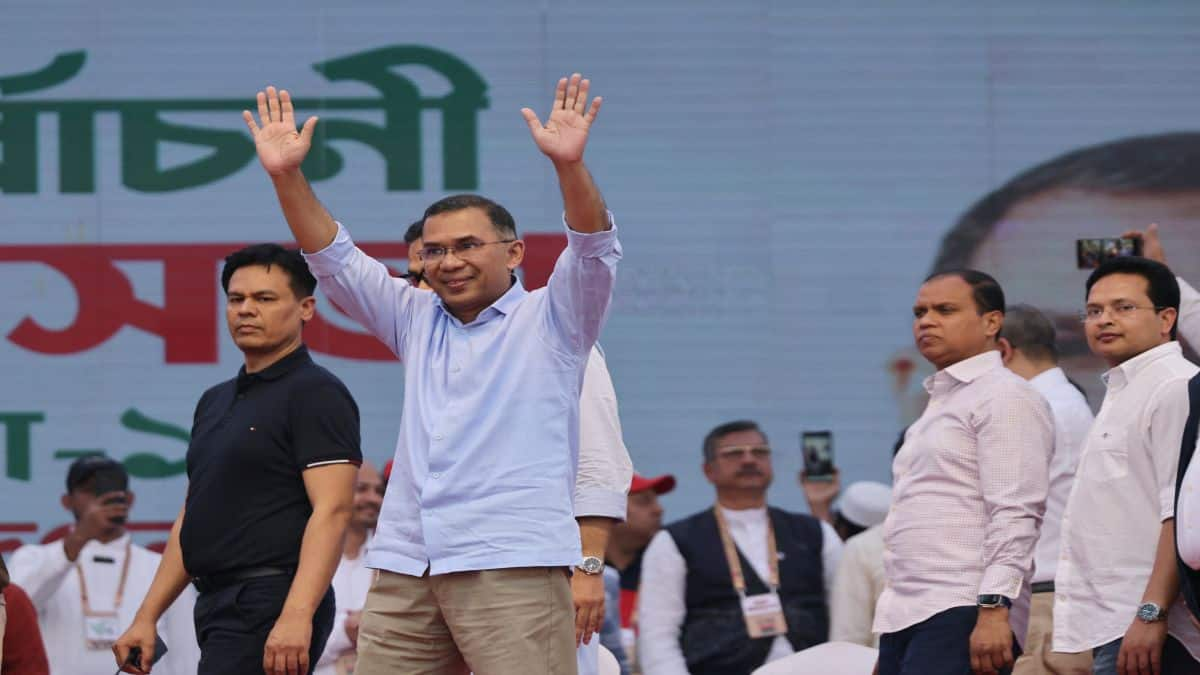
In his first remarks after a major victory in Bangladesh’s national elections, BNP chairman Tarique Rahman on Saturday called for national unity and dedicated the party’s win to those who “sacrificed for democracy.” Widely seen as the prime minister-in-waiting, Rahman said the election result marked the restoration of democratic rights and public mandate after years of political turmoil. Rahman, who recently returned to Bangladesh after nearly 17 years of exile, won from the Dhaka-17 and Bogura-6 constituencies, ensuring a decisive political comeback for the BNP.
Democracy Mandate After Landslide Win
Addressing a press conference, he said, “This victory belongs to Bangladesh. This victory belongs to democracy. This victory belongs to the people who aspire to and have sacrificed for democracy. From today, we are all free, with the true essence of freedom and rights restored.” The BNP secured a landslide victory in the 13th national parliamentary elections held on February 12, with results declared a day later. The party won 209 seats, comfortably crossing the majority mark required to form the government. Rahman said the strong voter turnout signalled the return of an accountable parliamentary system based on direct public mandate.
Historic Polls After Hasina Ouster
“These elections have paved the way for restoring a parliament and government accountable to the people after more than one and a half decades,” Rahman said, urging citizens to remain united to prevent any return of authoritarian rule and to ensure the country’s sovereignty remains intact. The elections were considered crucial as they were held for the first time since the ouster of former prime minister Sheikh Hasina during the student-led uprising of July 2024. Following her removal from power, Hasina moved to India and has been living there in exile.
Exile Return Reshapes Political Future
Her party, the Awami League, was barred from contesting the elections. Rahman returned to Dhaka in December 2025 after years of self-imposed exile in London. Soon after his return, his ailing mother and former prime minister Khaleda Zia passed away, marking an emotional moment for the party and its supporters. Rahman is now set to become Bangladesh’s next prime minister, a post previously held by his mother. If sworn in, he will also become the country’s first male prime minister since 1991.
Alongside the political transition, Bangladesh is expected to move forward with constitutional reforms proposed under the July National Charter, after the proposals received strong backing in a national referendum held alongside the general elections.