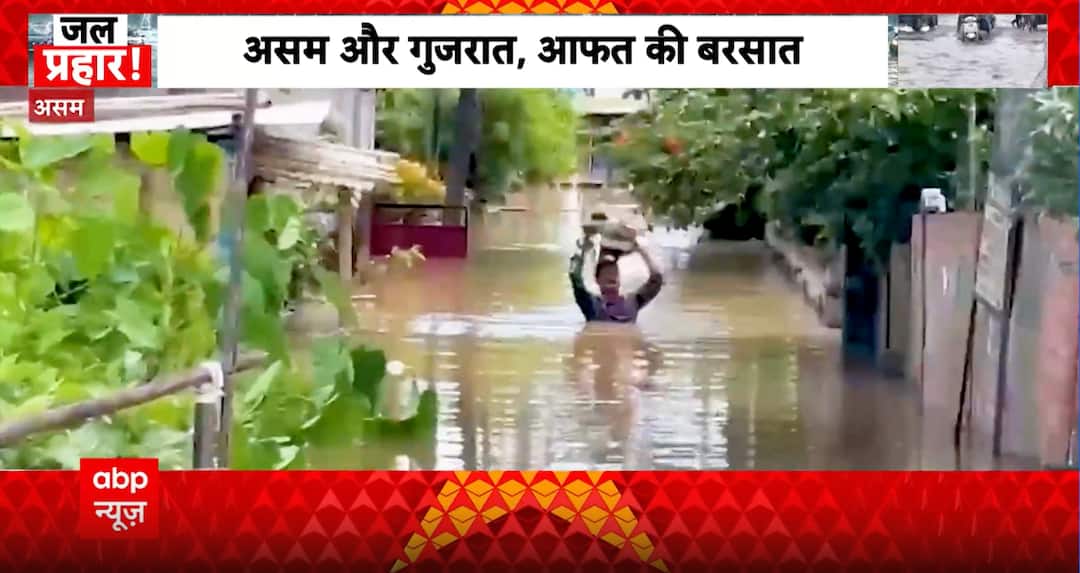
India’s relentless monsoon continues to unleash widespread devastation, with severe flooding disrupting lives across Assam and Gujarat. Rising rivers, submerged highways, inundated villages, and damaged infrastructure have left thousands struggling as authorities race to provide relief and rescue assistance. In Assam, continuous heavy rainfall has pushed several rivers above the danger mark, triggering extensive flooding across multiple districts. Sivasagar has emerged as the worst-hit region, with local officials describing the disaster as one of the most severe floods witnessed in decades. More than 300 villages have been inundated, affecting over 400,000 residents and nearly 100,000 families. Floodwaters have swept through homes, farmland, and public infrastructure, forcing residents to evacuate with little time to save their belongings. Officials report dozens of fatalities while rescue teams continue to reach isolated communities facing severe shortages of essential supplies. The crisis extends beyond the Northeast. In Gujarat, torrential rainfall has submerged roads, markets, and residential neighbourhoods across several districts, including Amreli, Valsad, and Patan. Waterlogged highways disrupted transport, while overflowing rivers created dangerous conditions for motorists. In Patan’s Santalpur region, a truck overturned after losing balance while attempting to cross floodwaters on a highway. Heavy rainfall also inundated the Charanka Solar Park, highlighting the scale of flooding affecting critical infrastructure and nearby villages. Emergency agencies remain on high alert as water levels fluctuate across several rivers. Authorities have advised residents to avoid flooded roads, low-lying areas, and overflowing bridges while rainfall continues in several parts of the country. The unfolding monsoon emergency underscores the urgent need for preparedness, timely evacuation, and coordinated disaster response as weather conditions remain unpredictable.

Monsoon Alert: Assam Battles Historic Floods as Gujarat Faces Deluge, Rivers Overflow and Chaos
Previous article
Next article