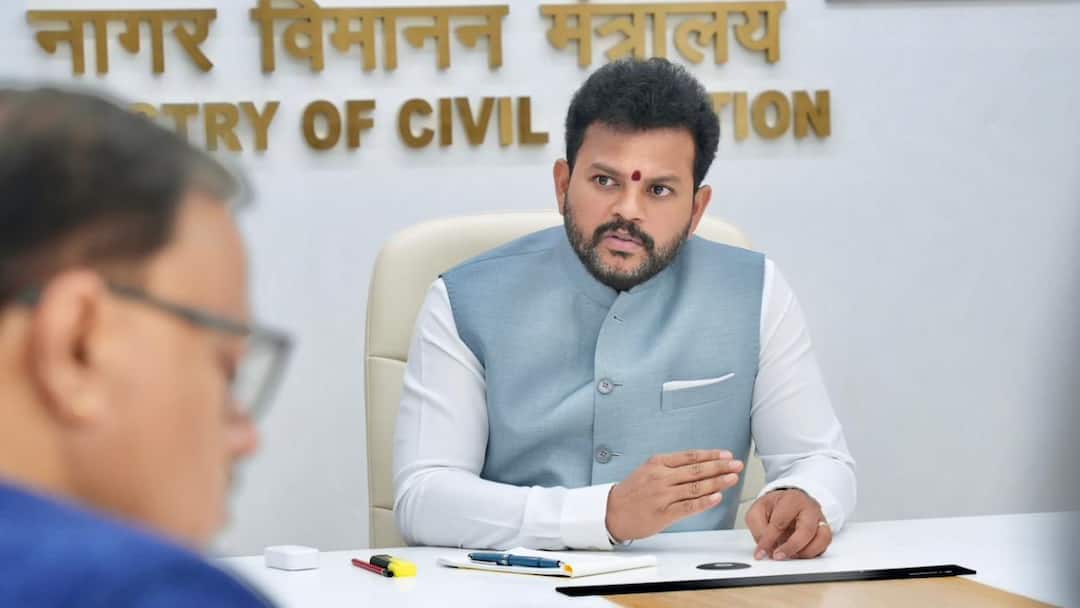

The Ministry of Civil Aviation has stepped in with a series of urgent interventions to manage the severe disruptions that have paralysed airline operations across the country with IndiGo bearing the brunt. On Friday, the Ministry announced that the Directorate General of Civil Aviation’s (DGCA) Flight Duty Time Limitations (FDTL) orders have been kept in abeyance with immediate effect, calling it a necessary step taken without compromising safety and aimed at protecting passengers—especially seniors, students and those travelling for medical needs.
Officials said that airlines have been directed to stabilise their schedules swiftly, adding that noticeable improvements are expected by Saturday. Full normalisation of services has been projected within the next three days.
Airlines Told To Refund Automatically, Assist Stranded Passengers
In a detailed set of instructions, the Ministry mandated that carriers enhance real-time communication systems to provide accurate updates across digital platforms. They must issue automatic full refunds for cancelled flights and facilitate hotel stays for passengers stranded due to extensive delays.
Additional support is also being prioritised for senior citizens, persons with disabilities, and other vulnerable travellers. The Ministry has instructed airlines to offer lounge access, dedicated assistance, refreshments, and essential services to ensure passenger comfort amid ongoing disruptions, as per a report on ANI.
The FDTL orders issued by the DGCA have been placed in abeyance with immediate effect for now to stabilise operations and prioritise relief for affected passengers.
Airlines have been directed to provide timely and accurate updates to all passengers and ensure automatic refunds…
— Ram Mohan Naidu Kinjarapu (@RamMNK) December 5, 2025
24×7 Control Room Activated for Coordination
To maintain continuous oversight, the government has established a round-the-clock control room for passengers and stakeholders. The helpline numbers—011-24610843, 011-24693963, and 096503-91859—will operate as a centralised response mechanism to ensure swift interventions wherever needed.