
ZME Science
In a remote stretch of Ethiopia’s Afar Rift, something quietly unsettling has begun to emerge from the ground. Fragments of bone, scattered within ancient sediments, are being studied for what they might represent rather than what they obviously are. Among them are remains attributed to early Homo sapiens, dated to around 100,000 years ago, and they carry marks that are hard to explain away. There is talk of intense heat, of unusual post-mortem treatment, and of behaviour that doesn’t sit neatly within the expected timeline of early human history. Nothing here is fully settled yet, but the implications are difficult to ignore, especially when the word “cremation” starts appearing in scientific discussion.
Early human cremation evidence: Scientists debate burn marks on ancient Homo sapiens bones
University of Oulu experts suggest that if these marks are correctly interpreted, they could push back the known history of human cremation by tens of thousands of years. That idea, however, sits alongside several other possibilities that remain on the table. Burning might have occurred after death for reasons we do not yet understand, or the heat damage could be the result of natural processes linked to environmental conditions over time. Adding to the complexity, other bones from the same layers carry predator bite marks, hinting that not all remains followed the same path after death. Some appear to have been buried relatively quickly, while others show more disturbance. The picture is fragmented rather than clear, like trying to reconstruct a sequence from scattered, partially erased pages. The phrase “earliest evidence of human cremation” is therefore used with caution, not certainty.
Ancient burned bones in Middle Awash raise new questions about the origins of human cremation
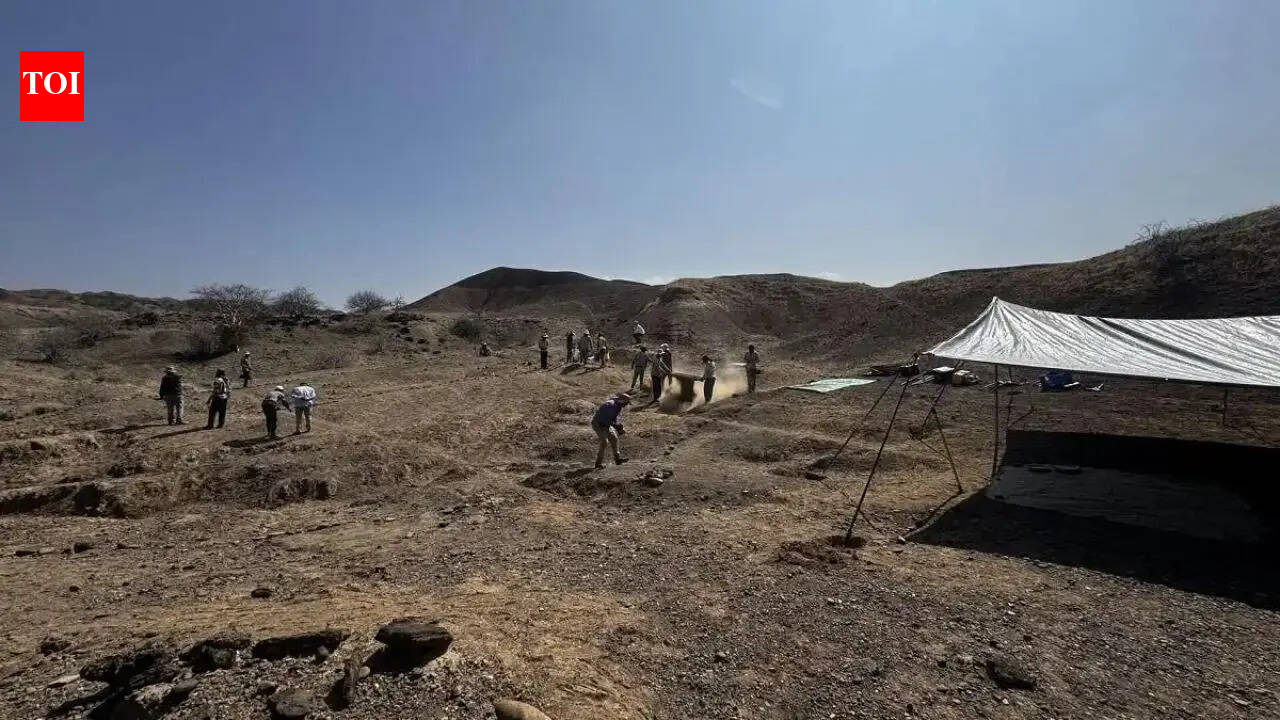
The Afar Rift has long been one of those places that refuses to stay quiet. In the Middle Awash region, layers of earth preserve a long, uneven archive of early human presence. The latest focus falls on the Faro Daba beds, part of a formation that has already produced tools, animal remains and fragments linked to early Homo sapiens life.These deposits are not cave floors or sheltered rock overhangs, which makes them unusual in African archaeology. Instead, they sit in open-air floodplain sediments that have somehow managed to survive shifting water, seasonal flooding and slow geological change. Excavations in the area have been ongoing for decades, and yet each new season still brings unexpected material. Thousands of stone tools have been recovered, along with animal fossils that sketch out a landscape populated by monkeys, rodents and large mammals moving through a wooded, river-influenced environment.Among this wider picture, a small set of human bones has drawn particular attention. Burn marks, uncertainty and what early cremation might meanSome of the Homo sapiens bones recovered from the site reportedly show signs of exposure to very high temperatures. Not the kind of light scorching that might come from accidental contact with fire, but traces that suggest sustained heating. It is this detail that has led some researchers to cautiously raise the possibility of early cremation practices.
Early Homo sapiens mobility patterns revealed through Middle Stone Age tools in Faro Daba
Beyond the human remains, the wider archaeological record from Faro Daba suggests repeated but brief visits to the area rather than permanent settlement. Stone tool production appears to have taken place on a seasonal floodplain linked to the ancient Awash River, where water availability likely shaped when and how groups moved through the landscape.Thousands of Middle Stone Age artefacts have been recovered, many showing careful production and use. Some pieces are made from obsidian, a volcanic glass that does not occur everywhere locally. Its presence hints at movement across wider distances, suggesting early Homo sapiens groups were not simply staying in one place but travelling, returning, and reusing familiar zones over time.Environmental evidence points to a shifting habitat, part wooded, part open, shaped by flooding cycles rather than stable conditions. In that kind of setting, survival would have depended on timing, knowledge of water patterns, and the ability to adapt quickly to changing resources. Animal fossils recovered from the same layers reinforce this, offering a snapshot of a diverse ecosystem that early humans were moving through rather than controlling.
What 100,000-year-old Homo sapiens bones in Ethiopia might reveal
The significance of the 100,000-year-old Homo sapiens bones from Ethiopia lies less in any single dramatic claim and more in the combination of small details. Burning traces, burial patterns, tool distributions and animal remains all sit together without forming a neat explanation.Researchers working on the Afar Rift material appear cautious, aware that interpretations can shift as new evidence comes in. What looks like cremation in one reading might later be reclassified under a different process entirely. Still, the possibility alone raises questions about how early humans in East Africa dealt with death, fire and memory far earlier than previously assumed.For now, the Faro Daba beds remain a kind of archaeological pause point. A place where fragments of bone and stone refuse to settle into a single story. And while the idea of the earliest human cremation is still far from confirmed, the site quietly expands what is thought possible for Homo sapiens living on a seasonally flooded plain 100,000 years ago, where water, movement and survival were tightly bound together. Go to Source