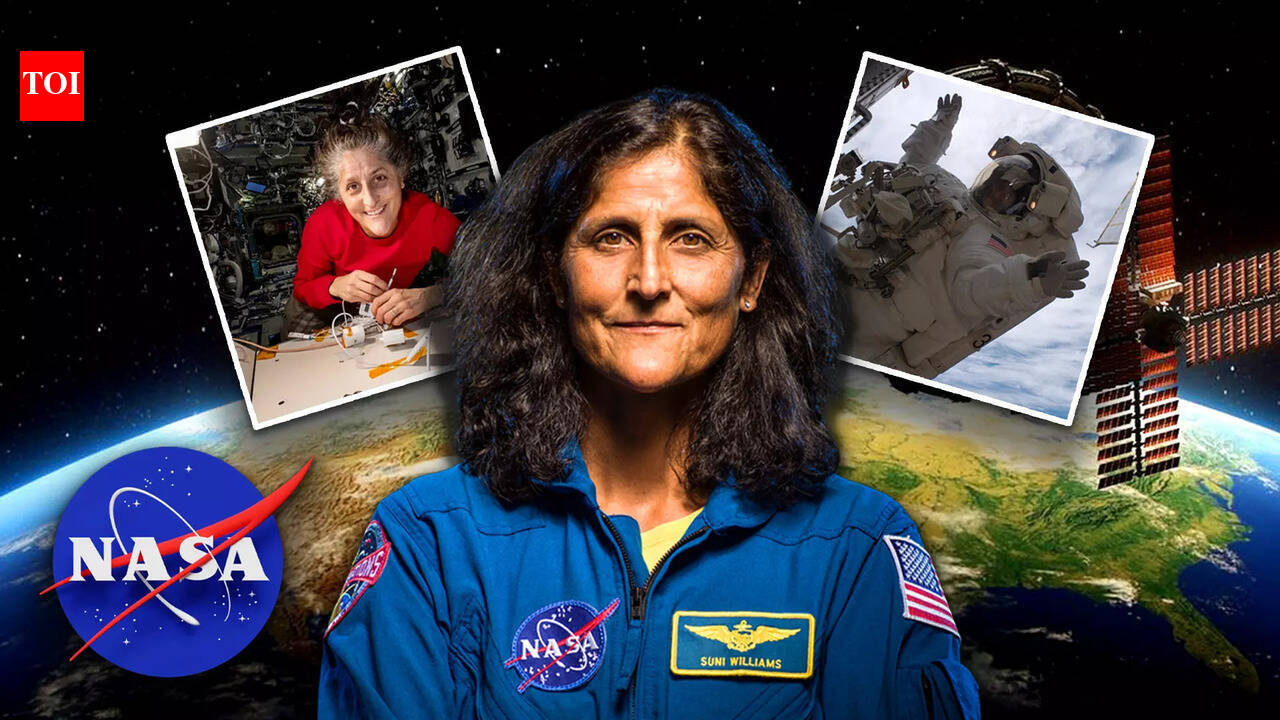

When Sunita Lyn Williams pressed her thumb against the hatch of the International Space Station one last time in March 2025, she wasn’t just stepping toward Earth; she was closing a chapter in space history few could rival. After 27 years with Nasa and more than 600 days in orbit, Williams retired at the end of December 2025 with a record book full of firsts and few equals in human spaceflight.
Sunita was born in Ohio on September 19, 1965. Williams grew up far from the rocket pads and control rooms that would one day define her career. Her father was of Indian descent, her mother had Slovenian roots that gave her a global identity even before she left Earth’s atmosphere. After graduating from the US Naval Academy, she became a Navy helicopter pilot and later a test pilot, flying a variety of aircraft and logging thousands of flight hours. Nasa selected her in 1998, and the years that followed read like a syllabus on excellence under pressure. Her first trip into space came in 2006 aboard Space Shuttle Discovery for the STS-116 mission. Williams didn’t just ride to the station, she worked there. As a flight engineer on Expeditions 14/15, she carried out four spacewalks totaling more than 29 hours, setting a then-female record and proving that endurance and focus matter as much outside the vehicle as inside.In 2012, she returned to the International Space Station on a Russian Soyuz craft for Expeditions 32/33. On this mission she became one of the few women ever to command the ISS, overseeing research, maintenance and even complex repairs like fixing a power distribution unit and an ammonia leak during spacewalks.But Williams’ final mission — the one that capped her career — was unlike anything planned.In June 2024, she and fellow astronaut Butch Wilmore launched aboard Boeing’s first crewed Starliner spacecraft. The flight was slated to be a brief test mission: a few days in orbit to check systems and return home. Those plans changed haphazardly. That spacecraft experienced propulsion issues and leaks, and Nasa decided it was safer to leave Starliner uncrewed. Rather than heading home, Williams and Wilmore became part of Expeditions 71/72, adapting seamlessly to a full station crew role instead of a short demo flight. What was meant to be eight days turned into 286 days in space, an unplanned stay that tested patience, skill, adaptability, and mental toughness. They completed crucial scientific work, maintenance tasks, and spacewalks during this extended period. Williams’ time in orbit on this mission contributed to her reaching 608 cumulative days in space and nine spacewalks totaling over 62 hours — more EVA (extravehicular activity) time than any woman in Nasa history, and fourth on Nasa’s all-time list.Coming home was a victory not just of engineering but of human endurance. When the SpaceX Crew-9 capsule splashed down off Florida in March 2025, it marked the end of a journey that had tested every element of long-duration spaceflight.What makes Williams truly inspirational isn’t just the numbers. It’s how she racked them up: with humility, adaptability, and an unshakable work ethic. She didn’t just fulfill mission objectives; she raised the bar for what astronauts can do. From commanding an orbiting laboratory to helping pioneer commercial crew programs that will carry humanity to the Moon and Mars, her fingerprints are on milestones that will outlast her career.She broke barriers at a time when spaceflight was still overwhelmingly male, earning respect as a leader. Her heritage and persona gave millions of young people, especially women and those from underrepresented communities, someone tangible to look up to, someone who walked on air and still managed to keep both feet firmly on Earth when she landed.As she steps away from Nasa, her legacy isn’t measured in days or hours, but in the doors she helped open. Future astronauts, from the Artemis generation bound for the Moon to missions that will go even further, are following paths she helped clear. That is why Sunita Williams’ story resonates: it’s not just about space. It’s about human potential. Go to Source