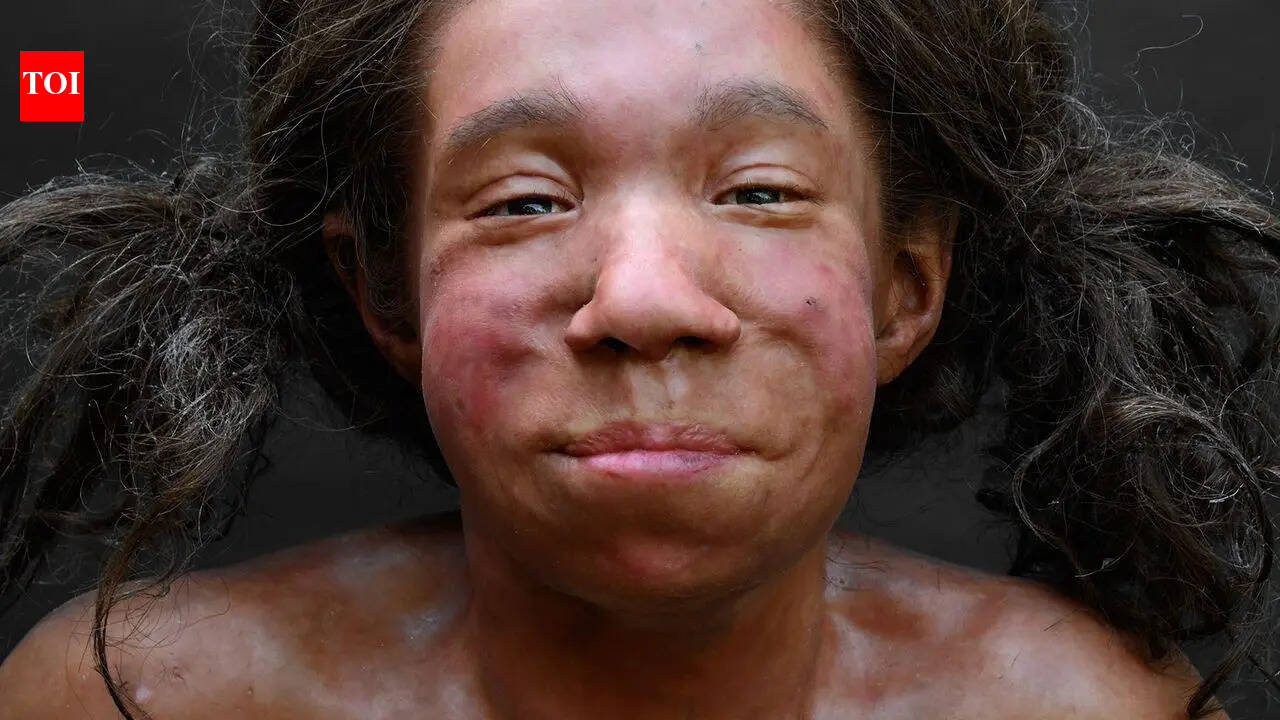


PC: BBC
The latest research on a Neanderthal infant from Amud Cave in Israel is giving a clearer picture of how different early development may have been in our extinct relatives. The remains, dated to around 51,000 to 56,000 years ago, suggest something unusual, as reported by Current Biology. The baby was not small in the way modern human infants are at the same age. It shows how much faster it grows in its early months outside the womb. Scientists studying the skeleton think this could reflect a distinct biological strategy linked to survival in harsh Ice Age environments. Not everything is fully settled, but the evidence points in a consistent direction. Neanderthal infants might have developed strength and size earlier than Homo sapiens babies, shifting how we understand childhood in prehistoric populations.
Amud cave Neanderthal infant skeleton and early growth findings
According to the study published in Current Biology, titled, ‘Rapid growth in a Neandertal infant from Amud Cave in Israel’, the specimen comes from Amud Cave, discovered in the 1990s. It is considered one of the most complete Neanderthal infant skeletons ever found. Around 111 bone fragments were recovered, though earlier studies focused mainly on the skull.Newer analysis expanded that view. The teeth suggested the infant died at about 5.5 months old. That detail alone makes the size findings more striking. The bones of the arms and legs tell a different story. Upper limb proportions match those of a modern human infant closer to 13–14 months old. Lower limb development shows a similar pattern. The body length is estimated between 70.3 and 78.6 centimetres. That is closer to a modern toddler than a baby under six months. It stands out clearly in the comparison data. The growth does not line up with what is expected in present-day human development timelines.
Neanderthal rapid early growth pattern after birth
Researchers suggest Neanderthal babies might have followed a rapid early growth pattern. It seems their bodies developed faster right after birth. Not evenly across childhood, but specifically in that early stage. This does not mean they were larger at birth. Earlier research indicates Neanderthal fetal development was broadly similar to that of modern humans. So the difference likely began after delivery.Once outside the womb, growth may have accelerated sharply. Then later slowed, bringing development back in line with Homo sapiens during later childhood stages. It is still based on limited samples. Only a small number of Neanderthal infants have been found. But a few other fossil cases show similar patterns, so the idea is gaining some support.
Infant growth and energy demands in cold climates
One explanation being discussed is energy demand. Neanderthals lived in colder Eurasian climates. Their bodies were generally more robust, with higher muscle mass and energy use. A fast-growing infant could have been an advantage in that setting. Stronger bodies earlier in life might have improved survival chances in colder conditions.Modern humans, evolving in warmer African environments, did not face the same pressure. Slower growth may have been more energy efficient for longer developmental periods.
Early appearance of Neanderthal traits
Another detail in the study is the appearance of adult-like Neanderthal traits in the infant skeleton. The clavicle appears robust, and the first rib is relatively straight, both features associated with adult Neanderthals. This suggests their physical characteristics appeared early in development. Not only in adulthood. So the growth process might have been compressed. Fast physical development. Early emergence of species-specific traits. Then a more balanced growth phase later on.It gives a different picture of Neanderthal childhood compared to modern humans. Less prolonged dependency in some respects, at least physically.
What this might mean for human evolution
The study, published in Current Biology, adds another layer to how Neanderthals are understood. They were not simply slower or less advanced versions of humans. Their development strategy seems to have been different.Fast early growth could have been a response to survival pressures. Even so, the evidence keeps building in one direction. Neanderthal babies might have grown quickly, built strong bodies early, then stabilised into adulthood differently from modern humans. Go to Source