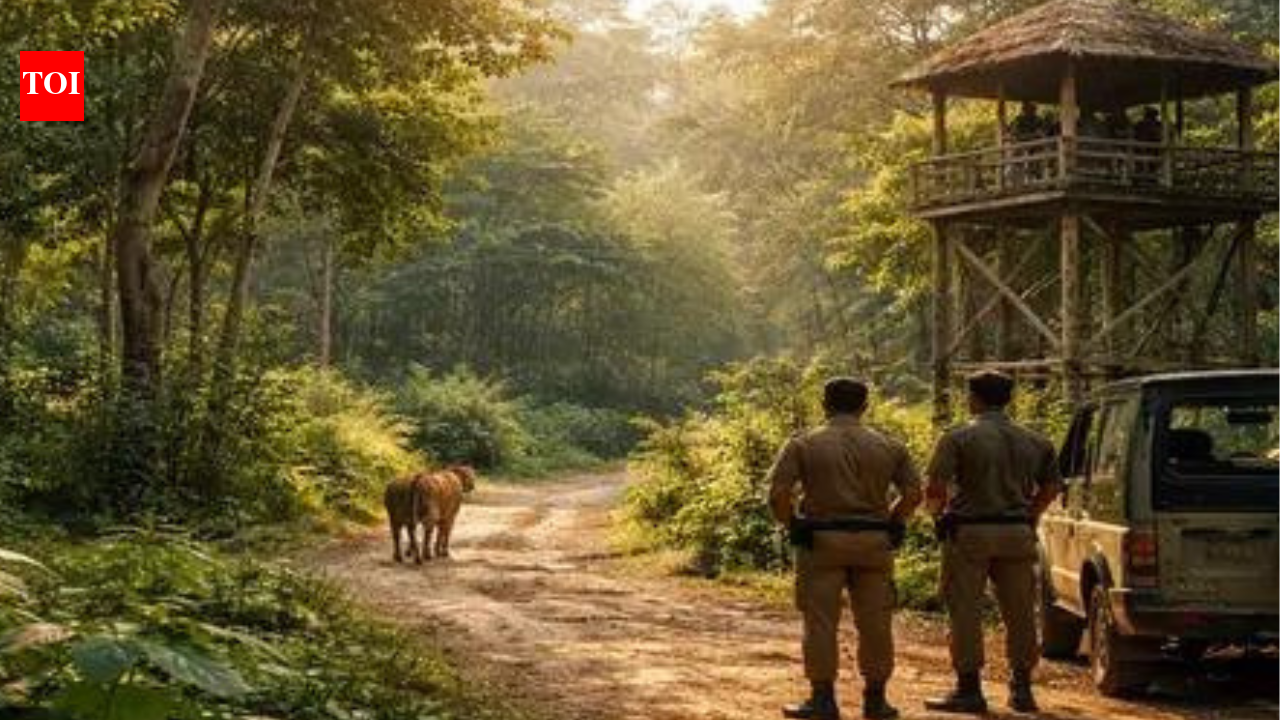

Image: IANS
BENGALURU: Humans are often described as the world’s ultimate “super-predator” — a species that hunts, traps and fishes at scales far beyond any other animal. Wildlife biologists have long argued that this makes us uniquely frightening to other species. But a new study led by researchers at the Centre for Ecological Sciences (CES), part of the Indian Institute of Science (IISc), suggests the picture is more complex.The research, published in the journal Ecology Letters, finds that animals clearly respond with fear to humans who kill — such as hunters and fishers — but react far less consistently to people who pose no direct threat, including tourists and researchers.“The short answer is: no, not always,” said Shawn D’Souza, a PhD student at the Centre for Ecological Sciences and the study’s lead author, when asked whether humans are always “super-scary” to wildlife.The team conducted a large meta-analysis, reviewing three decades of research from across species and ecosystems. They examined how wild animals altered three key behaviours: foraging, vigilance and movement. These behaviours reflect daily trade-offs. Time spent scanning for danger is time not spent feeding. Moving away from risk costs energy and may limit access to food or mates.Across studies, animals exposed to lethal humans — those who hunt or fish — tended to be more vigilant and spent less time feeding. In other words, they behaved as if under constant threat. By contrast, responses to non-lethal human presence were weaker and varied widely.Perhaps the most surprising finding was that some passive human structures, such as roads and settlements, were linked to reduced vigilance in certain animals. “In certain cases, these areas can function as perceived refuges,” D’Souza said. Many natural predators avoid humans. As a result, prey species may feel safer near human activity than in wilder areas where predators roam freely.Co-author Maria Thaker, Professor at CES, added that roadsides and edges of settlements are often cleared of thick vegetation. This can make them attractive grazing grounds for smaller animals. However, such areas carry obvious risks, including vehicle collisions.The findings broadly support what scientists call the “risk allocation hypothesis”. This idea proposes that animals adjust their behaviour depending on how intense and predictable a threat is. When danger is high and consistent, animals remain cautious. When risk is low or predictable, they can afford to relax.The consequences go beyond individual animals. Changes in fear and feeding patterns can ripple through ecosystems. If prey species graze more in certain areas, plant growth may change. If predators shift their movements to avoid humans, prey populations may rise. Over time, such behavioural adjustments can alter ecological balance.The study also touches on wildlife management. Co-author Kartik Shanker, Professor at CES, said that lethal control measures, such as limited culling, can influence animal behaviour. In some cases, a small amount of lethal intervention may reduce the movement of wild animals into human-dominated areas more effectively than other approaches currently used to manage conflict.At the same time, the researchers caution that much remains unknown. D’Souza said future work should aim to link behavioural responses to species traits, past exposure to humans, predator communities and landscape features. Long-term and experimental studies will be needed to determine whether animals are simply becoming used to human presence or undergoing deeper evolutionary change.For now, the findings challenge a simple narrative. Humans may be powerful predators. But to wildlife, we are not always equally frightening — and sometimes, paradoxically, we may even appear safer than the wild. Go to Source