
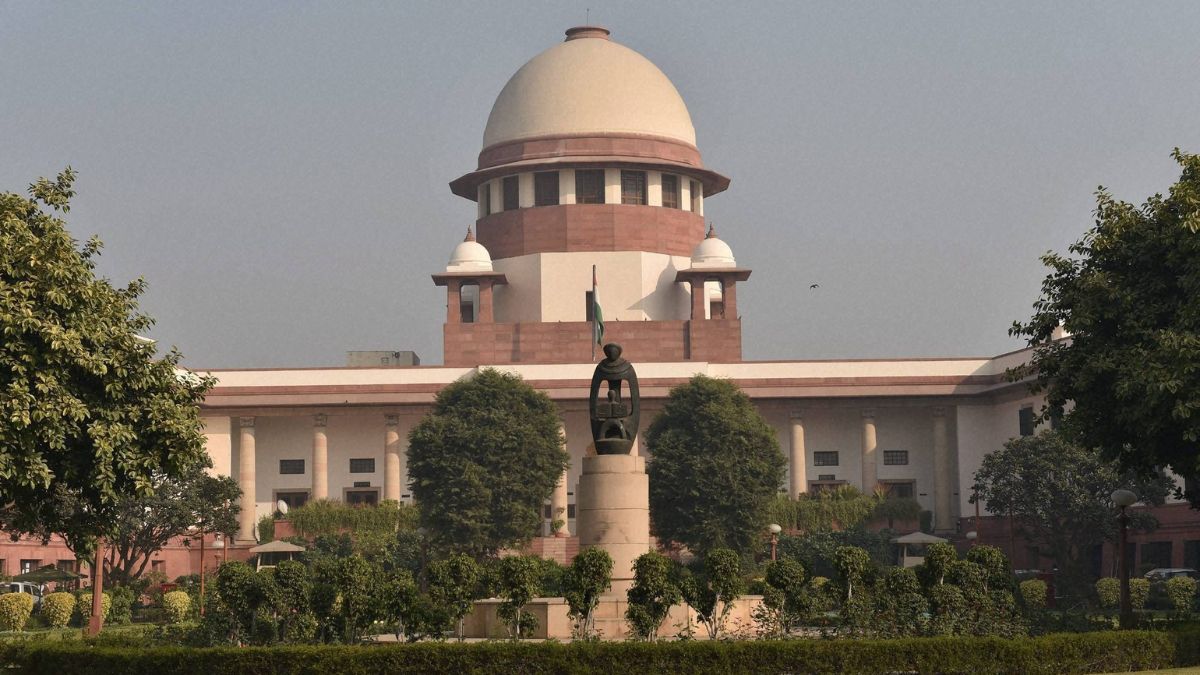
 "SC refuses to stay new Waqf law: 5-yr practice of Islam put on hold, not more than 3 non-Muslims on board")

The Supreme Court on Monday temporarily stayed key sections of the Waqf (Amendment) Act, 2025, offering relief to petitioners challenging the law’s constitutionality. The court paused provisions on who can create a Waqf, who can decide disputes over encroachment, and set interim guidelines for Waqf board composition, while allowing the rest of the law to remain in force.
The Supreme Court on Monday paused certain sections of the Waqf (Amendment) Act, 2025, giving temporary relief to petitioners challenging the law’s constitutionality. The court stayed provisions related to who can create a Waqf, who can decide disputes over encroachment, and also issued guidelines for Waqf board composition.
The court noted that there was no reason to suspend the entire Act while it hears the broader constitutional challenge.
“We have found that the entire act is challenged, but basic challenge was sections 3(r), 3C, 14. We have gone to legislative history from the 1923 Act and considered prima facie challenge to each section and hearing parties were not made out for entire statute. But sections which are under challenge, we have granted stay,” said the bench led by Chief Justice of India BR Gavai.
The court put on hold the requirement that a person must practice Islam for five years (section 3(R)) to create a Waqf, until rules are framed to define what counts as a practitioner of Islam.
It also stayed the provision that declared a property a Waqf property (section 3C(2)) until a government officer submits a report on any encroachment.
The Supreme Court further stayed section 3C(4), which allowed a District Collector to decide if a property is government-owned and pass orders. “Permitting the collector to determine the rights is against the separation of powers. An executive can’t be permitted to determine the rights of citizens,” Chief Justice Gavai said.
Regarding Waqf board composition, the court said no more than three non-Muslim members should be included in a Waqf board, and no more than four non-Muslims in the Central Waqf Council for now. It added that ex-officio officers should be from the Muslim community wherever possible (section 23).
The court did not interfere with the registration requirement, noting, “We have held registration existed since 1995 to 2013, and again now. So we have held registration is not new.”
The hearing follows arguments over three days, after which the bench reserved its interim order on May 22. The petitions challenge amendments made by Parliament earlier this year.
Key provisions of the Act, which triggered nationwide protests, were paused as the court flagged them as potentially “arbitrary” exercises of power. The bench said some sections need protection but saw no reason to stay the whole law.
Highlighting the Collector’s powers under the new law, the court said, “The Collector cannot be permitted to adjudicate the rights of personal citizens, and this will violate the separation of powers. Till adjudication happens by the tribunal, no third-party rights can be created against any party. The provision dealing with such powers to the Collector shall remain stayed.”
The law had allowed the District Collector to be the final authority on Waqf property disputes. Muslim bodies protesting the Act said this could lead to illegitimate claims.
Chief Justice Gavai also said the rule requiring a person to practice Islam for five years to declare a Waqf must be paused. “Without any mechanism, it will lead to exercise of arbitrary power,” he noted.
The court emphasized that it generally assumes statutes are constitutional, and intervention is warranted only in “rarest of rare cases.”
Amendments to the 1995 Waqf law, passed by Parliament and cleared by the President in April, sparked protests, with Muslim groups calling them unconstitutional and claiming they aimed to take over Waqf land. The government dismissed these claims, saying the law is meant to resolve disputes and encroachments on Waqf properties.
End of Article


&description=SC+refuses+to+stay+new+Waqf+law%3A+5-yr+practice+of+Islam+put+on+hold%2C+not+more+than+3+non-Muslims+on+board)