Last Updated:
Citing academic research, Panagariya highlighted the macroeconomic benefits of synchronised polls

The economist also argued that when elections are staggered, political parties are compelled to repeatedly announce new subsidies and transfers to woo voters, multiplying fiscal costs. Representational pic/PTI
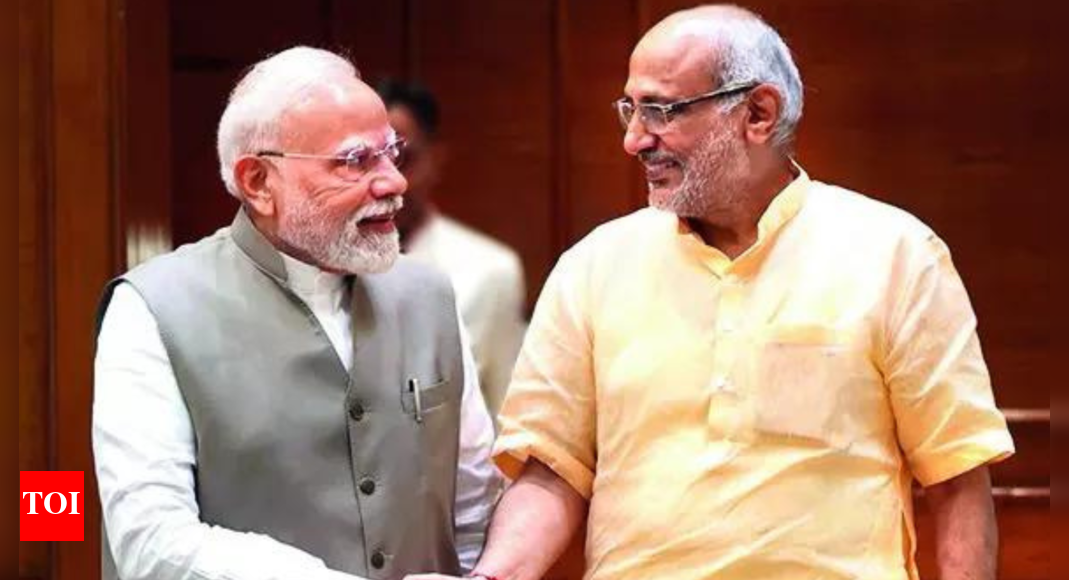
Economist and Sixteenth Finance Commission Chairman Arvind Panagariya strongly backed the idea of “One Nation, One Election” during his testimony before the Joint Parliamentary Committee on the 129th Amendment Bill, arguing that the current system of frequent polls hampers governance, disrupts policymaking, and imposes heavy economic costs. Ahead of his physical deposition before the committee, he sent a written submission.
Recommended Stories
At present, India conducts assembly elections in 13 different rounds to ensure each state and union territory with a legislature holds polls within its five-year cycle. This, Panagariya pointed out, means one round of elections takes place every four-and-a-half months on average—sometimes even more frequently when assemblies are dissolved
Tracing history, Panagariya noted that India’s first four general elections—1951-52, 1957, 1962, and 1967—were conducted nearly simultaneously. In 1957, leaders of the day even dissolved seven state assemblies a few months early to align polls with the Lok Sabha elections.
“The makers of the Constitution clearly saw merit in simultaneous elections,” he said. “Had they anticipated today’s situation of perpetual election cycles, they would likely have opted for an arrangement similar to what the 129th Amendment now proposes.”
Drawing from personal experience as Finance Commission Chair, Panagariya explained how the Model Code of Conduct (MCC) repeatedly delays official work. The Commission, tasked with consulting every state on fiscal needs, lost two crucial months in 2024 due to assembly polls. “This is but one example. Repeated enforcement of the MCC interrupts policymaking, delays procurement and project execution, and shortens the effective reform window for governments,” he stressed.
He argued that once-in-five-year elections would give both the union and state governments a longer, clearer policy horizon, improving stability and encouraging private investment.
Citing academic research, Panagariya highlighted the macroeconomic benefits of synchronised polls. A study by NK Singh and Prachi Mishra found that simultaneous union and state elections in the 1950s and 60s boosted GDP growth by 1.5 percentage points compared to the asynchronous decades that followed. The researchers attributed this to better quality of spending, with greater focus on capital investment.
International literature, from Yale economist William Nordhaus’s seminal “Political Business Cycle” model to more recent work by Alberto Alesina, Nouriel Roubini, Gerald Cohen and others, was also referenced to show how elections encourage fiscal profligacy. “Incumbents expand subsidies and transfers ahead of polls, often at the cost of long-term investment,” Panagariya observed, pointing to similar findings in studies from India, Colombia, and other developing economies
Beyond spending, Panagariya said frequent elections create obstacles to reforms requiring state cooperation, such as taxation frameworks and subsidy rationalisation. “Impending polls harden state positions and make the Union government hesitant to push tough measures,” he noted. Research by scholars like Nirvikar Singh, TN Srinivasan, and Laveesh Bhandari was cited to underline how election cycles have historically delayed reforms
The economist also argued that when elections are staggered, political parties are compelled to repeatedly announce new subsidies and transfers to woo voters, multiplying fiscal costs. Simultaneous polls, he said, would check this tendency by concentrating electoral incentives into one window every five years.
Summing up, Panagariya said the debate was ultimately about choosing between “permanent election mode” and a system that provides stability. “The costs of frequent elections—in governance, fiscal management, and economic reform—are clear. A once-in-five-years election cycle will strengthen policy continuity and support growth,” he told the Committee in his submission.
On Wednesday, apart from Panagariya, the PP Chaudhry-led committee will also hear from former Planning Commission chairman Montek Singh Ahluwalia.
September 24, 2025, 11:40 IST
Loading comments…
Read More
 "Rubio says Trump admin hopes to ‘fix’ tariffs on India over Russian oil")