
Last Updated:
Alongside the security push, development has been a parallel and crucial pillar of India’s anti-Naxal strategy

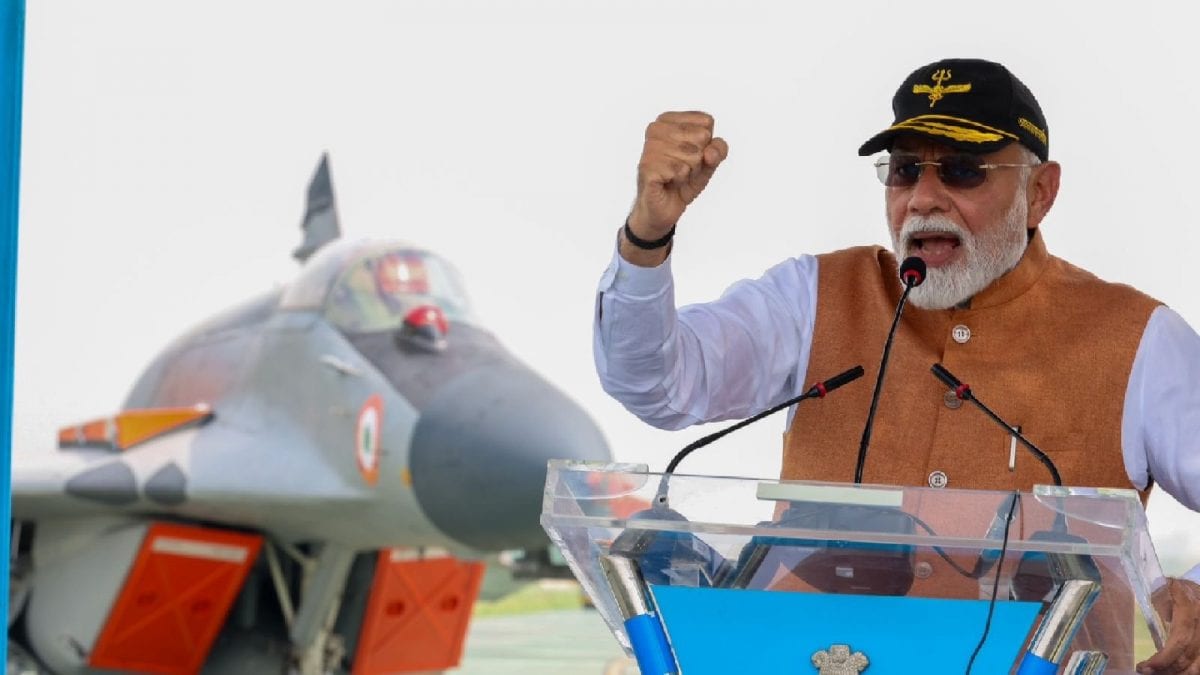
PM Narendra Modi. (X)
It is the first time in India’s history that the country has set a deadline to wipe off Naxalism from every nook and corner of its land.
For decades, Left Wing Extremism (LWE), commonly known as Naxalism, was one of India’s biggest internal security challenges. At its peak in 2010, Naxalite violence spanned across multiple states, affecting over 200 districts. However, in the last decade, India’s response has taken an aggressive form. The Union Ministry of Home Affairs (MHA) asserts that India is on the path to being “Naxal-free”, combining forceful security measures with deep developmental interventions.
Recommended Stories
Home Minister Amit Shah has credited the leadership of Prime Minister Narendra Modi for India’s decisive steps to end Naxalism. “Under the leadership of PM Modi, we will make India Naxal free,” Shah has said.
Sharp Decline in Spread and Violence
The data reveals a dramatic decline in both geographical spread and intensity of violence. In August 2025, the Home Ministry informed Parliament that “the resolute implementation of the National Policy and Action Plan 2015 has resulted in consistent decline in violence and constriction of geographical spread. The LWE-related violence incidents and resultant deaths of civilians & Security Forces, have come down from high of 2010 by 81 per cent and 85 per cent respectively in 2024.”
The retreat is visible in district-level data. In 2013, 126 districts were officially listed as affected by Naxalism. By April 2025, that number had shrunk to just 18 districts. Similarly, the government told Parliament in December 2024 that “three review[s] of LWE affected districts have been undertaken in the last six years with reduction from 126 to 90 districts in April 2018, further to 70 in July 2021 and then to 38 in April 2024″.
Violence, too, has dropped to historic lows. Compared to 2010, LWE incidents were down 73 per cent in 2023, while deaths of civilians and security personnel had fallen by 86 per cent. In just 2024 (till mid-November), violence fell by a further 25 per cent compared to the previous year.
From Hotbeds to Isolated Pockets
The impact of these combined measures is visible at the ground level. States once synonymous with Naxal violence—Chhattisgarh, Jharkhand, Odisha, Bihar, and parts of Maharashtra—are reporting drastic reductions.
For instance, official data shows that in Sukma, Chhattisgarh, incidents dropped from 70 in 2023 to 66 in 2024, with civilian and security deaths nearly halved. In Jharkhand’s West Singhbhum, once one of the worst-affected districts, incidents fell from 72 in 2023 to just 14 in 2024.
This shrinking footprint explains why the Home Ministry declared in 2025 that LWE has been “constricted to only a few pockets”.
The 2015 National Policy: A Turning Point
The key point of this transformation is the ‘National Policy and Action Plan to address LWE’, which was approved in 2015. It was the first comprehensive, multipronged national strategy, integrating security, development, and rights-based measures. As the Home Ministry explained, the plan “envisages a multi-pronged strategy involving security related measures, development interventions, ensuring rights and entitlements of local communities”.
On the security front, the government of India has supplemented state police forces with Central Armed Police Forces (CAPFs), helicopters, and fortified infrastructure. Since 2014, 543 out of 621 fortified police stations have been built in affected states. Funds for modernisation, intelligence-sharing systems, and special operations units have strengthened local capacities. Between 2019 and 2024, over Rs 4,350 crore was released for capacity building of states under schemes such as Special Infrastructure Scheme (SIS), Security Related Expenditure (SRE), and Special Central Assistance (SCA).
Equally significant is the effort to choke Maoist funding. The MHA noted: “Choking of funds is an important part of the overall strategy for elimination of LWE. Synergised efforts by central and state agencies are being implemented to ensure cutting of sources of funding.”
Roads, Schools, Banks: Development as Security
Alongside the security push, development has been a parallel and crucial pillar of India’s anti-Naxal strategy. The government has repeatedly emphasised that insurgency cannot be eliminated by force alone; the vacuum of governance and opportunity had to be addressed.
Road connectivity has expanded rapidly. “For expansion of road network, 14,928 km have been constructed under 2 LWE specific schemes namely Road Requirement Plan (RRP) and Road Connectivity Project for LWE Affected Areas (RCPLWEA).” In Chhattisgarh alone, over 3,500 km of roads were laid, opening access to previously isolated villages.
Telecom penetration has improved dramatically, with 8,640 mobile towers commissioned across LWE regions. Banking and postal services have followed as nearly 5,900 new post offices and 1,007 bank branches have been opened, along with 937 ATMs in the most-affected districts.
For education and skills, the state has invested in 46 new Industrial Training Institutes (ITIs), 49 Skill Development Centres, and 179 Eklavya Model Residential Schools (EMRSs) for tribal children. By 2024, 178 EMRSs were already functional in Naxal-hit districts.
The government has also earmarked funds for “filling critical gaps in public infrastructure in Most LWE affected Districts under Special Central Assistance (SCA) scheme,” with nearly Rs 3,769 crore released since 2017.
Winning Back Communities
Beyond hard infrastructure, the Centre has worked to win back the trust of local populations — often the most vulnerable to Maoist intimidation. As the Home Ministry put it, “The poor and marginalised sections of the society, especially the tribals, have borne the brunt of this violence… Ironically, it is the same tribals and the economically underprivileged sections, whose cause the Maoists claim to espouse [who] have been the biggest victims.”
To bridge this trust deficit, Central Armed Police Forces have run civic action programmes in affected villages—building small community projects, running health camps, and supporting education drives. Similarly, Tribal Youth Exchange Programmes, organised by Nehru Yuva Kendra Sangathan, have given young people exposure outside their insurgency-affected environments.
Rehabilitation of surrendered cadres has also been prioritised, providing financial assistance, housing, and livelihood support. Funds from the SRE scheme have covered “rehabilitation of surrendered LWE cadre, ex-gratia to families of civilians killed in LWE violence/martyred security force personnel.”
Towards the Endgame
From 126 districts in 2013 to just 18 in 2025, the journey of India’s fight against Naxalism is among the sharpest turnarounds in the country’s internal security narrative. The Union Home Ministry credits this to the twin thrust of robust security and accelerated development. As Minister of State for Home Affairs Nityanand Rai told Parliament, “LWE, which has been a serious challenge to the internal security of the nation, has been significantly curbed in the recent times.”
While challenges remain in some remote areas, the trajectory is clear. What was once India’s “biggest internal security threat” is now in its twilight, with the prospect of a Naxalism-free India finally within reach.
About the Author

The News Desk is a team of passionate editors and writers who break and analyse the most important events unfolding in India and abroad. From live updates to exclusive reports to in-depth explainers, the Desk d…Read More
The News Desk is a team of passionate editors and writers who break and analyse the most important events unfolding in India and abroad. From live updates to exclusive reports to in-depth explainers, the Desk d… Read More
September 15, 2025, 16:44 IST
Loading comments…
Read More