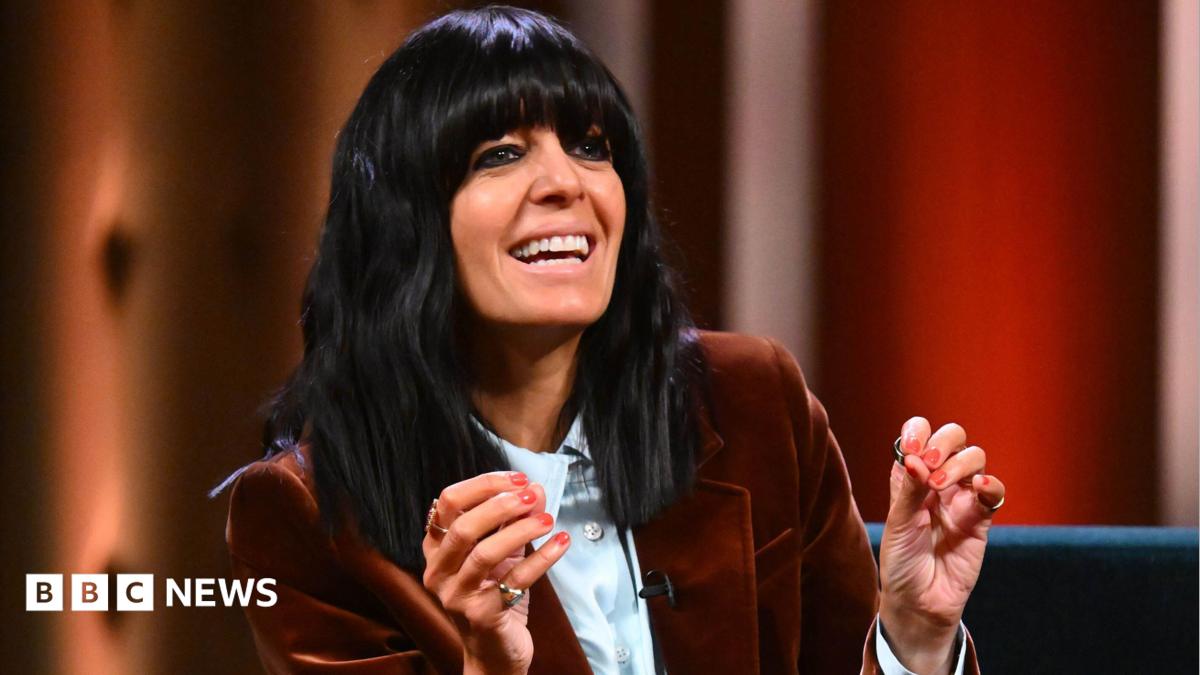


When Lisa Kudrow appeared on The Claudia Winkleman Show earlier this year, she was visibly delighted to meet Linda from The Traitors.
The Friends actress, probably the most famous guest the programme had during its seven-week run, said it was “thrilling” to meet one of the reality show’s breakout stars, who she revealed had even inspired one of her own recent performances.
As host of The Traitors, Winkleman was ideally placed to introduce the pair, resulting the kind of wonderfully bizarre meeting of minds normally seen on The Graham Norton Show.
But Winkleman’s own chat show did not last long enough for any more unusual guest combinations on its teal sofa. The presenter quit last week after just one series, saying she was simply “too nervous to enjoy it”.
It had made sense for the BBC to commission The Claudia Winkleman Show, given the presenter’s popularity on programmes such as Strictly.
There’s a different level of pressure, however, hosting a show with your own name above the door.

“Everyone thought she could pull it off because she’s smart and funny, but a chat show with multiple guests is very difficult to handle,” the Telegraph’s arts and entertainment editor, Anita Singh, tells BBC News.
“You have to marshall the conversation, give each guest equal time, help them to plug whatever they’re plugging, then cue in whatever anecdote they’ve agreed beforehand with the researchers. Graham Norton makes that look deceptively easy.”
She adds: “I think if Claudia had done a couple more series she would have become better at it. But she’s at her best when she’s being spontaneous, and the format allows very little space for that.”
Winkleman’s decision to quit surprised many. The viewing figures were lower than Norton’s, but still respectable. The reviews from critics were mixed, rather than universally bad.
The BBC confirmed it was Winkleman’s decision to stop, and implied that they would’ve happily commissioned a second series – and possibly already had.
“My understanding is they had made a deal beyond one season,” says Deadline’s Jake Kanter, who has reported on the talk show throughout. “How formal that was, I don’t know. But there was an intention for it to continue.”
He adds: “I wholeheartedly believe her that this perhaps didn’t work out because of her own concerns and anxiety around the hosting.”

Former BBC One controller Peter Fincham, who hosts the TV podcast Insiders, likens it to the Davina McCall chat show he commissioned in 2006, which also ended after one series.
“You have to remember, particularly chat shows where the presenter’s name is in the title, it’s very exposing for them,” he tells BBC News.
“Had Claudia Winkleman wanted to carry on with her chat show, it could have been a slow burn,” he reflects.
“But what she’s done is rare, actually, for somebody to say, ‘hmm, didn’t really enjoy that, don’t think I’ll do it again’.
“That says something very positive about her that you don’t often see among presenters.”
Succession planning
Many considered Winkleman, 54, to be chat show emperor Graham Norton’s presumptive successor – not least because he seemed to be ushering her through himself.
So Television, which Norton co-owns, also produced Winkleman’s show, and it could have been a neat way for the company to retain work when Norton does eventually quit.
Admittedly, Norton’s show is not vanishing any time soon – he signed a new three-year deal with the BBC in 2025. He has also taken on several new projects, including a podcast, more novels, and a short-lived ITV game show, The Neighbourhood.
But Norton, 63, has also spoken openly in recent years about working less. He reduced the number of chat show episodes he presents in 2022, and also stepped down from his Virgin Radio show two years later.

The short life of The Claudia Winkleman Show could make the Norton succession plan a key issue for the BBC’s incoming entertainment chief, Ed Havard.
“This does leave the BBC with a problem if and when Graham decides to retire, because if Claudia can’t do it, I don’t know who can,” says Singh.
“Graham doesn’t want to do 52 weeks a year,” Fincham notes, “so I’m sure the BBC would have been delighted to have another long-running chat show that you can balance with his, and they may have another try.”
Dozens of presenters would love the gig and many would be perfectly capable – Jack Whitehall did a solid job when he stood in for Norton previously, or Alan Carr could probably be tempted to return to his Chatty Man days.
But the TV landscape is also littered with examples of cancelled chat shows. As well as Winkleman and McCall, Lily Allen and Charlotte Church also hosted series which didn’t last long.

A cynic might say that the short life of Winkleman’s series will have shown both her and the BBC that launching a new chat show is harder than it looks.
But Kanter has a more nuanced interpretation, reflecting: “My instinct is that this was always a bit of an experiment.
“Clearly it was something that Claudia wanted to do, and when you have a presenter at the peak of her powers, I think it’s just good talent management to try and work together with that presenter on their dream project.”
He adds: “I’m sure all sides will walk away with their heads held high, and it was worth giving it a crack, I think.”
Do we still need chat shows?
Personalities aside, there’s the more existential question of whether the BBC even needs a new talk series, when there are now hundreds of other platforms where celebrities can go to promote their product.
Stars can just as easily appear on YouTube strands such as Snack Wars or Hot Ones as a TV chat show, or spend as much time at press junkets being interviewed by TikTokers as legacy media outlets.
Talent agents know that seeing Hollywood stars talking to a lovable and sweary East London pensioner known as Grime Gran, or playing a game of Would You Rather with LadBible, is just as likely to generate publicity as traditional interviews.
Singh highlights that clips from programmes such as Norton’s often go viral too, but adds: “I don’t think the public is craving another TV chat show.
“Think back to the most memorable encounters from the heyday of chat shows,” she says. “They were one-on-one: Parkinson with Muhammad Ali; Wogan with George Best or David Icke.
“Those long-form interviews have moved to podcasts now, where celebrities find it easy to be open and essentially treat them as an extended therapy session.
“And the most entertaining celebrity interviews around are on Amelia Dimoldenberg’s Chicken Shop Date. Compared to content like that, a chat show in a TV studio seems quite old-fashioned.”

Norton’s show clearly still delivers huge value for the BBC, and Kanter says the the “chat show format remains strong” and is a “really important part of the BBC One schedule”.
“It sprinkles a bit of stardust, it’s appointment to view, I think people enjoy that it’s a Friday night and they can tune in for some entertainment, it performs well online, it’s an engine for clips and viral moments, and that’s something that’s to be valued in this attention economy,” he notes.
And, speaking from experience, Fincham concludes he is “not a big fan of succession plans” anyway.
“I ran BBC One between 2005 and 2007,” he recalls, “and at that time, a regular conversation was ‘What’s the succession plan for David Attenborough?’
“That was 20 years ago, and I can’t help noticing he’s still presenting programmes today. So beware of the assumption that a succession plan is needed.
“And Graham Norton, if he chooses to continue, has got plenty more in the tank.”
Related topics
- Claudia Winkleman
- Television
-
Claudia Winkleman quits chat show after one series
-
16 July
-
-
‘The best friend you’d love to have’ – How Claudia Winkleman conquered TV
-
9 November 2025
-