
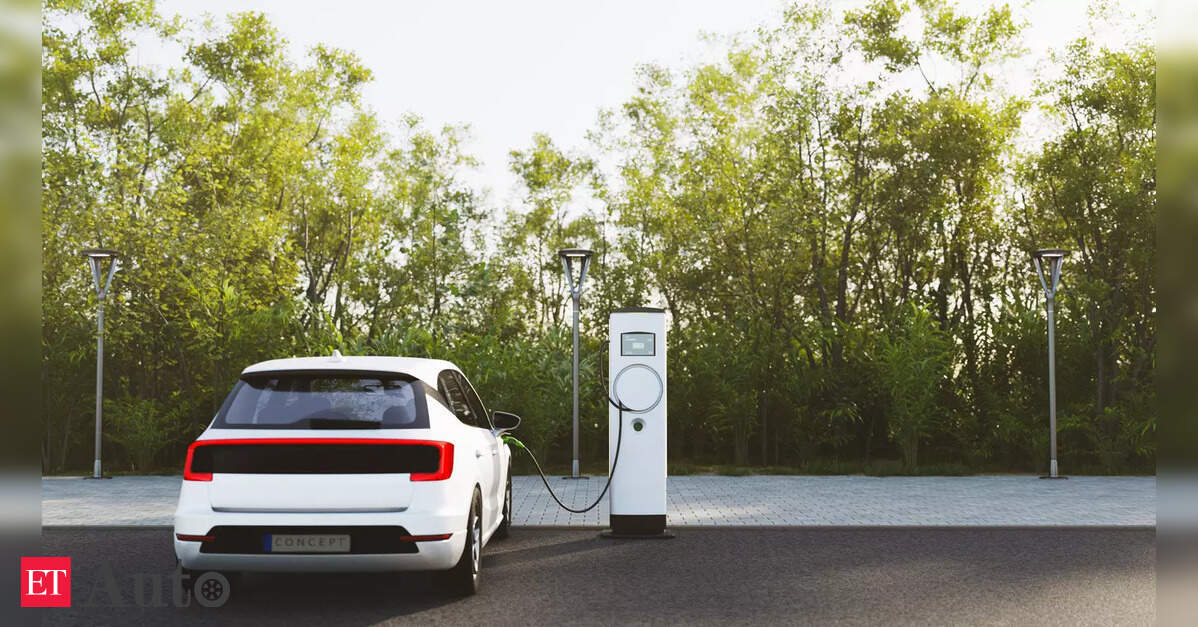

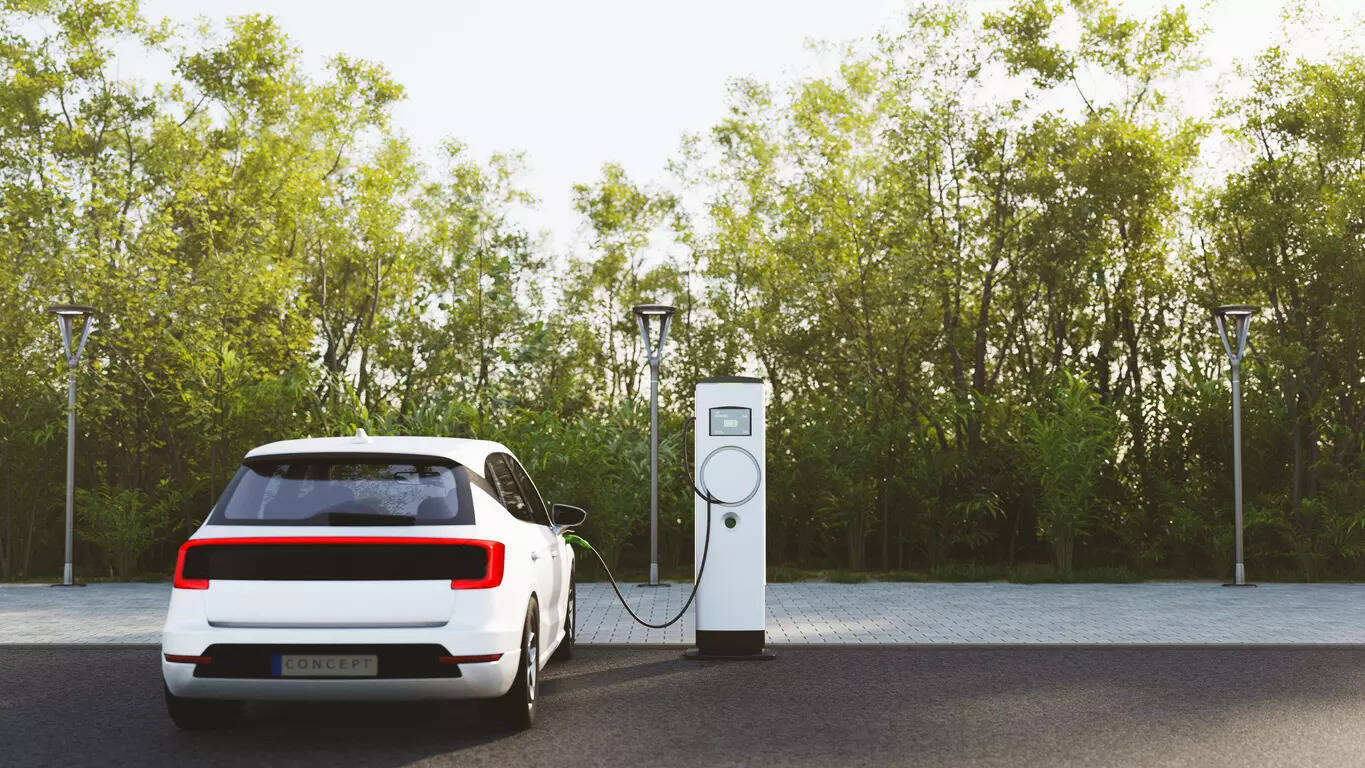
 The country has spent heavily on subsidies for EVs, and getting rid of the support too quickly could derail the shift to battery power.
The narrow streets of Kathmandu — sized for pedestrians and rickshaws — are choked with engines. Buses, motorbikes, small trucks and taxis fill the sprawling valley with horns and exhaust. For its more than 3 million residents, just getting around is a dangerous, eye-stinging ordeal.
But recently, a new kind of motor has started to ease the crush. Sleek electric vehicles glide by with a quiet hum. Gleaming showrooms do a brisk business in the latest models, and charging stations on the highways have turned into rest stops with cafes for drivers to pass the time.
The transition is moving quickly. Over the past year, EVs accounted for 76% of all passenger vehicles and half of the light commercial vehicles sold in Nepal. Five years ago, that number was essentially zero. The EV market share in Nepal is now behind only those of a few countries, including Norway, Singapore and Ethiopia. The average for all countries was 20% in 2024.
The swift turnover is the result of government policies aimed at leveraging Nepal’s wealth of hydropower, easing dependence on imported fossil fuels and clearing the smog. It has been fed by an intense push from Nepal’s biggest neighbor, China, the world’s dominant manufacturer of battery-powered vehicles.
“For us, using electric vehicles is a comparative advantage,” said Mahesh Bhattarai, director-general of Nepal’s Department of Customs. “It’s good for us. In the global market, the Chinese EVs are expanding. The same is happening in Nepal.”
The effort stands in contrast to policies in the United States and Europe, which have blocked Chinese EVs to protect their domestic auto industries. And it carries hope for other developing countries that seek to become wealthier without enduring the crucible of pollution from which many rich nations have already emerged.
The International Energy Agency estimates that the world will add 1 billion vehicles by 2050. A vast majority of them will be in low- and moderate-income countries, where the extent of EV adoption will help determine future levels of both air pollution and climate-warming emissions.
“We’re interested in making sure that this rapid growth in these emerging markets doesn’t follow the same trajectory as the developed markets,” said Rob de Jong, head of sustainable transportation for the United Nations Environment Program.
But as Nepal has learned, there are obstacles. The country has spent heavily on subsidies for EVs, and getting rid of the support too quickly could derail the shift to battery power. Even if gas-powered passenger cars are phased out, cleaning the air will require public transportation to go electric as well.
The Asian Development Bank, a multinational development lender, has been a key financier of Nepal’s dams, transmission lines and charging networks. The head of the bank’s resident mission in Nepal, Arnaud Cauchois, is cautious about the risk of backsliding.
“Given the economic sense that this EV conversion represents for Nepal, I think I would see it as unlikely that we would have major policy change,” Cauchois said. “But that’s basically a wish more than a conviction.”
From Indian Petrol to Chinese Cars
Many countries are trying to electrify their vehicle fleets, but the case for doing so is even more obvious in Nepal, with its clean energy embodied in the rivers that run down from the Himalayas.
A 2015 border skirmish with India squeezed Nepal’s petroleum imports, then its largest energy source. After that, the government invested heavily in hydropower and grid infrastructure that have provided cheap, nonpolluting sources of electricity. Nearly all households now have access, and the rolling blackouts have ended.
To maximize the potential of its homegrown power, Nepal would need to use it for transportation. But EVs were still too expensive for mass adoption in a country with a per-capita economic output of about $1,400. So, the government pulled all the levers it had to provide incentives.
Nepal’s primary source of revenue is taxes on imports. To make EVs cheaper, the government set its customs and excise taxes on the cars at a combined maximum of 40% in 2021, compared with 180% for gas-powered cars. Now, the electric version of one Hyundai SUV costs less than $38,000, while the gas-powered model is about $40,000.
The Nepal Electricity Authority built 62 charging stations, in Kathmandu and on highways across the country. It allowed anyone to build chargers, levied negligible tariffs on their import and gave away transformers — the priciest component.
Finally, the government set electricity costs for chargers at less than market rates. At those prices, fueling a gas-powered car cost about 15 times as much as charging an electric one. That was enough to create a business model for hotels, restaurants and other roadside entrepreneurs to install chargers on their own.
“At first, everybody was scared — how to establish and whether it would run or not,” said Kul Man Ghising, who managed the electricity authority until March. “But we tried and tried and tried.” Businesses have now installed about 1,200 chargers, according to the agency, and private residences are likely to have thousands more.


 "Putin gets validation from Alaska summit. What did Trump take home in an empty-handed return?")
