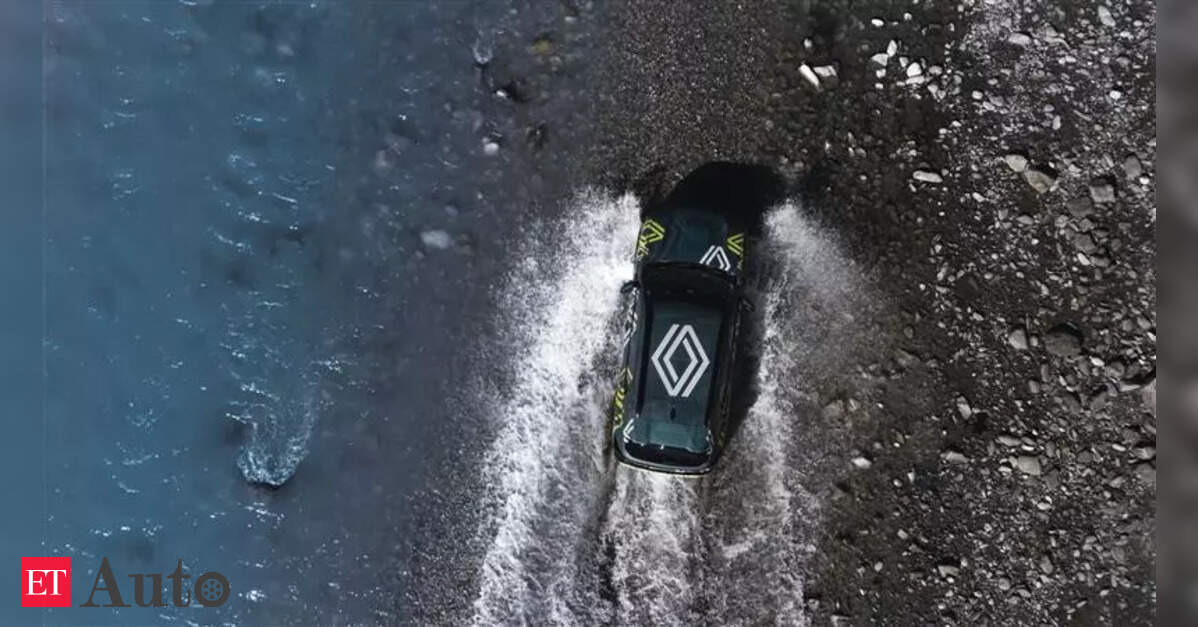

 Renault Duster
French automaker Renault is betting on the strong brand recall of the Duster SUV to revive its India business, as it pivots towards more premium models in one of the world’s fastest-growing car markets.
The company plans to reintroduce the Duster later this month, marking the return of a nameplate that once enjoyed stronger recognition in India than the Renault brand itself.
Under a revamped strategy led by new chief executive Francois Provost, Renault will move away from entry-level positioning and instead target India’s expanding middle class and SUV buyers. The automaker’s market share in India has fallen to below 1 per cent from a peak of around 4 per cent nearly a decade ago.
Republic Day debut for new Duster
Renault is set to unveil a new-generation Duster on January 26, India’s Republic Day, according to company executives and sources. The SUV has been re-engineered to meet current safety and emission regulations and updated to align with evolving consumer preferences.
The Duster launch will be followed by a larger SUV, similar in size to the Dacia Bigster, and an electric vehicle, people familiar with the plans said. Sales of the Duster are expected to begin in February, with a hybrid powertrain offered for the first time in India.
“Previously, our strategy was to offer a car to all Indians. That is not my strategy,” Provost said in an interview with news agency Reuters.
“I am targeting the middle class, which is growing in India and wants competitively priced but attractive cars,” he added.
Shift towards premium models
Renault currently sells the Kwid, Kiger and Triber in India and plans to at least double its line-up over time. The renewed focus on SUVs reflects structural changes in the Indian passenger vehicle market, where SUVs now account for more than half of total sales, compared with about 10 per cent when the Duster was first launched in 2012.
The original Duster was Renault’s breakout model in India, helping it reach a market share of around 4 per cent by 2016. However, the company withdrew the SUV nearly five years ago, citing the high cost of upgrading it to meet stricter emission norms.
Renault now owns 100 per cent of its manufacturing facility in southern India, which has an annual capacity of 500,000 vehicles. The plant will continue producing cars for Nissan until 2032, while Renault evaluates export opportunities from India.
The company also plans to increase sourcing of components from India for vehicles built in other markets, particularly South America, aligning with strategies adopted by rivals such as Stellantis, Volkswagen and Honda.
India critical to global growth
Renault’s renewed push in India is part of a broader effort to reduce its dependence on Europe, which currently accounts for nearly 70 per cent of its global sales and is facing slower growth and intensifying competition, including from Chinese manufacturers.
India’s passenger vehicle market is projected to reach around 6 million units by 2030, up 36 per cent from 2025, driven largely by demand for SUVs and premium vehicles, according to S&P Global Mobility.
Renault expects annual Duster production in India to reach 130,000–140,000 units, potentially more than tripling its current sales. Provost said even a modest share of the Indian market could be transformational.
“I would be delighted to achieve 5 per cent of a 6 million car market,” he said.