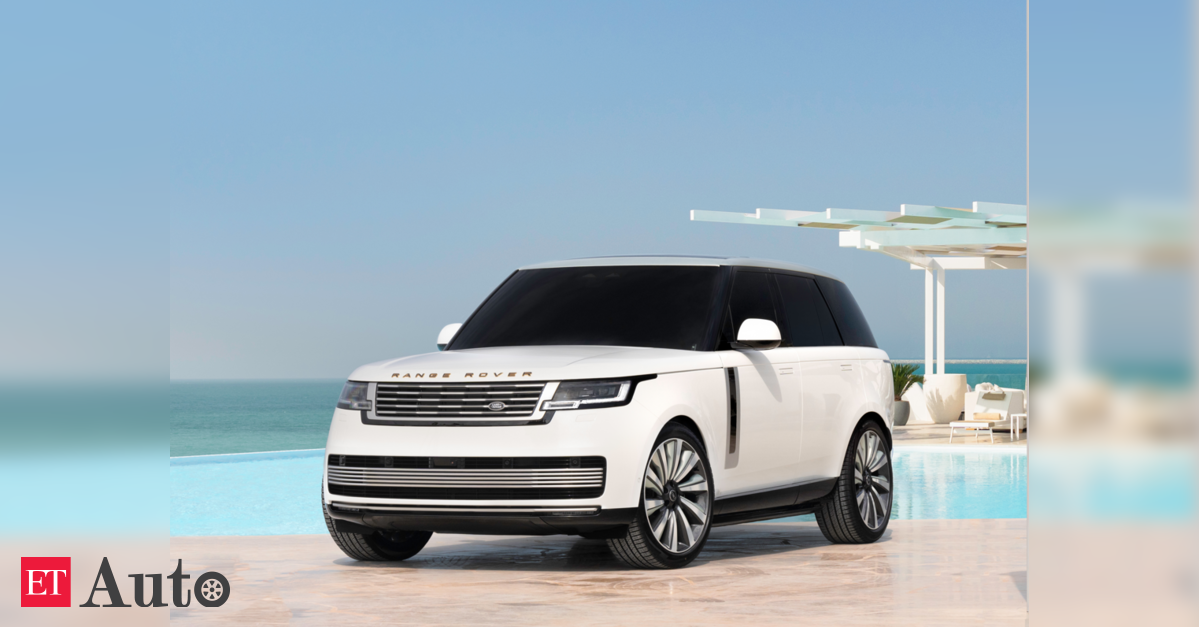

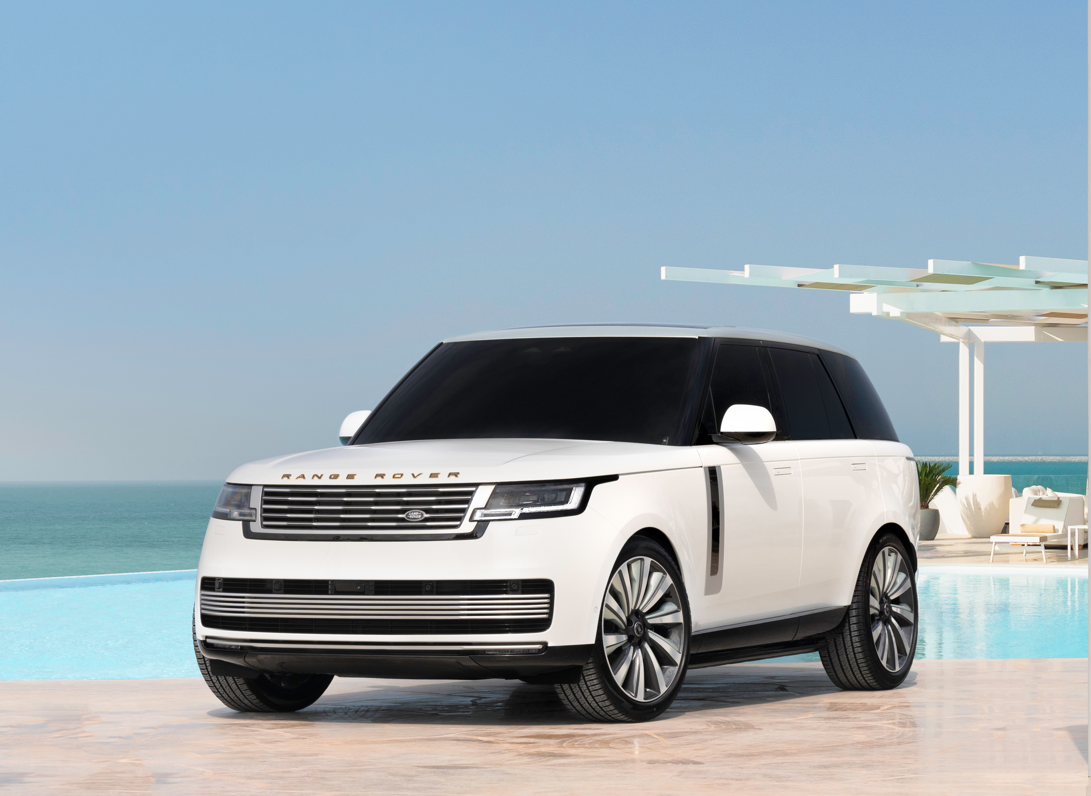
 The company plans to bring MHEV, HEV, PHEV, or BEV to Range Rover, Defender, and Discovery, while making Jaguar all-electric.
Jaguar Land Rover (JLR) is targeting medium-term double-digit revenue growth, with the US emerging as a priority growth market alongside its key regions of the UK, Europe and China, as the luxury carmaker seeks to tap rising demand and strengthen supply chain resilience.
“To truly manifest the power of our brands, we will increase our focus on North America, our biggest market. The rising demand for luxury products, coupled with the strong preference we see for our brands, signals significant growth potential,” said PB Balaji, CEO, JLR.
The luxury carmaker also committed to investing in and growing in high-potential markets, including India and the Middle East.
The company is also aiming to lower its breakeven volume to 300,000 units while pursuing cost efficiencies under its transformation strategy.
“Looking ahead, we are focused on reducing our breakeven point back to 300,000 units within two years through the delivery of Enterprise Missions,” Balaji said in the company’s annual report.
The British luxury carmaker reported a 23.6 per cent year-on-year decline in wholesale volumes (excluding China) to 307,915 units in FY26, compared with 400,898 units in FY25.
Its Enterprise Mission programme is expected to deliver £1.7 billion in savings over the next two years.
This move is aligned to make JLR more resilient amid geopolitical uncertainty, slowing electric vehicle adoption and volatile global markets.
Tata Motors reported a consolidated PBT of ₹2,519 crore, while exceptional items of ₹4,142 crore, the PBT from continuing operations reported a loss of ₹1,623 crore. Tata Motors’ net debt also rose to ₹30,710 crore due to adverse free cash flows, primarily owing to production stoppages at JLR.
The Indian automaker said profitability was impacted by multiple JLR headwinds, including the cyberattack, higher tariffs, the expansion of China’s luxury vehicle tax regime, VME (vehicle mix and marketing expense) pressures, and adverse commodity prices.
The impact was visible for its China sales as the Chery Jaguar Land Rover joint venture declined 26.8 per cent year-on-year to 24,987 units.
In China, the company is taking steps to mitigate the impact of deteriorating market conditions through its new Freelander collaboration with Chery Automotive, under its joint venture.
Multi-powertrain strategy to drive growth
JLR is now gearing up to bring multiple interventions this year, including the launch of the Range Rover Electric and the unveiling of the new Jaguar. The company plans to bring MHEV, HEV, PHEV, or BEV to Range Rover, Defender, and Discovery, while making Jaguar all-electric.
“2026 is set to be an exciting year for JLR as we develop our next-generation vehicles, including the launch of the Range Rover Electric and the unveiling of the first new Jaguar, and take further steps to unlock our potential by putting our world renowned brands and peerless products at the very centre of our business,” added Balaji.
Tata Motors PV is planning to bring a multi-powertrain approach to market, as both the Maharashtra-based automaker and JLR are investing across ICE, hybrid, and battery technologies.
“We enter FY27 with confidence, supported by a robust pipeline of new launches and multi-powertrain offerings,” said TMPV Chairman N Chandrasekaran.
He further highlighted that the automotive industry is witnessing a massive technological transformation, shifting customer preferences, and geopolitical concerns.
AI at heart of operations
Post the cyber incident, the British automaker has kept artificial intelligence (AI) and its IT systems at the centre.
“We will harness the power of data and AI to create delightful customer experiences and accelerate the overall clockspeed of our organisation…And we continue to invest in strengthening our IT systems, and we continue to drive our Enterprise Missions, to increase efficiency and control our costs,” Balaji added.
For this reason, the company has already deployed AI-powered tools across its operations, including engineering, manufacturing, and after-sales. These include a Technician Virtual Assistant operating across 36 countries, AI-driven warranty management systems, and digital factory assistants, targeting enhanced productivity and service quality.
The luxury automaker is also utilising advanced stimulation technologies to enhance vehicle development.