
 Passenger EV penetration currently stands at about 4–5 per cent in India.
India’s electric car market is growing, but it will only take off when more affordable electric cars become popular, said Shailesh Chandra, MD of Tata Motors Passenger Vehicles and Tata Passenger Electric Mobility.
Overall passenger EV penetration currently stands at about 4–5 per cent in India.
Pointing out at a structural imbalance, Chandra said that the sub-₹12 lakh category, which accounts for nearly 65 per cent of total passenger vehicle volumes, has EV penetration of just 1.6 per cent.
In contrast, the ₹12 lakh-plus segment comprising the remaining 35 per cent of the market has already reached around 10 per cent.
“The ball has started rolling at 5 per cent, but the real speed comes when you enter double digits,” Chandra said.
“If even 10 per cent of that 65 per cent segment shifts to electric, you jump from four to 10 per cent nationally. That’s when it becomes a serious game.” He described the current phase as a preparatory stage before exponential growth, with three triggers determining the pace of acceleration: greater model availability across brands, adequate charging infrastructure on key highways, and stronger value propositions in the entry segment.
Mainstreaming EVs in the sub-₹12 lakh bracket has been particularly challenging due to low real-world range, slow charging speeds and limited consumer confidence in battery durability and resale value.
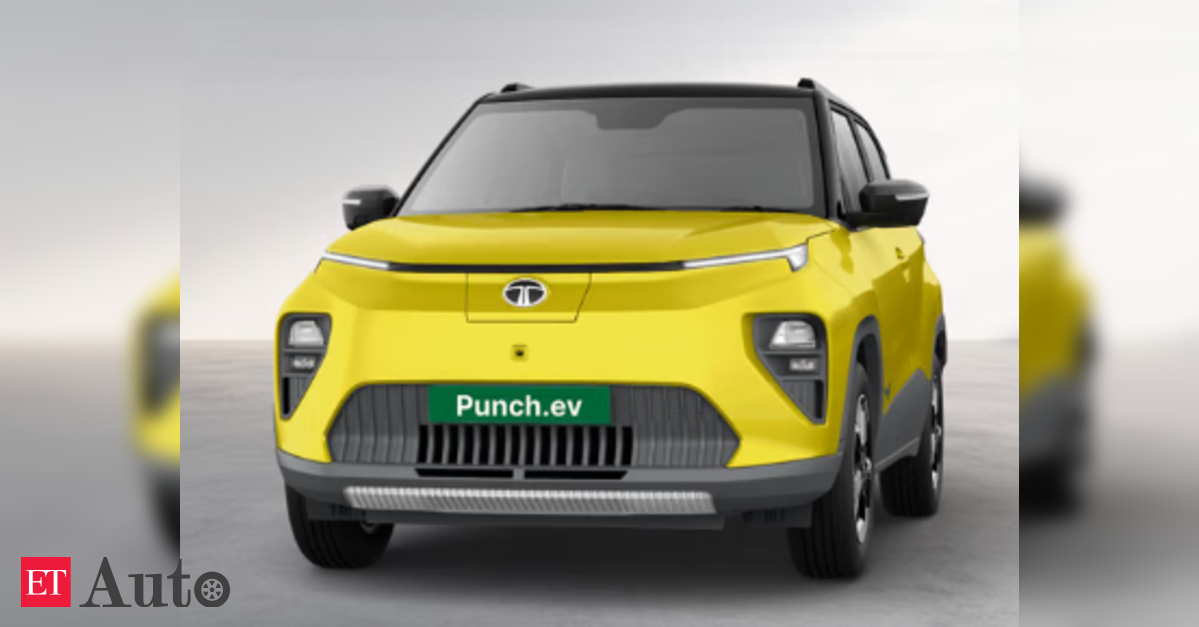
“Customers in this segment are highly value conscious. They need predictability and transparency,” he said. The electric car market leader is seeking to address those concerns with the refreshed Punch.ev. The model offers a claimed range of up to 350 km and supports 20–80 per cent charging in 26 minutes, with a 135-km top-up in 15 minutes. It’s also giving an unlimited kilometre, lifetime battery warranty.
Priced at ₹ 9.69 lakh (ex-showroom, Mumbai), the new Punch.ev brings EV ownership to near on-road price parity with ICE offerings in the entry-level small-car segment, the company claimed. Within the broader Punch portfolio, comprising petrol, CNG and EV variants, EV penetration currently stands at around 10 per cent. Chandra said this could rise to 15–20 per cent in the near term.
Chandra expects the refreshed Punch EV to drive 30–50 per cent incremental sales over the existing model, which currently sells 1,500–1,800 units a month. To lower upfront barriers, the maker of Nexon and Harrier EVs has introduced a Battery-as-a-Service (BaaS) option structured as a financing mechanism that separates the vehicle and battery cost into two EMIs. Starting at ₹6.49 lakh with a battery EMI of ₹2.6 / km. Tata Motors joins manufacturers including JSW MG Motor India, VinFast, Toyota and Maruti Suzuki in offering similar options.
Tata Motors, which currently sells half a dozen EV models, had ceded ground to rival JSW, MG, and others.
New models such as the Harrier EV have helped it regain some ground. According to Federation of Automobile Dealers Associations data, its market share rose to 43 per cent in January 2026 from 38 per cent in July 2025. The company ended 2025 with sales of 81,125 EVs, up 18 per cent year-on-year. In January alone, it sold 9,052 units, marking a 72.7 per cent increase over the year-ago period.
Chandra cautioned that growth will be gradual rather than abrupt. “EV is not about a sudden spike. It is about steadily strengthening every product and making the technology accessible,” he said. “Once you cross 10–15 per cent, the speed changes dramatically. That’s when exponential growth truly begins.”