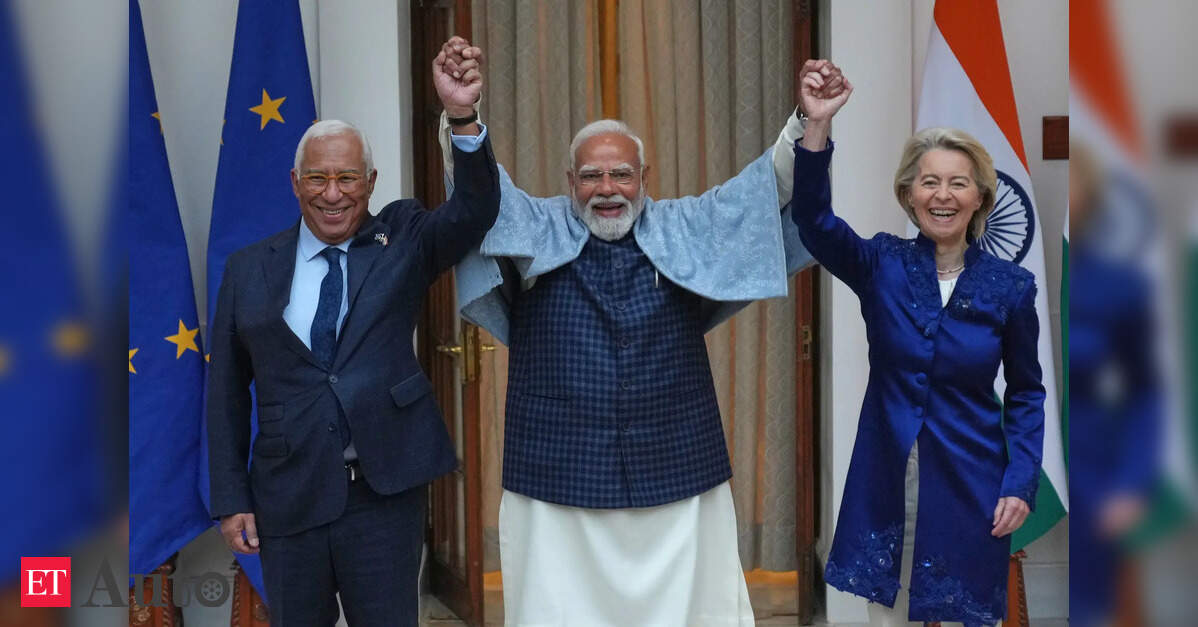

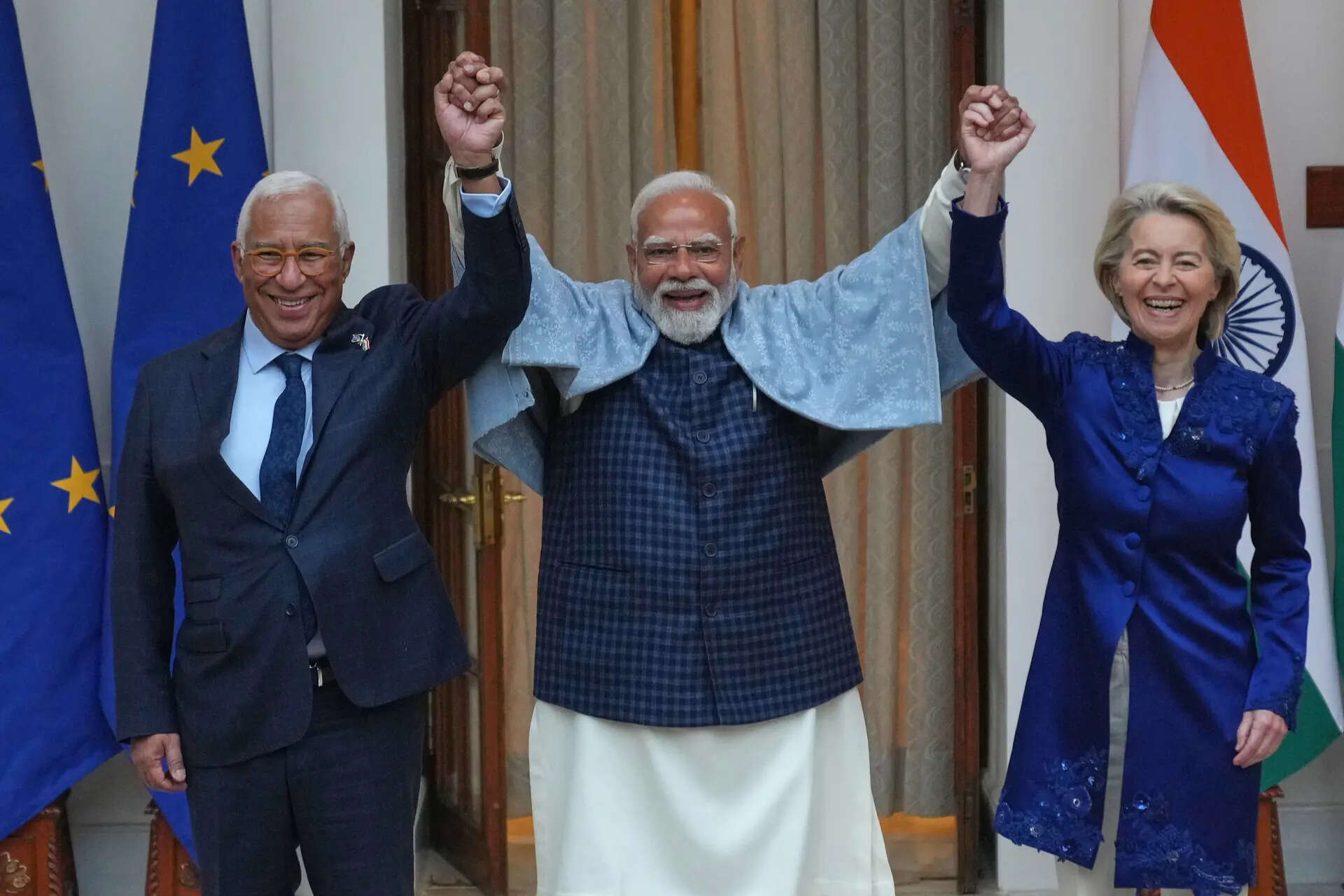
European luxury cars are set to become more affordable in India after the country and the European Union concluded a long-pending Free Trade Agreement (FTA) at the 16th India-EU Summit on Tuesday.
The deal allows a phased cut in import duties on European cars under a quota system, opening the door for cheaper imported cars from brands such as Mercedes-Benz, BMW, Audi, Ferrari, Lamborghini, Rolls-Royce and Bentley to lower prices in the Indian market over the coming years.
What the India-EU deal means for car buyers
Under the agreement, India has agreed to a calibrated, quota-based liberalisation of the automobile sector. This will allow European carmakers to bring more fully imported models, especially in higher price segments, at sharply lower tariffs. Within the quota, import duties on EU-made cars will gradually fall to 10 per cent. This marks a major shift from the earlier system, where duties on fully built imported cars went as high as 110 per cent. However, an official breakdown has not been provided, but as per reports, the tariffs on cars are likely to be dropped to 40% from next year before rolling it down to 10% over a period of time. These rates will apply to the first 250,000 cars imported annually from the European Union.
India-EU Deal: Which cars qualify under the deal
The lower duties apply only to cars with a landed value (CIF) of over $15,000, or roughly ₹13.5 lakh. This threshold is meant to protect mass-market and budget car segments in India. As a result, the biggest gains are expected in:
- Premium sedans
- Luxury SUVs
- Performance cars
- Supercars and ultra-luxury models
India-EU Deal: How much cheaper could cars get
As per a Reuters report, the immediate cut to 40 per cent duty in 2026 itself brings significant savings compared with the old 110 per cent regime.
Some indicative price changes based on the new structure include:
| Brand | Model | Old Price (110% Duty) | New 2026 Price (40% Duty) | Total Saving |
| Skoda | Octavia vRS | ₹58.0 Lakh | ₹40.5 Lakh | ₹17.5 Lakh |
| Volkswagen | Golf GTI | ₹52.0 Lakh | ₹36.0 Lakh | ₹16.0 Lakh |
| BMW | M4 Competition | ₹1.55 Crore | ₹1.08 Crore | ₹47.0 Lakh |
| Audi | RS Q8 | ₹2.30 Crore | ₹1.60 Crore | ₹70.0 Lakh |
| Porsche | 911 Carrera | ₹2.10 Crore | ₹1.47 Crore | ₹63.0 Lakh |
| Lamborghini | Urus | ₹4.40 Crore | ₹3.08 Crore | ₹1.32 Crore |
| Ferrari | Roma | ₹3.80 Crore | ₹2.66 Crore | ₹1.14 Crore |
| Ferrari | 296 GTB | ₹5.40 Crore | ₹3.78 Crore | ₹1.62 Crore |
| Ferrari | SF90 Stradale | ₹7.50 Crore | ₹5.25 Crore | ₹2.25 Crore |
| Ferrari | Purosangue (V12) | ₹10.50 Crore | ₹7.35 Crore | ₹3.15 Crore |
| Bentley | Bentayga | ₹5.00 Crore | ₹3.50 Crore | ₹1.50 Crore |
| Bentley | Continental GT | ₹5.23 Crore | ₹3.66 Crore | ₹1.57 Crore |
| Bentley | Flying Spur | ₹5.25 Crore | ₹3.67 Crore | ₹1.58 Crore |
| Rolls-Royce | Ghost | ₹8.95 Crore | ₹6.26 Crore | ₹2.69 Crore |
| Rolls-Royce | Cullinan | ₹10.50 Crore | ₹7.35 Crore | ₹3.15 Crore |
| Rolls-Royce | Phantom | ₹10.48 Crore | ₹7.33 Crore | ₹3.15 Crore |
Note: All prices are indicative and based on estimated ex-showroom in INR. The actual price may vary according to the actual duty structure rollout, carmakers and dealer price list.
Three things buyers should know
Electric vehicles will not get an immediate cut Electric vehicles imported from the EU will remain at current duty levels for the first five years. The reduction for EVs will begin only after 2031, as the government seeks to protect domestic investments by Indian manufacturers.
Why the price drop feels bigger
When import duty comes down, the base price used to calculate GST and compensation cess also reduces. This means the final on-road price falls much more sharply than the duty cut alone suggests.
Old favourites may return
Cars that exited India because they became too expensive to import, such as performance sedans and enthusiast models from carmakers like Renault and Volkswagen, are now expected to make a comeback in limited numbers without requiring local factories.
Government’s view on the India-EU deal on cars
The government said the carefully crafted auto liberalisation package balances consumer interest with domestic manufacturing priorities, while also opening opportunities for “Make in India” and future automobile exports from India to the European Union.
What India-EU FTA deal on cars means for Indian buyers
Indian consumers are expected to benefit from access to high-technology vehicles and increased competition in the premium automobile segment. While the biggest price cuts will fully materialise over time, even the first phase of the India-EU trade deal could reshape the luxury and performance car market in India.