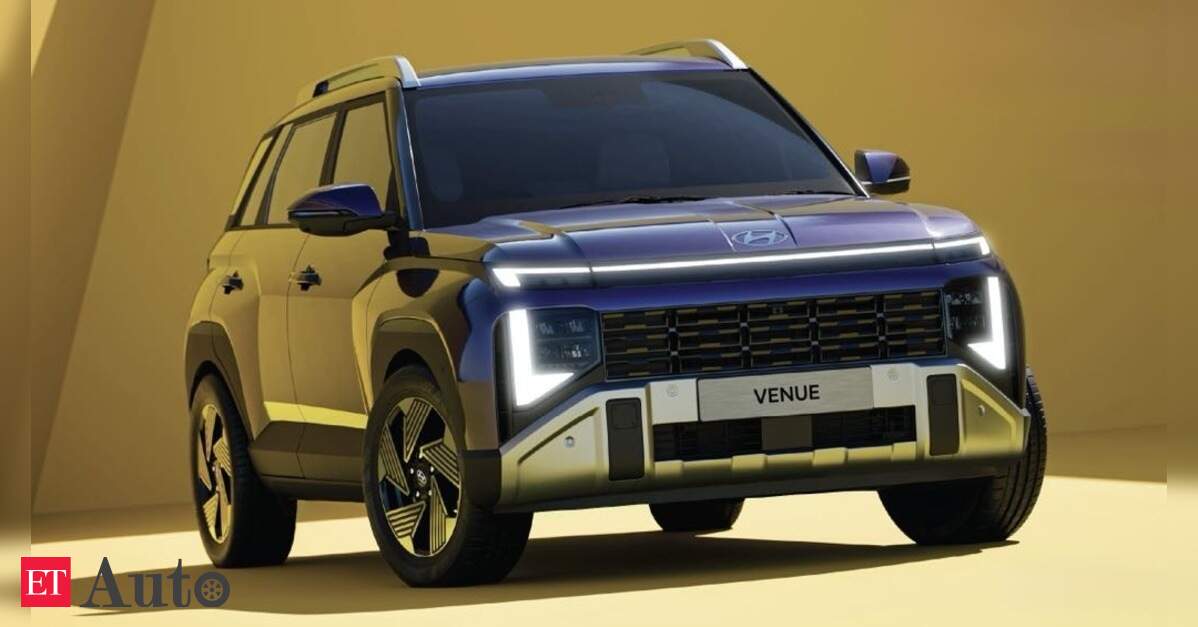

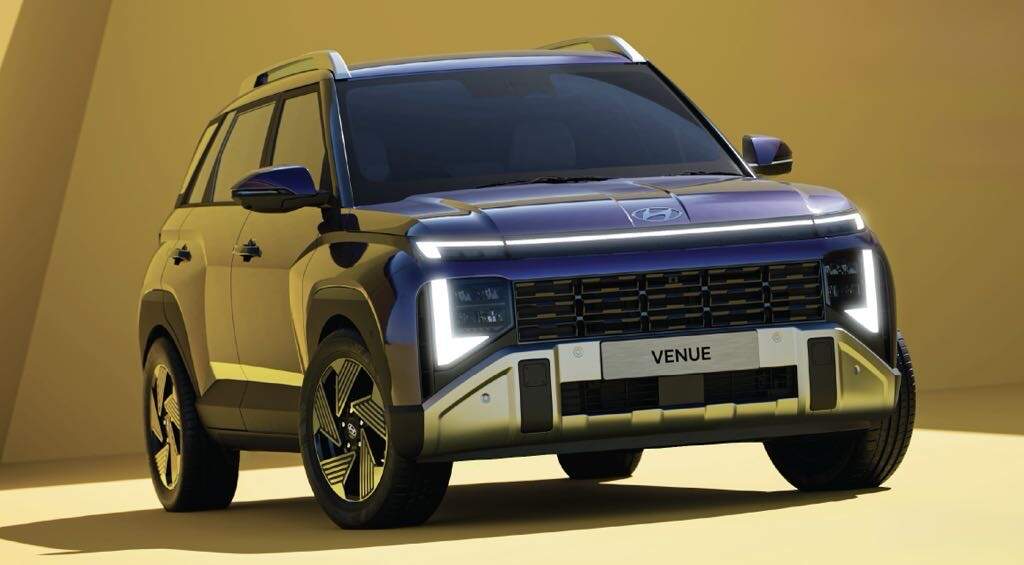
 Hyundai’s Pune facility has become the exclusive global manufacturing base for the new-generation Venue, making India central to the model’s international rollout.
Hyundai Motor India is accelerating its manufacturing and export plans by bringing forward capacity expansion at its Pune plant by nearly two years, reflecting the growing strategic role of India in the Korean automaker’s global production network.
The company’s top management said it will commence third-shift operations at its Pune facility from October 2026, instead of the original timeline of mid-2028, allowing it to respond faster to domestic demand as well as growing export opportunities. The move comes as Hyundai prepares to export the all-new Venue to around 35 global markets, significantly expanding India’s role as a production base.
Speaking after the company’s first-quarter FY27 earnings, Managing Director and CEO Tarun Garg said the decision would help Hyundai cater to rising demand both in India and overseas.
“We are progressing with preparations to commence third shift operations at our Pune facility from October 2026 itself. This development would effectively advance our capacity ramp-up plan by nearly two years because the original plan was mid of ’28, enabling us to meet growing customer demand and accelerate business growth,” he said.
Pune as export hub for Venue
Hyundai’s Pune facility has become the exclusive global manufacturing base for the new-generation Venue, making India central to the model’s international rollout. “The new Venue is being exclusively produced globally in the Pune plant,” Garg said. “Earlier we were exporting the old Venue to 28 markets, now we are looking at 35 markets.”
The third shift will support both domestic and export demand.
“Venue is receiving a great response not only in the domestic market but also in the export market. So the third shift will help us to achieve that,” he added.
Hyundai currently operates the Pune plant with an annual capacity of around 120,000 units in two shifts, which will increase to about 170,000 units under three-shift operations. The next expansion phase will raise capacity to 250,000 units by 2028, followed by 300,000 units by 2030.
The export push also extends beyond the Venue. Hyundai has started shipments of left-hand-drive Exter and Verna variants and is targeting new overseas markets, particularly in Latin America.
“We are following a strategy of more markets and more models,” Garg said, adding that strong order backlogs in West Asia and new export programmes should support recovery in overseas volumes during the coming quarters.
Manufacturing resilience on display
The company’s manufacturing flexibility was tested during the quarter after a fire at a supplier’s facility disrupted production in June, affecting around 13,900 vehicles.
Despite initially guiding for recovery during the second quarter, Hyundai has already restored most of the lost production.
“We lost 13,900 vehicles… and I think most of it has already been recovered in July. Within Q2, 100 per cent of it will be recovered,” Garg said.
He described the recovery as another example of Hyundai’s operational resilience.
“Throughout our 30-year journey in India, we have successfully navigated various challenges through swift decision-making, strong execution and close collaboration with our partners,” he said in his opening remarks.
The disruption, coupled with geopolitical tensions in West Asia that affected exports, weighed on first-quarter profitability, although the company maintained its full-year guidance of 8–10 per cent volume growth and an EBITDA margin of 11–14 per cent.
Multi-powertrain strategy remains intact
Even as India moves towards stricter fuel-efficiency regulations under the Corporate Average Fuel Efficiency (CAFE) framework, Hyundai said it does not intend to alter its long-term product roadmap.
Instead of pursuing an EV-only strategy, the company will continue investing across petrol, diesel, CNG, hybrid and electric powertrains.
“We believe in giving multiple technology options to the customers,” Garg said. “We don’t thrust anything on the customer; rather we ask the customer what he wants and we should be able to give him.”
The company’s CNG portfolio continues to expand, with CNG contributing a record 18.2 per cent of domestic sales during the quarter. Hyundai has already announced plans to offer six CNG models by 2030 while simultaneously introducing hybrid vehicles and dedicated EVs.
On upcoming CAFE III regulations, Garg said Hyundai’s existing product strategy would be sufficient.
“As per our internal calculations, our game plan and our strategy on EV, on CNG, on hybrids—we don’t need to do anything to pre-pone. Whatever is the plan should help us meet CAFE III as planned,” he said.
Rural markets outpace urban India
Beyond manufacturing and exports, Hyundai also highlighted a significant shift in its domestic demand profile, with rural India emerging as its fastest-growing market.
Rural contribution to Hyundai’s domestic sales increased to 25.9 per cent in the April-June quarter from 22.6 per cent a year earlier. Rural volumes grew 23.2 per cent during the period, compared with 2.8 per cent growth in urban markets.
Garg attributed the trend to expanding infrastructure, stronger rural outreach, wider dealership and mobile service networks, and changing income patterns.
“We believe that this growth will continue in the rural areas,” he said, adding that rural demand is increasingly being driven by multiple economic activities rather than farm income alone.
With capacity expansion, a stronger export programme, new product launches and broad-based powertrain investments, Hyundai is positioning India not only as its largest manufacturing base outside South Korea but also as a key pillar of its global production and export strategy.