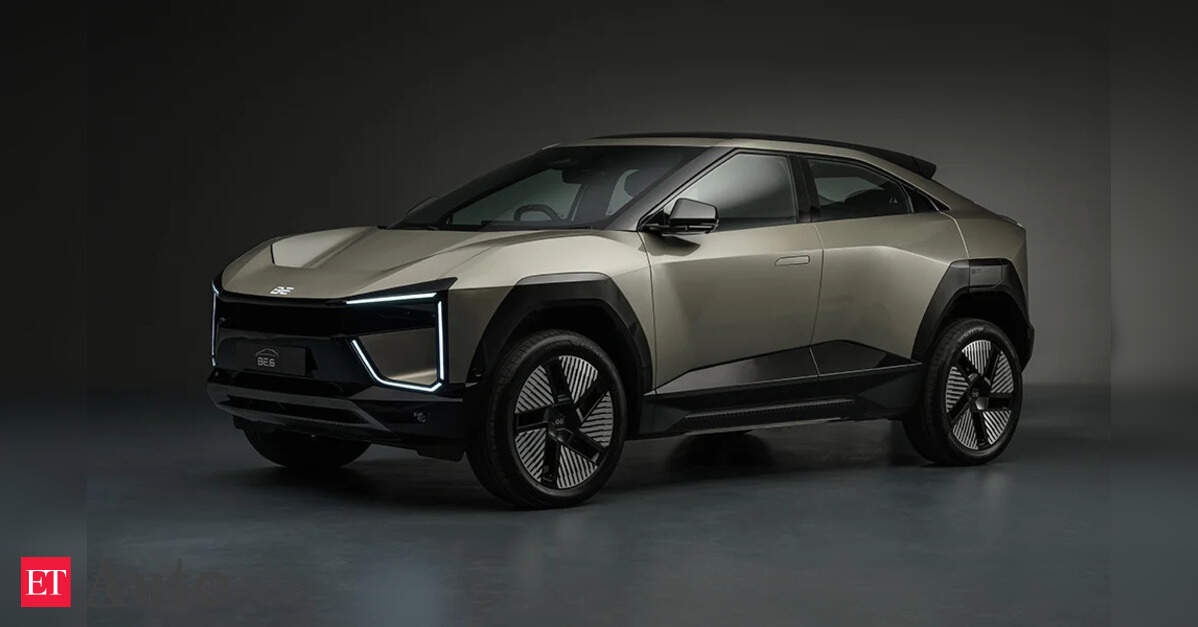

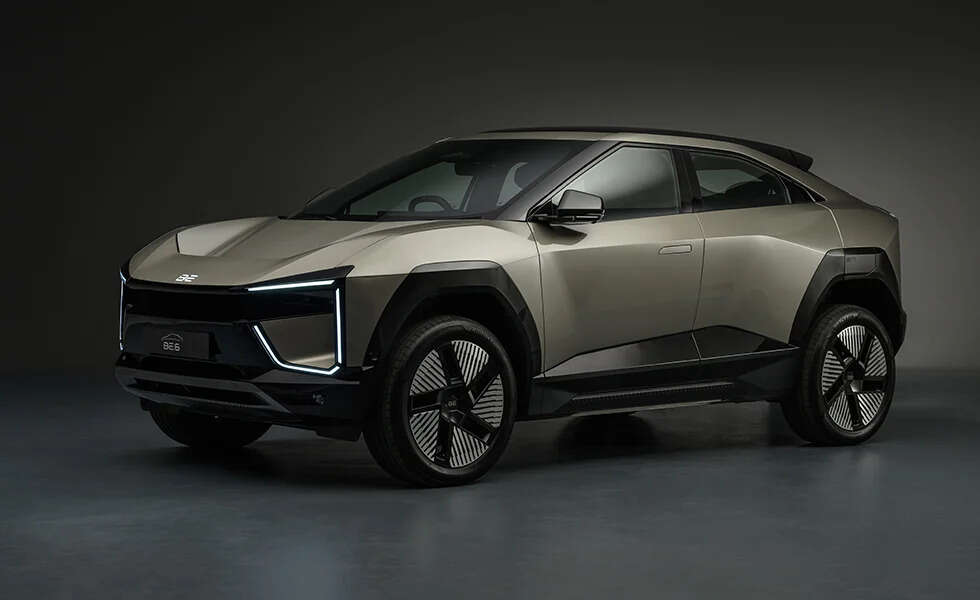
 Mahindra BE 6 reflects Mahindra’s ‘Attack Mode’ strategy—combining faster development, premium positioning, and innovation to compete at global EV speed,
“/>
‘Attack Mode is a strategy adopted in Formula E racing, where a racing driver makes a deliberate choice to accelerate at the right moment, in imperfect conditions. In ideal conditions, overtaking is difficult, because everyone is at speed’, said Mahindra Group Chairman Anand Mahindra in his Annual General Meeting message to shareholders. And this approach may be the need of the hour for Indian companies harbouring big and global ambitions, including Mahindra’s own automotive (including EVs) business.
Ramping up speed and innovation
In the new-age industry, there’s an added layer of requirements – innovation and speed, to grow sustainably. As Indian automakers seek a stronger position globally, comparisons with Chinese manufacturers, or the ‘China speed’, have become increasingly frequent.
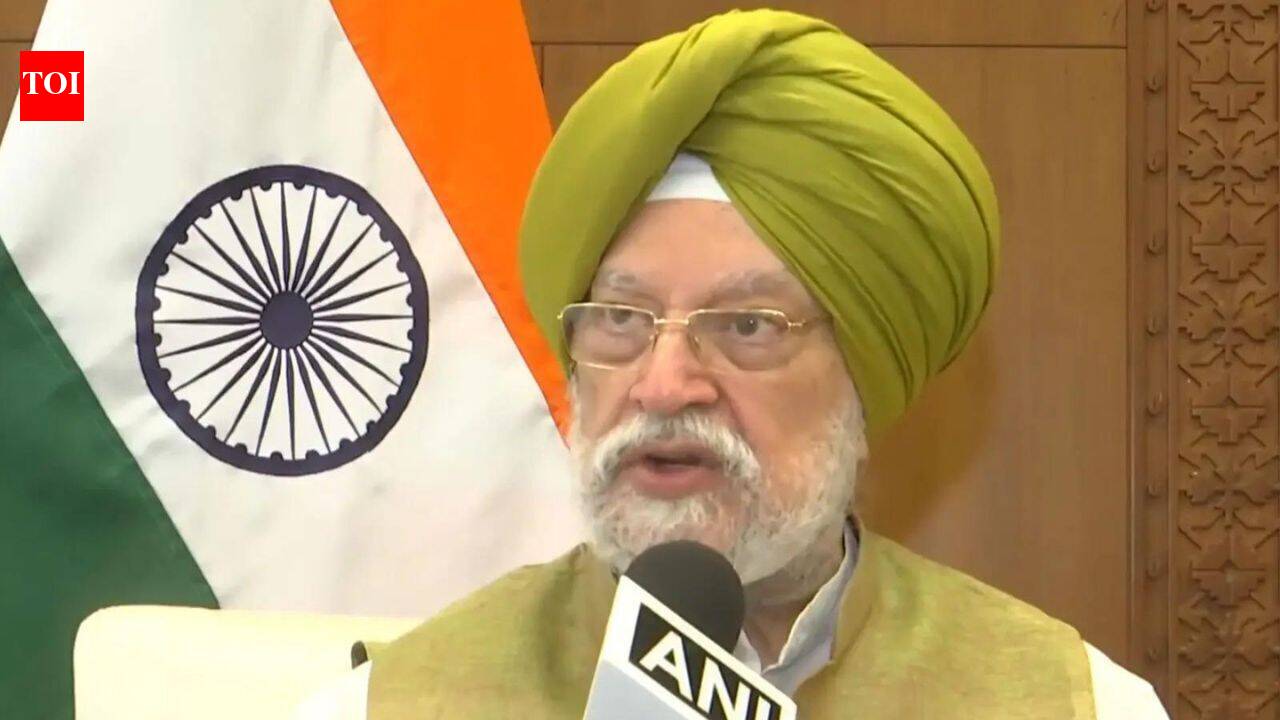
R Velusamy, President – Automotive Business, M&M, and MD, Mahindra Electric Automobile Limited believes Indian automotive players must benchmark themselves not only on technology but also on execution.
According to him, three capabilities will determine long-term competitiveness. The first is product quality covering fit, finish, craftsmanship, and overall customer experience.
The second is development speed. Chinese manufacturers have dramatically shortened product development cycles while refreshing existing models at a pace that has forced global automakers to rethink conventional timelines. Velusamy said understanding and responding to that speed would be essential for success in the current era.
The third is delivering a compelling price-value equation. “It is about understanding how quickly competitors develop products, how frequently they refresh them and at what price-value equation they compete,” Velusamy tells ETAuto in an interview recently.
Mahindra itself has attracted industry attention over the past few years for compressing development timelines for its electric SUV programmes. In his previous role as President – technology and Product Development, Velusamy led the team in developing Mahindra’s first set of born-electric SUVs – BE 6 and XEV 9e in a record time of three years.
When asked about the company’s new benchmark, to also meet the ‘China speed’, Velusamy smiles and says, “When we do it I will let you know what the next benchmark is. These are arsenals that you keep in the cover!”
Mahindra plans to launch 6 new EVs by 2031.
Focus on premium positioning
India’s passenger EV market may still account for a relatively small share of overall car sales, but for M&M, the transition is already beginning to alter something more fundamental than volumes—it is changing who buys the brand.
The homegrown SUV maker says a large majority of customers opting for its new-generation born-electric SUVs are first-time Mahindra buyers, signalling that its premium EV strategy is helping the company expand beyond its traditional utility vehicle customer base and compete for buyers who may otherwise have considered global or luxury marques.
“These are products priced above ₹25 lakh. We are converting what used to be seen as a typical UV Mahindra into a luxury-segment Mahindra.”
The comments offer an early indication of how Mahindra’s aggressive investment in its INGLO-based born-electric platform is beginning to reshape the brand’s market positioning. Unlike its earlier electric offerings, the BE 6 and XEV 9e have been conceived as technology-led premium SUVs, targeting buyers seeking software-rich, feature-intensive products rather than merely lower running costs. They also lead the OEM’s Software-Defined Vehicle (SDV) journey.
EV revival gathering pace
Velusamy’s comments come against the backdrop of a sharp improvement in India’s passenger EV market after a relatively subdued phase last year.
Driven by new launches, improving charging infrastructure and increasing consumer confidence, electric passenger vehicle sales have regained momentum in recent months, with industry growth significantly outpacing the broader passenger vehicle market. Mahindra believes the ecosystem has now reached an important inflection point. The share of EVs in the overall PV market is estimated to be at around 9 per cent.
“If these numbers are coming, everything has to be moving in the right direction,” Velusamy says, referring to the industry’s recent growth trajectory.
As per FADA (Federation of Automobile Dealers Associations) Research data, retail sales in the Indian electric PV market grew a whopping 108 per cent in June, though on a lower base of 15,318 units in June last year. With retail sales of 7,766 units, Mahindra stands at number two position, with a market share of 25 per cent.
| Company | June ’26 Sales | June ’25 Sales | Growth (YoY) |
|---|---|---|---|
| Tata Motors Passenger Vehicles | 12,187 | 5,375 | ▲126.73% |
| Mahindra & Mahindra | 7,766 | 3,513 | ▲121.06% |
| JSW MG Motor India | 5,861 | 4,691 | ▲24.94% |
| Maruti Suzuki India | 1,919 | — | — |
| VinFast Auto India | 1,404 | — | — |
While infrastructure, localisation and policy support continue to evolve, he believes the larger ecosystem has matured considerably over the past few years.
“There has been an orbit shift,” he said, adding that geopolitical developments affecting fuel prices, along with continued government support for electrification, have further strengthened consumer interest in electric vehicles.
Demand outstripping supply
More than generating demand, the immediate challenge for Mahindra (and most other EV makers) however, is to fulfill it.
Mahindra is currently producing around 6,500-7,000 born-electric SUVs every month and expects production to cross 8,000 units in the near future as manufacturing operations stabilise.
Although its EV plant at Chakan has an installed annual manufacturing capacity of 200,000 units, about 120,000 units have so far been operationalised.
“It is a good problem to have. We are not able to supply enough to the market,” Velusamy says.
Unlike conventional capacity expansion programmes, Mahindra’s production ramp-up is closely linked to the common INGLO electric architecture that underpins multiple future products. As volumes increase across the platform, manufacturing efficiencies and component economics are also expected to improve.
New customers, new expectations
Perhaps the biggest change, according to Velusamy, lies in the kind of customer Mahindra is now serving.
“This is a completely new learning for us. We never had these customers, we never had these products and we never had this experience.”
Unlike traditional SUV buyers, premium EV customers may expect frequent software improvements, seamless digital interfaces, connected services and continuous feature enhancements. Mahindra says customer feedback from this new ownership base is already feeding into future product development.
The company sees this as an ongoing learning process rather than a one-time product launch. “You launch the product, receive feedback and continue improving it,” says Velusamy.
The continuous improvement, on a good quality baseline, will be also crucial for Mahindra to tap international EV markets successfully.
Mahindra has previously outlined ambitions to build an international premium SUV business, with EVs expected to play an important role in that strategy over the coming years. Mahindra and its fellow homegrown OEM are looking at the UK as a key overseas market (among others) for its EVs.
Beyond a new propulsion tech
For Mahindra, electrification increasingly appears to be serving a larger strategic purpose than merely participating in a growing segment of vehicles with a new propulsion technology.
The company’s born-electric programme is helping reposition the brand in premium mobility, attract a new customer demographic and build capabilities in software-led vehicle development—all while preparing for a future in which global competitiveness will be determined as much by speed of execution as by engineering excellence.
Whether that transformation ultimately translates into sustained global success will depend on the company’s ability to scale manufacturing, maintain quality, and also continue shortening development cycles.