
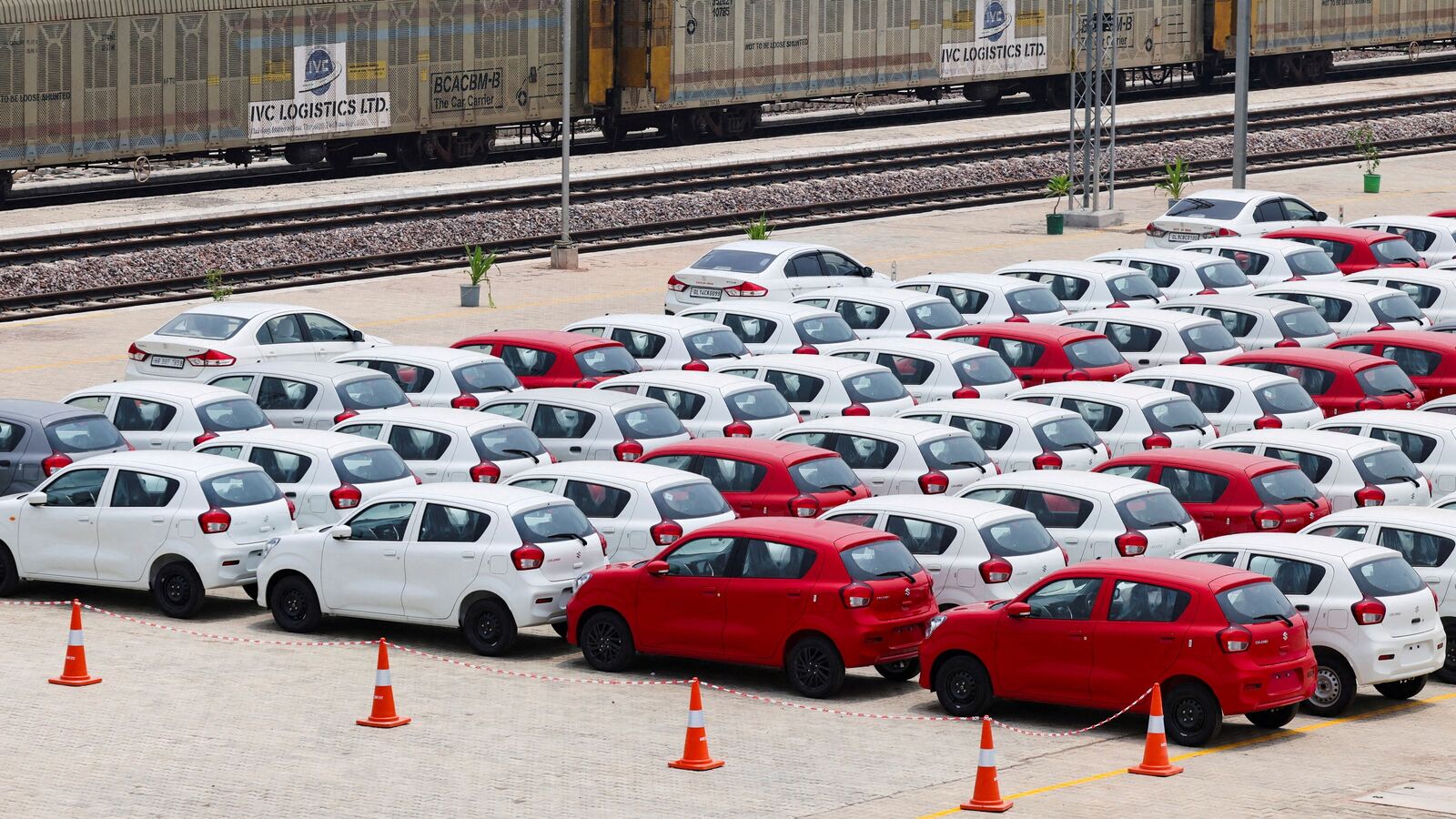


- Major Indian carmakers oppose a proposed small-car concession in upcoming emission rules, warning it favours one manufacturer and risking clean-mobility progress.

View Personalised Offers on
 Check Offers
A proposed tweak to India’s upcoming fuel-efficiency regulations has triggered public disagreement among the country’s largest automakers. Letters sent to the government, reviewed by Reuters, show Tata Motors, Hyundai, Mahindra & Mahindra and JSW MG Motor urging policymakers to drop a planned concession for certain small petrol cars, saying it risks tilting the field in favour of one manufacturer.


None of the companies have named the beneficiary. But industry data and several senior executives cited by Reuters point to Maruti Suzuki, the country’s top seller of compact cars, as the main company that would gain from the move.
Also Read : Explained: Why R C Bhargava thinks India’s CAFE norms need a rethink
A Policy Meant for Small Cars
India is preparing to tighten its Corporate Average Fuel Efficiency (CAFE) norms, reducing the allowable fleet-average CO₂ emissions to 91.7 g/km from an earlier target of 113 g/km. Automakers had expected this tightening to apply evenly across the board, nudging the market further toward EVs and high-efficiency technologies.
But the latest draft proposes a relaxation for a narrow group of small petrol cars: those weighing 909 kg or less, measuring under four metres and using engines of 1,200 cc or less. According to the government’s explanation, these vehicles have “limited potential for efficiency improvements”.
The idea has sparked resistance. Three company executives told Reuters the 909-kg cut-off is arbitrary and does not align with global practice. They argued that the relief would overwhelmingly benefit the carmaker, whose under-909-kg models account for about 16 per cent of its sales.
Also Read : New CAFE 3 norms proposed plan to incentivise small cars, hybrids
Manufacturers Warn Against One-Sided Relief
Mahindra pushed back strongly in its letter to the power ministry, asking the government to avoid creating “a ‘special category’ or definitions based on size or weight”. Such a move, it wrote, “can have adverse effects in terms of the nation’s progress towards safer, cleaner cars, and can alter the level playing field for industry players”.
Hyundai raised similar concerns with the industry ministry, warning that the exemption could send the wrong signal globally. It said the move “may be perceived internationally as a step backwards”, especially as major markets are tightening efficiency rules. It also cautioned that “abrupt policy changes favouring a specific segment risk undermining industry stability and customer interests, as future investments and technology rollouts are planned on the basis of established norms”.
JSW MG Motor told the transport ministry that over 95 per cent of cars under 909 kg come from a single manufacturer, adding that “a relaxation restricted to this weight band would disproportionately benefit one manufacturer”.
Tata Motors, Mahindra and JSW MG Motor did not respond to additional questions from Reuters, and the power, transport and industries ministries also did not comment.
Also Read : Taking the kids out for a drive? Here are 5 ways to protect them from pollution…
Maruti Defends the Safeguard for Small Cars
Maruti Suzuki, in response, argued that its small cars naturally consume less fuel and emit less carbon dioxide than the rest of the market. It said that providing a safeguard for this segment “will help both CO2 reduction and fuel saving”. Although 16 per cent of its domestic sales fall under the 909-kg threshold, demand for these entry-level models has been declining as Indian buyers shift toward larger SUVs.
Regulation Stalls
The disagreement has delayed the finalisation of the new CAFE norms, rules that will shape investment decisions and product strategies for years. Until the government resolves the dispute, automakers face uncertainty over how aggressively they must push electrification and what mix of vehicles their future line-ups must deliver.
Check out Upcoming Cars in India 2025, Best SUVs in India.
First Published Date: 01 Dec 2025, 08:50 am IST