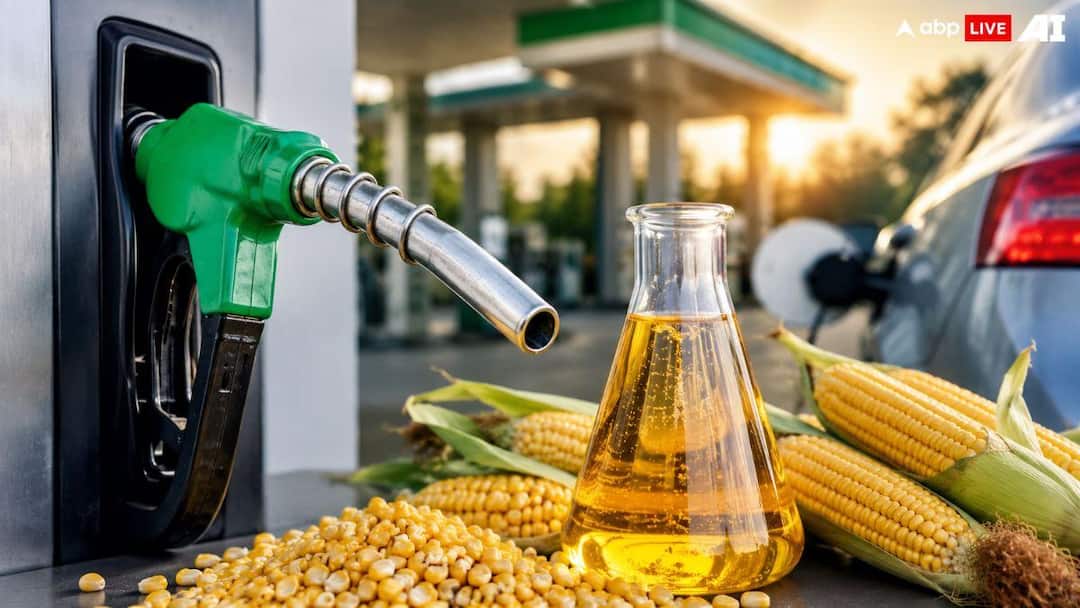

- Centre considers gradual E25 petrol rollout following E20 issues.
- Consumers report reduced mileage, increased maintenance from E20 fuel.
- Vehicle manufacturers and dealers raise compatibility concerns for E25.
E20 Fuel Row: The Centre may adopt a more gradual approach to introducing E25 petrol, following growing consumer complaints over the performance of the existing E20 fuel blend and concerns raised by vehicle manufacturers.
While no formal decision has been announced, the Indian Express reported that the government is considering spacing out the transition beyond E20 to allow more time for vehicles, consumers and the broader ecosystem to adapt.
The development comes as the government continues to defend its ethanol blending programme, insisting that scientific evidence does not support claims of widespread vehicle damage.
E25 Transition May Be Phased
India accelerated its ethanol blending programme over the past few years, making E20, a blend containing 20 per cent ethanol and 80 per cent petrol, the standard fuel across the country well ahead of its original 2030 target.
According to the report, discussions within the government now suggest that the next stage of the programme could be implemented in a calibrated manner rather than through a rapid nationwide rollout.
“There is a view (within the government) that the transition beyond E20 will need to be spaced out. That is the sense we have got from vehicle manufacturers too. The idea is to go to E25 in a calibrated, graded manner for existing vehicles,” a senior government official told the news organisation.
The report added that senior government officials recently met to review concerns surrounding higher ethanol blends. The discussions reportedly focused on scientifically evaluating consumer complaints and encouraging original equipment manufacturers (OEMs) to address vehicle-related issues before moving ahead with E25.
Government officials also believe additional time may be required to ensure readiness across the automotive and fuel distribution ecosystem.
Also Read : Are You Using Your Credit Card For Convenience Or Just To Get Through The Month?
Why Has E25 Come Into Focus?
Although the government has not announced a date for introducing E25 fuel, two recent policy developments have fuelled speculation that a higher ethanol blend could be rolled out in the near future.
The Centre recently announced a central excise duty exemption for petrol containing 22-30 per cent ethanol. The Bureau of Indian Standards (BIS) has also notified fuel quality standards for these higher ethanol blends.
These steps have prompted industry observers to question whether India is preparing for the next phase of its ethanol blending roadmap.
Mileage and Vehicle Performance Concerns Persist
Consumer concerns surrounding E20 fuel have continued to grow over recent months, with many motorists reporting lower mileage and increased maintenance issues.
A Reuters report, citing industry officials, said E20 fuel typically results in a fuel efficiency reduction of around 3 per cent to 3.5 per cent because ethanol contains less energy than conventional petrol.
However, a recent survey by LocalCircles indicated that some consumers believe the impact has been significantly greater.
According to the survey, the proportion of petrol vehicle owners reporting a mileage decline of more than 10 per cent increased from 45 per cent in May to 66 per cent in June.
The survey also found that complaints about unusual wear and tear or repair requirements almost doubled during the same period, rising from 29 per cent to 55 per cent.
Older Vehicles Seen as More Vulnerable
Industry stakeholders have suggested that older internal combustion engine vehicles may be more susceptible to higher ethanol blends.
Ethanol’s hygroscopic nature allows it to absorb moisture, which could increase the risk of corrosion in certain engine components. It also has a lower calorific value than petrol, which can reduce fuel economy.
Automobile manufacturers have reportedly expressed concerns that moving to E25 before the vehicle fleet is fully compatible could lead to additional maintenance issues, particularly for older vehicles.
Petrol Dealers Seek Review
The debate has also reached fuel retailers.
According to an ANI report, the Odisha Petroleum Dealers Association has urged the government to reconsider the pace of the E20 rollout, citing increasing customer complaints and unresolved issues relating to dealer margins.
Association President Sasanka Sekhar Sahu said petrol pump operators were facing criticism from customers despite having no role in framing fuel policy.
“Earlier, there were no complaints. Now that the E-20 has been introduced, we have problems… A car’s carburettor gets jammed. There are many problems. They come and make a mess in the petrol pump. The owner of the petrol pump has nothing to do with it. The government has introduced it. It has sent us. We have sold it,” Sahu told ANI.
He added that the association plans to formally request the government to reconsider the E20 mandate and instead adopt a phased approach beginning with a 10 per cent ethanol blend until vehicle compatibility improves.
Also Read : Stock Markets Rally Ahead, Asian Indices Remain Mixed: Sensex Above 78,400, Nifty In Green
Government Rejects Claims of Widespread Damage
The Centre has consistently maintained that the ethanol blending programme is based on extensive testing and that there is no scientific evidence to support claims of widespread engine damage.
Union Petroleum Minister Hardeep Singh Puri recently dismissed social media claims suggesting that E20 fuel attracts pests or harms engines, describing them as rumours.
While acknowledging that ethanol blends may result in a slight reduction in mileage, the minister said the concept was well established internationally.
“We did not invent the concept of ethanol usage; work on this has been going on for a century… India, the Congress government was the first to formulate a plan for this in India… They use it in racing cars also, the acceleration increases. Mileage, yes, it may drop a little,” Puri said during remarks made last week.
Fresh Debate After Court Proceedings
The controversy gathered further attention this week after reports from a court hearing suggested Attorney General R. Venkataramani had described E20 as an “experiment” whose results would become clear next year.
The government has since denied that the Attorney General made those remarks.
For now, the government continues to back the ethanol blending programme while weighing whether the transition to E25 should proceed more gradually as concerns from consumers, vehicle manufacturers and fuel retailers continue to emerge.