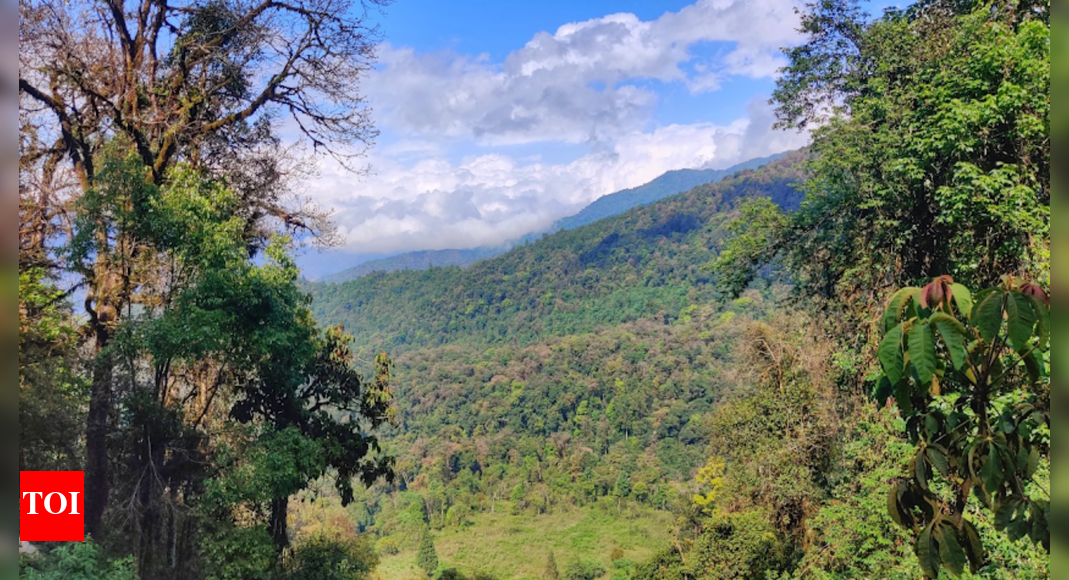

The study site at Eaglenest Wildlife Sanctuary in Arunachal Pradesh | Credit: IISc
BENGALURU: Insect-eating birds that live close to the forest floor in the Eastern Himalayas are facing serious survival challenges due to human-driven changes to their habitats, a new study by the Indian Institute of Science (IISc) has found.Researchers from IISc’s Centre for Ecological Sciences (CES) tracked wild bird populations for over ten years in the Eaglenest Wildlife Sanctuary, Arunachal Pradesh. Their findings reveal that logging and other disturbances are altering forest microclimates, making them hotter during the day and colder at night. These changes are stressing species that depend on the stable, cool, and moist environment of primary forests. The study, carried out between 2011 and 2021, focused on understorey insectivorous birds—those that live and feed below the canopy. The research team tagged the birds with lightweight aluminium rings and revisited the same sites every year to track changes in their body mass and survival rates. They also placed temperature and humidity loggers in both undisturbed and selectively logged forests to understand how microclimatic changes affect bird populations. “Using these long-term datasets, we can better understand why some species survive after logging while others decline strongly,” said Akshay Bharadwaj, a former Master’s student at CES and corresponding author of the study.The findings show that in logged forests, where the canopy is thinned or broken, the ground-level environment becomes more exposed to direct sunlight during the day and loses heat faster at night. Such conditions increase stress on birds that are thermal specialists—species that have evolved to thrive in the stable, moderate climates typical of untouched forests.“Species that can still find microclimates in logged forests similar to their original forest homes are surviving after selective logging. It is those which can’t match their old conditions that face steep declines,” Bharadwaj explained.Over time, these birds have shown a reduction in body mass and a sharp drop in long-term survival. Researchers warn that such changes could ripple through the ecosystem. Fewer insect-eating birds could lead to an increase in insect populations, which in turn may disrupt ecological balance and affect plant health.
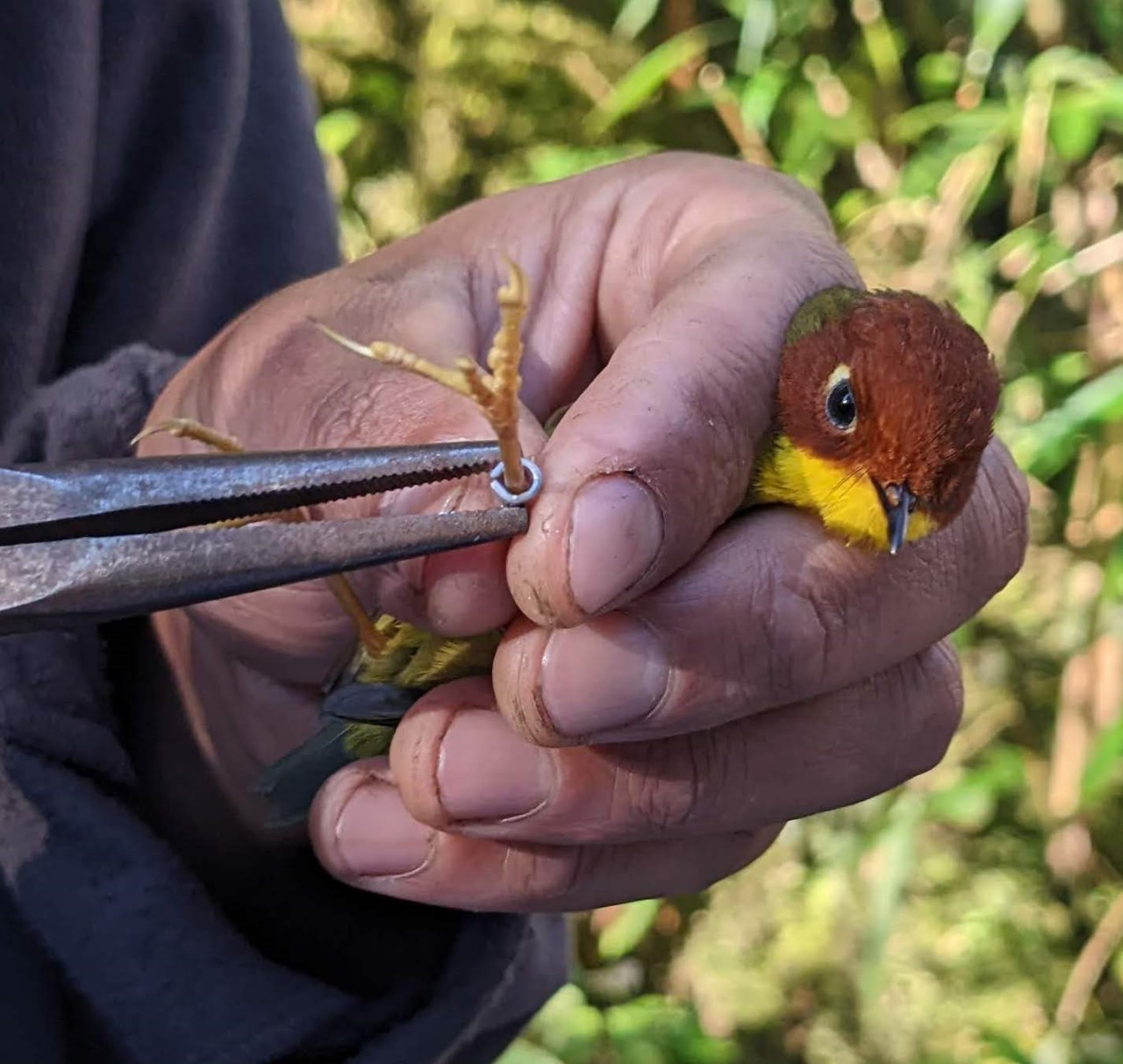
A Chestnut-headed Tesia being ringed by trained field staff | Credit: IISc
The team stressed that conservation efforts should prioritise protecting primary forests across different elevations in the Eastern Himalayas. In areas where forests have already been disturbed, they suggest measures such as creating shaded zones or adding water sources to help restore microhabitats.“Being in the field studying these fascinating animals is always a thrill. We work in a relatively remote part of Arunachal Pradesh, often under challenging conditions—rain, leeches, and elephants—but long-term field data like these are vital. They help us plan practical conservation steps for species facing climate and habitat pressures,” said co-author Umesh Srinivasan, Assistant Professor at CES.