
 "<div>'There's no free money': Belgium warns of risks in using frozen Russian assets for Ukraine</div>")

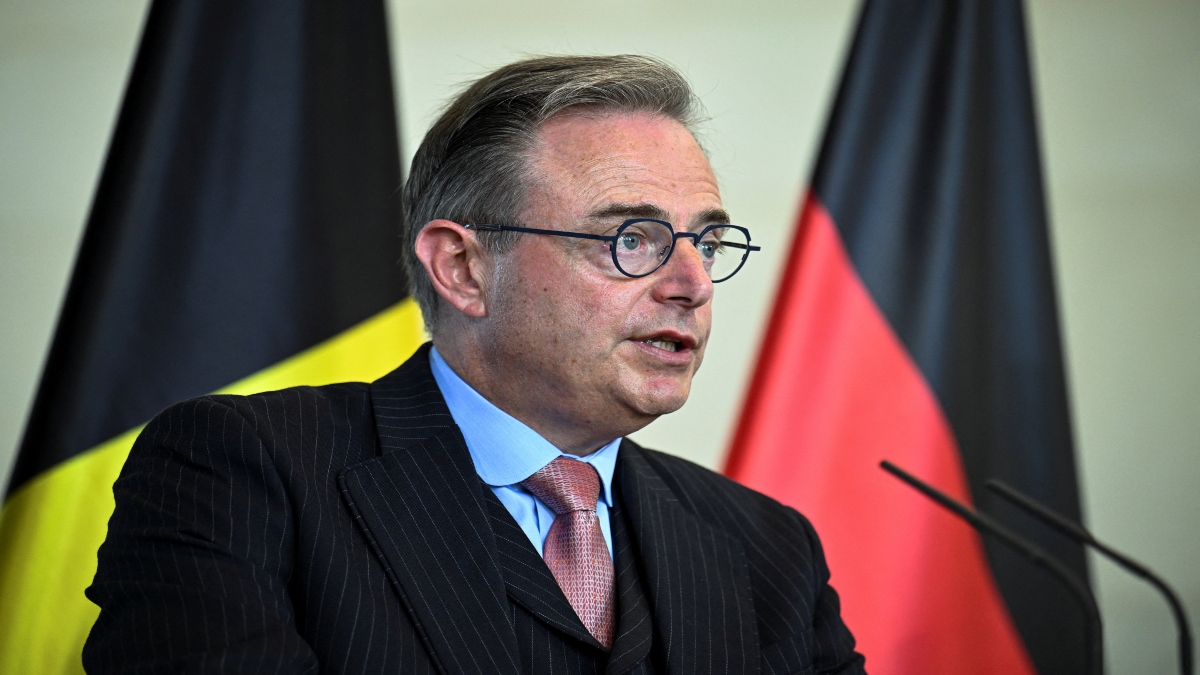
Belgian PM Bart De Wever called on EU leaders to provide written assurances that they would share the risks of using frozen Russian assets to fund loans for Ukraine — a pressing concern for Belgium, which holds the largest share of those assets
“There’s no free money — there are always consequences,” Belgian Prime Minister Bart De Wever warned on Thursday, as he urged fellow EU leaders to provide written guarantees that they would share the risks involved in using frozen Russian assets to finance loans to Ukraine.
Addressing a summit in Copenhagen, De Wever made it clear that while leveraging Russia’s frozen central bank assets might seem like a bold financial solution, it comes with legal and geopolitical risks — especially for Belgium, where the majority of those assets are held.
European Union leaders on Wednesday had voiced broad support for a plan to use the frozen assets to back a €140 billion ($164.5 billion) loan to Ukraine. However, they acknowledged that significant legal and financial hurdles remain.
International law prohibits the outright confiscation of sovereign assets, meaning the EU would need to structure the loan in a way that respects Moscow’s legal claims while shielding Belgium and other participants from potential retaliation by Russia.
“I explained to my colleagues yesterday that I want their signature saying, if we take (Russian President Vladimir) Putin’s money, we use it, we’re all going to be responsible if it goes wrong,” Reuters quoted De Wever as telling reporters in Copenhagen.
The bulk of Russia’s frozen assets in Europe are located in Belgium, primarily because they were held at Euroclear — the central securities depository — at the time they were immobilised.
With US-funded military aid to Kyiv winding down and many EU governments grappling with budget constraints, the European Commission has proposed tapping into the interest earned on these frozen Russian central bank assets to support Ukraine in 2026 and 2027.
Moscow has denounced the plan as “pure theft.”
While many EU leaders are eager to use the assets to ease the financial strain of supporting Ukraine, countries like Belgium are wary of being left to carry the risk alone if the plan backfires.
European Commission President Ursula von der Leyen sought to reassure them on Wednesday, promising that Belgium would not be left solely responsible for the fallout.
Russia vows retaliation
Moscow has vowed to retaliate against anyone involved in seizing Russian central bank assets and has already filed lawsuits in Russian courts targeting Euroclear and the funds it holds in the Moscow securities depository.
Belgium is also increasingly concerned about the personal safety of Euroclear’s leadership.
“The director of Euroclear already lives under close protection, so it is risky what we are going to do,” De Wever said.
“I want everybody to be aware of that, and I want a signature (that says) we’re going in that boat with you, whatever it takes, wherever it may sail, and whatever it might encounter,” he added.
The European Commission’s proposal effectively front-loads potential future Russian reparations to Ukraine by using the cash generated from immobilized Russian central bank assets.
But to ensure Belgium isn’t left exposed — either if Russia must be repaid early or never pays reparations at all — the proposed EU loan to Ukraine, intended to fund both military needs and government operations, would require guarantees from EU member states and possibly other G7 nations.
On Wednesday, G7 finance ministers said they were exploring coordinated and legally sound ways to use frozen Russian funds.
This raises two key questions: how much financial risk each participating government would assume, and which countries would ultimately benefit from Ukraine’s military purchases made with the loan.
De Wever also called for full transparency from EU countries on where frozen Russian assets are held, criticizing the secrecy surrounding the issue.
While Belgium holds the largest share, a European Parliament report suggests France may hold €19 billion, and Luxembourg between €5–20 billion.
Outside the EU, estimated holdings include €28 billion in Japan, €26 billion in the UK, €15 billion in Canada, €6 billion in Switzerland, and €4 billion in the US. These figures remain unverified and appear to exceed the commonly cited $300 billion total frozen across G7 countries.
EU foreign policy chief Kaja Kallas acknowledged on Wednesday that the plan to use these assets is still in progress: “It’s not supported by everybody yet. We still have a lot of work to do.”
With inputs from agencies
End of Article

 "Pakistani-origin grooming gang leader sentenced to 35 years in UK rape case")
&description=%E2%80%98There%E2%80%99s+no+free+money%E2%80%99%3A+Belgium+warns+of+risks+in+using+frozen+Russian+assets+for+Ukraine)