
Last Updated:
Kerala has reported over 60 confirmed cases of Primary Amoebic Meningoencephalitis (PAM) this year, including 19 deaths, with patients from infants to the elderly

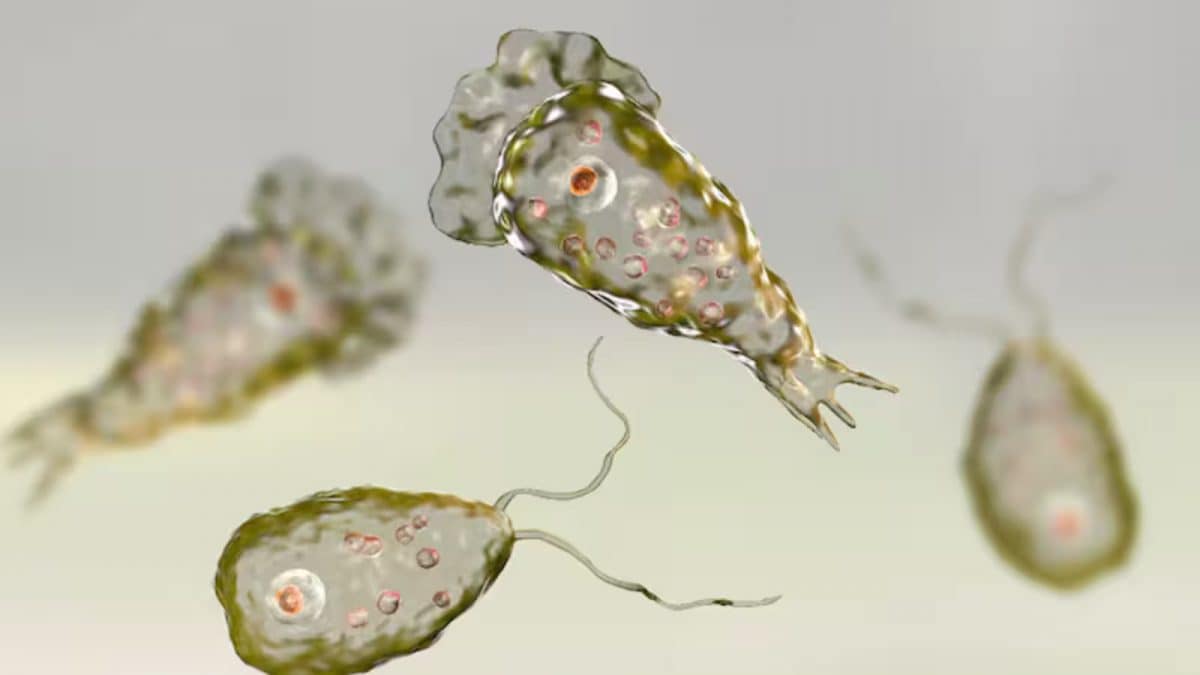
Kerala confirms 69 brain-eating amoeba cases, 19 deaths this year. (Representative Image)
Kerala is facing one of its most alarming health challenges in recent years: a sudden spike in cases of Primary Amoebic Meningoencephalitis (PAM), a rare but deadly brain infection caused by the so-called “brain-eating amoeba.” In 2025 alone, the state has reported 69 confirmed cases and 19 deaths. The rise is striking, considering fewer than 10 cases were reported in the six years leading up to 2023.
State Health Minister Veena George has called it a “serious public health concern,” pointing out that infections are no longer confined to clusters in Kozhikode and Malappuram but are now surfacing sporadically across the state. Patients range from a three-month-old infant to a 91-year-old, complicating efforts to trace and contain the cases.
Recommended Stories
What Exactly Is The ‘Brain-Eating Amoeba’ Infection?
Primary Amoebic Meningoencephalitis is a rare infection of the brain caused by Naegleria fowleri, a microscopic organism found in warm freshwater and soil. Popularly dubbed the “brain-eating amoeba,” it invades brain tissue and causes rapid inflammation, often leading to death within days.
According to a Kerala government document, PAM affects the central nervous system. It is most often seen in otherwise healthy children, teenagers and young adults. The infection destroys brain tissue, causing severe swelling and making survival rates extremely low.
How Does The Infection Happen?
People cannot get PAM by drinking contaminated water, and the disease does not spread from person to person. Infection occurs when water containing the amoeba enters the nose, usually while swimming, diving or bathing in untreated freshwater. From there, the amoeba travels along the olfactory nerves, crosses the cribriform plate at the base of the skull and reaches the brain.
The organism thrives in stagnant freshwater such as ponds, lakes and rivers. It has also been detected in poorly maintained swimming pools and inadequately chlorinated household tanks. According to the Indian Express, many of Kerala’s water sources, including wells and ponds, have high levels of coliform bacteria from sewage and waste. This provides abundant food for the amoeba, allowing it to thrive in warm waters.
Other free-living amoebae, Acanthamoeba and Balamuthia, can also cause brain infections, though these develop slowly over weeks or months in the form of Granulomatous Amoebic Encephalitis. Unlike PAM, which progresses rapidly, these cases often go undiagnosed until it is too late.
What Are The Symptoms?
The symptoms of PAM resemble those of bacterial meningitis, which makes diagnosis difficult. They typically appear between one and nine days after exposure and may develop acutely within hours.
The first signs include headache, fever, nausea and vomiting. As the infection advances, patients may experience a stiff neck, confusion, seizures, hallucinations, loss of balance and eventually slip into a coma.
The CDC warns that most patients die within one to 18 days after symptoms begin, often due to severe brain swelling. Kerala’s health department has echoed this, noting that by the time other more common causes of meningitis are ruled out, PAM is usually too advanced for treatment to work.
Why Is Kerala Seeing More Cases Now?
Kerala reported its first PAM case in 2016, but infections were rare until last year, when 36 cases and nine deaths were confirmed. This year’s surge has doubled that figure, with 69 cases and 19 deaths already on record.
Two factors are driving the increase. First, climate change and rising temperatures have made stagnant freshwater bodies more hospitable for amoebae, while heatwaves are driving more people to use them for bathing and swimming. As the state health department warned, climate change is increasing the likelihood of encounters with this pathogen.
Second, poor water sanitation is compounding the risk. Many of Kerala’s ponds and wells are rich in bacteria from sewage and waste, creating the perfect environment for the amoeba to thrive.
How Deadly Is The Infection?
Globally, the fatality rate of PAM is about 97 per cent. In Kerala, however, the mortality rate this year stands at roughly 24 per cent, far lower than the global average. This is largely due to quicker diagnosis and more aggressive treatment.
The Indian Express reported that two children, siblings of an eight-year-old who died of the disease in August, recently recovered. Their survival offers rare hope in a disease that has claimed nearly every patient it has infected.
What Are Doctors Using For Treatment?
There is no standard cure for PAM. Almost all known survivors worldwide were diagnosed before the infection reached the brain, highlighting the importance of early detection.
Doctors in Kerala are using a combination of drugs, including amphotericin B, rifampin, miltefosine, azithromycin, fluconazole and dexamethasone. Miltefosine, an anti-parasitic drug, has been linked to rare survivor cases worldwide, and its early use has contributed to Kerala’s recent recoveries. The state government has acknowledged, however, that the rarity of the disease, its fulminant clinical course, and the difficulty of making a rapid diagnosis have hampered the evaluation of drug regimens.
After the 2023 Nipah outbreak, doctors in Kerala were instructed to check all cases of meningoencephalitis for amoebic infection. “If they find amoeba, they will start the treatment for amoebic meningoencephalitis. Early detection can save lives,” Minister Veena George said.
What Precautions Are Being Advised?
Given the lack of a reliable cure, prevention is critical. Health authorities have issued detailed guidance:
- Avoid swimming or bathing in untreated or stagnant freshwater bodies such as ponds and lakes.
- Use nose clips or keep the head above water while swimming in freshwater.
- For nasal rinsing or religious rituals like jal neti, use only boiled and cooled, distilled or sterile water.
- Ensure that swimming pools, wells and household tanks are regularly cleaned and properly chlorinated.
- Avoid exposing open wounds to untreated water or soil, and use waterproof bandages if necessary.
- Contact lens users are advised to use sterile, commercially prepared solutions to prevent Acanthamoeba-related eye infections.
The state health department, in collaboration with the National Centre for Disease Control, is carrying out environmental sampling and testing of water sources. Hospitals have been put on alert, and awareness drives are underway to warn the public of the risks.
What Kerala’s Cases Signal
In August alone, a three-month-old infant, a 52-year-old woman and a nine-year-old girl in Kozhikode died of PAM, illustrating how the infection spares no age group. State authorities have launched a “Water is Life” chlorination drive to disinfect wells, tanks and public bathing areas, alongside awareness campaigns during the monsoon.
The pattern is not confined to Kerala. India recorded its first PAM case in 1971, with sporadic deaths in Tamil Nadu, Maharashtra and elsewhere, and Kerala’s first confirmed fatality came in 2016. What sets the present apart is both the sudden spike in cases and the rare recoveries achieved through early use of drugs such as miltefosine.
These lessons point to a broader warning. Warmer waters and sewage-fed bacteria are helping the amoeba thrive, while practices such as ritual nasal cleansing with unboiled or untreated water heighten the risk. Kerala’s relatively lower fatality rate of 24 per cent compared with the global average of 97 per cent shows that vigilance, surveillance and quick treatment can save lives. But the trend also underlines how climate change and unsafe water systems are making once-rare infections more common. Preventing them will increasingly depend on stronger water safety measures, medical readiness and community awareness.
About the Author

Karishma Jain, Chief Sub Editor at News18.com, writes and edits opinion pieces on a variety of subjects, including Indian politics and policy, culture and the arts, technology and social change. Follow her @kar…Read More
Karishma Jain, Chief Sub Editor at News18.com, writes and edits opinion pieces on a variety of subjects, including Indian politics and policy, culture and the arts, technology and social change. Follow her @kar… Read More
September 18, 2025, 09:01 IST
Loading comments…
Read More