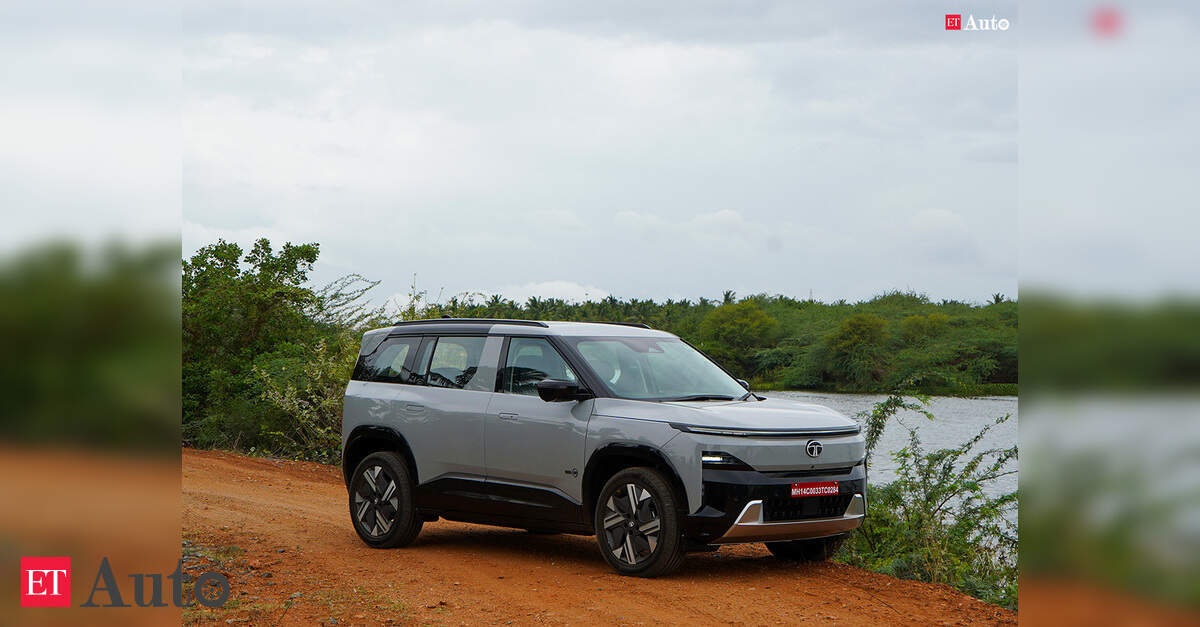

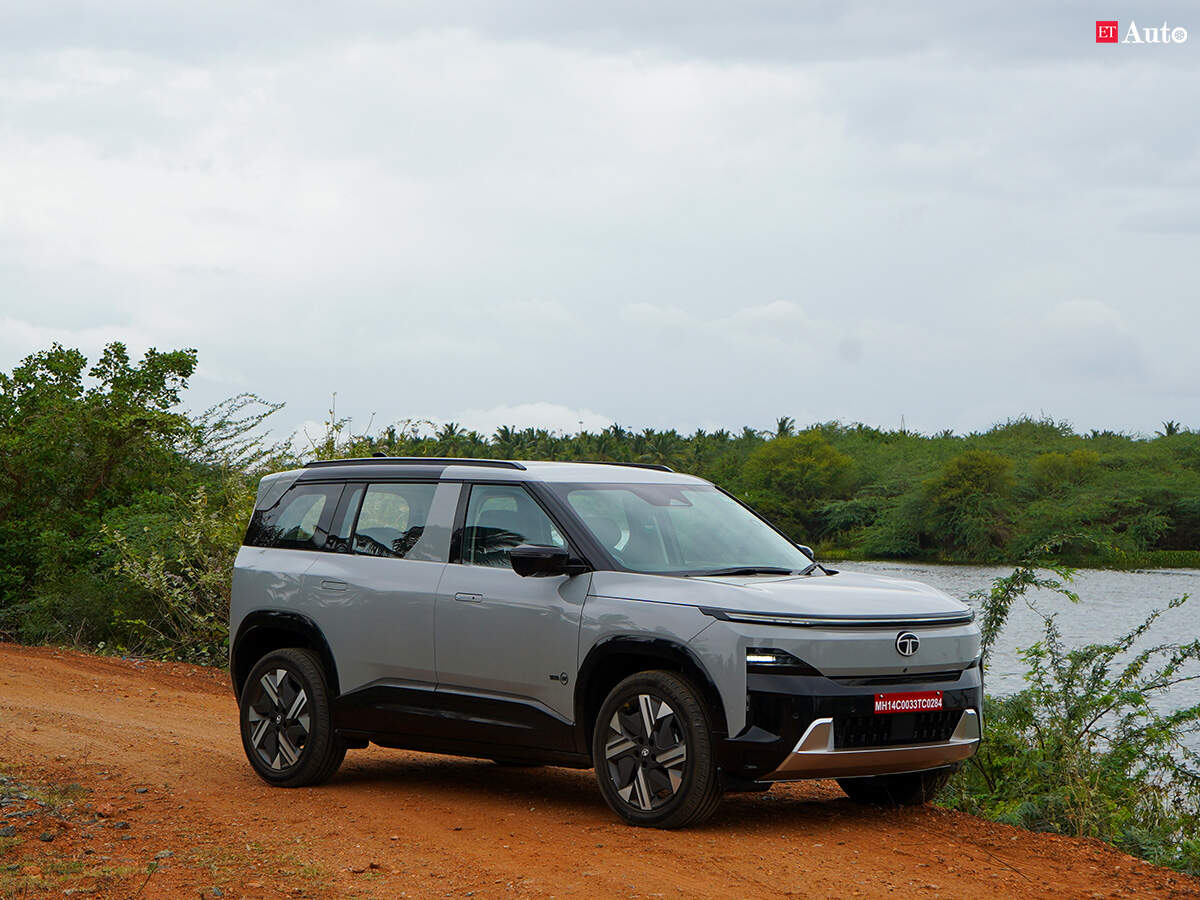
 Tata Sierra EV
Tata Motors maintained its Numero Uno position in India’s passenger electric vehicle (EV) market in July 2026 with a comfortable lead even as competition intensified with the likes of Mahindra & Mahindra (M&M), Maruti Suzuki, VinFast and Kia steadily expanding their presence in the fast-growing segment.
According to vehicle registration data from Vahan, total passenger EV registrations showed a healthy 81.6 per cent year-on-year (YoY) growth to 31,788 units in July 2026, up from 17,509 units in the corresponding month last year.
During the period under review, Tata Motors clocked total retails of 13,579 units, almost doubling its volumes from 6,728 units sold in July 2025. The company accounted for nearly 43 per cent of the total e-PV market in the country last month, reinforcing its leadership, despite an increasingly crowded marketplace.
The strong performance stems from sustained demand for electric vehicles as customers seek economical modes of safe personal transportation after the recent bout of fuel price hikes linked to crude supply impacts amid the West Asia crisis, which is now slowly waning off. The recent debate around E20 fuel being hazardous for older cars in the country has also spiked consumer interest in zero-emission mobility.
| Passenger EV Registrations – July 2026 | |||
| OEM | July’26 | July’25 | Growth |
| Tata Motors | 13,579 | 6,728 | 101.8% |
| Mahindra & Mahindra | 7,677 | 3,416 | 124.7% |
| JSW MG Motor | 5,642 | 5,900 | -4.4% |
| Maruti Suzuki | 1,590 | 0 | — |
| Vinfast India | 1,478 | 0 | — |
| BYD India | 742 | 613 | 21.0% |
| Hyundai Motor India | 565 | 719 | -21.4% |
| Kia India | 464 | 65 | 613.8% |
| Stellantis India | 51 | 68 | -25.0% |
| Total | 31,788 | 17,509 | 81.6% |
| Source: Vahan Data | |||
Moreover, Tata Motors has further strengthened its electric portfolio with the addition of two new models. Along with the established Nexon.ev, Punch.ev, Curvv.ev and Harrier.ev, the company has recently expanded its lineup with new all-electric offerings including the Tiago EV and the Sierra EV, enabling it to address multiple price points and customer segments. However, the competitive landscape is evolving rapidly. Arch rival and another homegrown major M&M, remained the second-largest player with 7,677 registrations in July, recording a robust 124.7 per cent YoY growth from 3,416 units a year earlier.
The company’s electric SUV strategy continues to gain momentum, with models such as the XEV 9S witnessing encouraging market traction and helping narrow the gap with the segment leader.
At No.3, JSW MG Motor India retained its position with 5,642 registrations, though it recorded a 4.1 per cent de-growth compared with 5,900 units in July 2025. While MG continues to benefit from its established EV portfolio, the market has become significantly more competitive with several manufacturers entering the space.
Challengers gain ground
Maruti Suzuki too is starting to assert itself in the EV space as the country’s largest carmaker– which had no presence in the EV segment a year ago– recorded 1,590 registrations in July 2026.
Although still well behind the market leaders, the numbers indicate that Maruti is gradually establishing itself as a credible player in India’s electric passenger vehicle market with its maiden product the e-Vitara.
Another noteworthy entrant in the Indian market is VinFast, which registered 1,478 units last month. The Vietnamese automaker, which launched its first two products in the country in September 2025, is one of the fastest-emerging challenger brands in the domestic EV ecosystem in India.
Chinese EV specialist BYD also posted healthy gains, with registrations rising 21 per cent to 742 units from 613 units in July 2025. Kia India, meanwhile, saw registrations jump more than seven-fold to 464 units, compared with just 65 units a year earlier.
While the EV6 and EV9 sit at the top-end of the product portfolio, the Carens Clavis EV is positioned as a mainstream segment EV by the company. The Korean automaker’s volumes are expected to receive a further boost after it introduced the Syros EV only in the last week of July, implying that the model contributed little to the month’s registrations.
Hyundai’s EV registrations, on the other hand, remained largely stable at 565 units, down marginally from 719 units in July last year with the Ioniq 5 and Creta EV being the key models on offer.
The company is gearing to address the belly of the market with a locally-manufactured mass-market EV slated to launch within this financial year. On the other hand, Stellantis registered 51 units during the month with the sole EV – eC3X – also getting a makeover recently.
The cumulative January-July data also reflects Tata Motors’ continued dominance. Tata Motors has registered 72,247 passenger EVs so far in CY2026, comfortably ahead of Mahindra at 42,828 units and JSW MG Motor India at 38,191 units.
Total passenger EV registrations during the first seven months of the calendar year reached 1,79,602 units, compared with 98,130 units in the corresponding period of 2025, representing an increase of over 83 per cent. According to industry experts, EV penetration could touch 10 per cent in FY27, indicating the growing consumer interest, backed by conducive government policies such as the Delhi EV Policy 2.0, which enables the shift towards electric mobility in the country.