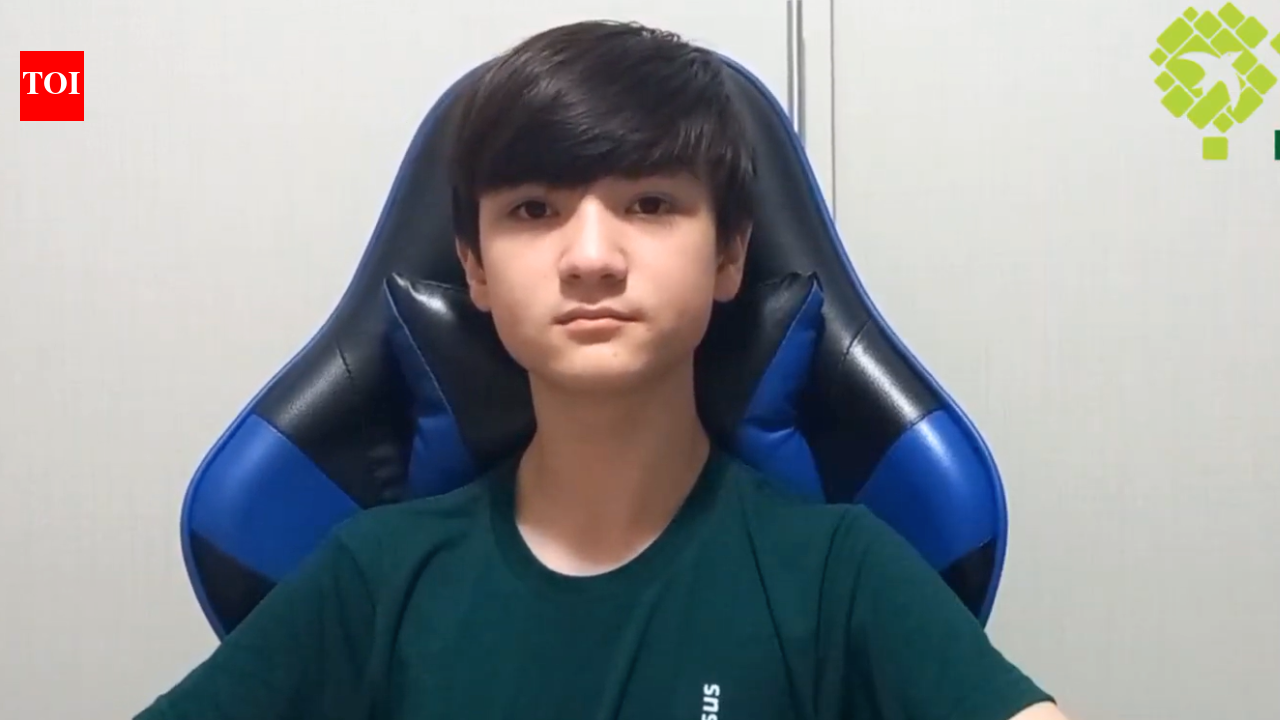


As concerns over plastic pollution continue to grow, a 14-year-old student in Brazil has developed a sustainable alternative using materials that would otherwise be discarded. Lucas Tadao Sugahara Wernick, a student from Curitiba in the southern state of Paraná, created biodegradable food trays made from cassava peels and araucaria tree residues. Designed as a substitute for conventional Styrofoam trays, the innovation uses agricultural waste and natural starch to produce packaging that decomposes much faster than petroleum-based foam. Developed as a school science project, the invention has attracted attention at Brazilian science fairs for demonstrating how everyday waste can be transformed into an environmentally friendly product with practical applications.
Why Lucas turned agricultural waste into biodegradable packaging
Lucas began exploring sustainable packaging after learning about the environmental problems caused by Styrofoam and single-use plastics. Widely used to package fruits, vegetables and meat, Styrofoam is lightweight and inexpensive but can remain in the environment for hundreds of years after disposal.Instead of relying on conventional materials, Lucas looked for agricultural waste that was abundant in Brazil. He chose cassava peels, a by-product of the food industry that is often discarded or used as animal feed, and dry araucaria residues, which naturally fall from Paraná pine trees and are commonly treated as garden waste. By giving these materials a second life, the project embraces the principles of a circular economy, where waste is transformed into valuable products.
How the biodegradable trays are made
The trays are produced using a combination of dried cassava peels, processed araucaria residues, water and cassava starch. After the raw materials are cleaned, dried and ground into smaller particles, they are mixed into a composite material that is heated and pressed into moulds before being dried.One of the most innovative aspects of the project is the use of cassava starch as a natural binding agent. Rather than depending on petroleum-based plastics or chemical additives, the starch helps hold the material together while maintaining its biodegradable properties. The resulting trays are intended for packaging fruits and vegetables in place of traditional Styrofoam containers.
How does the invention compare with Styrofoam?
The project aims to address one of the biggest environmental drawbacks of Styrofoam: its persistence in nature. Conventional Styrofoam packaging is often cited as taking up to 700 years to decompose under natural conditions, contributing to long-term plastic pollution.According to reports on Lucas’s project, the biodegradable trays can break down in about 30 days under suitable conditions. Although decomposition rates vary depending on temperature, moisture and soil conditions, the dramatic reduction in environmental persistence highlights the potential of biodegradable packaging made from renewable resources.
What tests did the young inventor carry out?
Lucas did not stop at producing a biodegradable material. He also evaluated whether it could function as practical food packaging. According to the project’s published summary, the trays underwent tests for compression strength, pressure resistance, torsion, water absorption and biodegradability.To examine how quickly the material decomposed, samples were buried in moist soil and monitored over time. The results indicated that the trays offered sufficient mechanical strength for packaging applications while retaining their biodegradable characteristics. The findings suggest that agricultural waste can be transformed into packaging that is both functional and environmentally responsible.
Why cassava peels are an ideal material
Cassava is one of Brazil’s most widely cultivated crops, generating large amounts of processing waste every year. While the edible root is used to produce flour, starch and numerous food products, the peels are often discarded despite containing valuable natural starch.Lucas recognised that this starch could serve as a natural adhesive, reducing the need for synthetic binders. Combined with the fibrous structure of araucaria residues, the material creates a lightweight composite capable of replacing certain single-use packaging products. Using waste that is already readily available also reduces the demand for new raw materials.
Recognition at science fairs
The project quickly gained recognition beyond Lucas’s classroom. It was presented at science fairs in Brazil, including the PUCPR Science Fair, where it attracted attention for combining sustainability with practical engineering. The research was also published in the proceedings of a scientific initiation symposium, highlighting the project’s technical approach and experimental testing.The recognition demonstrates how school-level research can contribute innovative ideas to broader discussions about sustainable packaging and waste reduction.
Could agricultural waste help reduce plastic pollution?
Researchers around the world are investigating biodegradable packaging made from renewable materials as countries seek alternatives to petroleum-based plastics. Agricultural by-products such as corn starch, sugarcane fibres, rice husks and cassava residues are increasingly being explored because they are abundant, renewable and biodegradable.Lucas’s invention adds to this growing field by showing how two commonly discarded materials found in southern Brazil can be combined to create practical food packaging. While further development and large-scale manufacturing would be required before such trays could replace Styrofoam commercially, the project highlights how local agricultural waste could play a role in reducing plastic pollution and creating more sustainable packaging solutions in the future. Go to Source