
Friday, July 31, 2026
34.1 C
New Delhi

Tiny reef fish thrived near seabird islands; where rats wiped birds out, marine food chains changed

Tiny reef fish flourished beside islands filled with seabirds; where rats removed the birds, the entire underwater food chain took another route

Ecosystems work with each other no matter how far or disconnected they are. Animals and birds have impacts on each other’s lives and deaths. According to a new study, invasive rats on tropical islands are creating winners and losers among tiny underwater animals near the bottom of the food chain that inhabit surrounding coral reefs. Now, scientists are saying the resultant changes can rewire food chains on the reefs.Tiny fish and invertebrates that live at the bottom of the sea on coral reefs are known collectively as ‘cryptofauna’. These creatures are often overlooked and little studied, but they play a vital ecological role and represent a cornerstone of energy transfer on coral reefs.Led by researchers at Lancaster University and the University of Texas, a team of marine scientists studying these tiny critters on reefs around remote islands in the Indian Ocean have discovered that their populations are much different around islands infested by invasive rats compared to reefs around islands without rats.

Seabirds, rats and small invertebrates

Seabirds, rats and small invertebrates

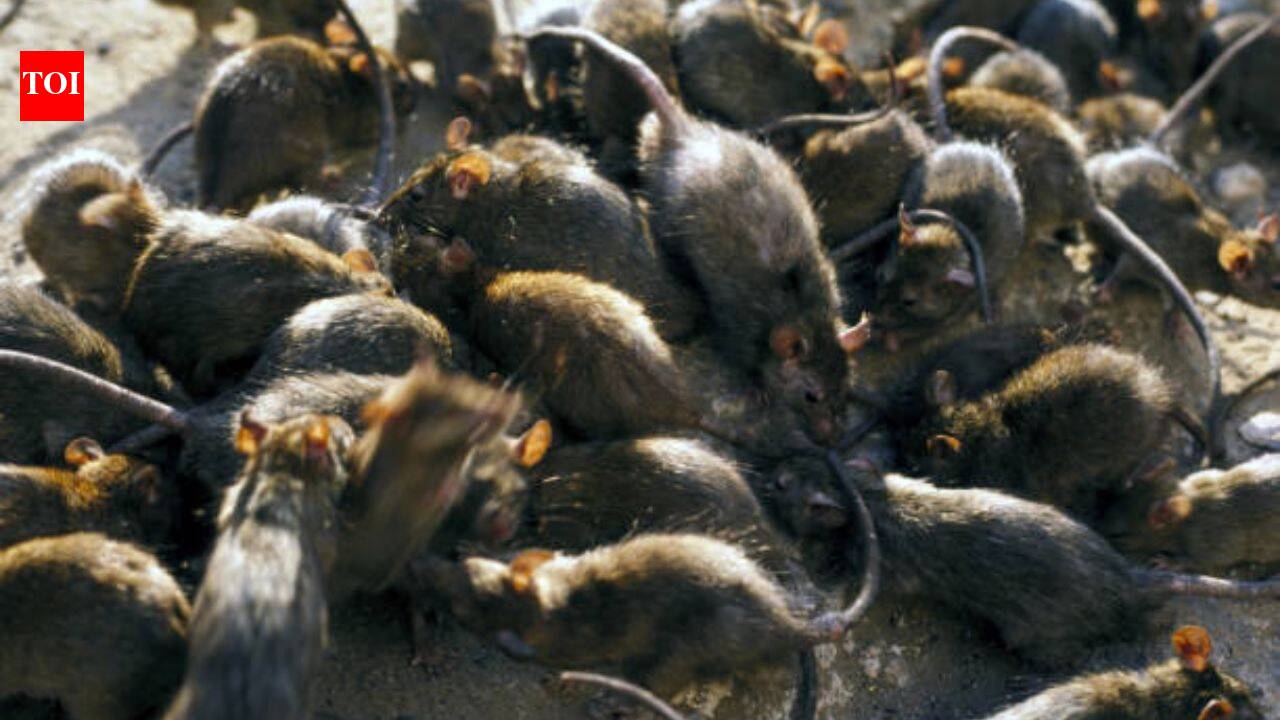
” msid=”132756255″ width=”” title=”Invasive rats, which arrived as stowaways on ships hundreds of years ago, have decimated the seabird populations on the islands, eating their eggs, chicks and at times even adult seabirds.” placeholdersrc=”https://static.toiimg.com/photo/83033472.cms” imgsize=”” resizemode=”4″ offsetvertical=”0″ placeholdermsid=”47529300″ type=”thumb” src=”https://static.toiimg.com/photo/83033472.cms” class=”” data-src=”https://static.toiimg.com/photo/msid-132756255/seabirds-rats-and-small-invertebratesbrbr.jpg” data-api-prerender=”true”/> </p>
<p> Invasive rats, which arrived as stowaways on ships hundreds of years ago, have decimated the seabird populations on the islands, eating their eggs, chicks and at times even adult seabirds.</p>
</p></div>
</p></div>
<p> Reefs surrounding rat-free islands are dominated by tiny ‘cryptobenthic’ fish species, such as gobies and triplefins, whose biomass is more than five times greater than that of small invertebrates. But around rat-infested islands, the population of small invertebrates such as coral crabs, porcelain crabs and snapping shrimps is higher. Moreover, the biomass of the cryptobenthic fish and invertebrates is nearly equal.  The secret to how rats are able to impact these marine creatures lies in how they are affecting the seabird populations on the islands they have infested. Invasive rats, which arrived as stowaways on ships hundreds of years ago, have decimated the seabird populations on the islands, eating their eggs, chicks and at times even adult seabirds. On the islands without rats, the populations of seabirds are a whopping 760 times greater.Seabirds have a vital role in recirculating nutrients from the open ocean where they feed, to the islands where they roost, breed and nest. Their droppings, known as guano, are rich in nutrients that, when washed off the islands into the sea, act as a natural fertiliser for the surrounding coral reef ecosystem.The study area in the Chagos Archipelago in the remote Indian Ocean provides a living laboratory to compare marine ecosystems around islands with and without rats. Researchers from Lancaster University have conducted years of studies looking into the effects of invasive rats on marine ecosystems, from how changes in nutrient flows affect the growth of corals to the territorial behaviour of fish species. </p>
<p><h2> Cryptobenthic fish versus invertebrates</h2>
</p>
<div data-pos=
Cryptobenthic fish versus invertebrates

” msid=”132756266″ width=”” title=”This latest study, published in Ecology, is one of the first to reveal the changes to benthic cryptofauna and the species that prey on them.” placeholdersrc=”https://static.toiimg.com/photo/83033472.cms” imgsize=”” resizemode=”4″ offsetvertical=”0″ placeholdermsid=”47529300″ type=”thumb” src=”https://static.toiimg.com/photo/83033472.cms” class=”” data-src=”https://static.toiimg.com/photo/msid-132756266/cryptobenthic-fish-versus-invertebratesbrbr.jpg” data-api-prerender=”true”/> </p>
<p> This latest study, published in Ecology, is one of the first to reveal the changes to benthic cryptofauna and the species that prey on them.</p>
</p></div>
</p></div>
<p> This latest study, published by Ecology, is one of the first to reveal the changes to benthic cryptofauna and the species that prey on them, offering surprising new insights for the study team.“Contrary to our expectations, the low-nutrient conditions that rats create do not negatively affect all reef organisms,” said Laura-Li Jeannot, lead author of the study and PhD researcher at Lancaster University. “Nutrient-loss impacts are not uniform. There are winners and losers.“The discovery of the role of cryptic invertebrates is interesting, as really very little is known about these critters, even less so than for cryptobenthic fishes. How they respond to disturbances or transfer energy through systems was almost entirely undocumented,” she said.The researchers believe that fish have a number of competitive advantages when the seabird nutrient flow remains intact. They have extraordinarily high rates of growth and reproduction. “As a result, they have high nutrient and energy requirements, and those can be matched in nutrient-rich environments. This allows these fish populations to flourish and expand in favourable conditions – such as seabird-fertilised reefs,” said Jeannot. With expanding populations, they colonise habitats that would be otherwise occupied by cryptic invertebrates. “Beyond chasing invertebrates away from their homes, they also outcompete them for food: our results show that cryptobenthic fish, when more abundant, likely drive invertebrates to seek alternate, less preferred resources,” she added.On the flip side, the researchers believe that the main reason invertebrates have relative success near rat-infested islands is due to the loss of competitive pressure from cryptobenthic fishes, which are much less abundant in nutrient-poor reefs. Invertebrates’ lower metabolic rates could also be an advantage in lower nutrient environments as they don’t require as many nutrients to sustain a certain level of biomass. </p>
<p><h2> A changing food web</h2>
</p>
<div data-pos=
A changing food web

” msid=”132756341″ width=”” title=”The researchers found that mixed carnivorous fish rely more on cryptobenthic fish in seabird environments, and that the productivity of fish-eating predators soars while invertivore productivity stagnates near seabirds.” placeholdersrc=”https://static.toiimg.com/photo/83033472.cms” imgsize=”” resizemode=”4″ offsetvertical=”0″ placeholdermsid=”47529300″ type=”thumb” src=”https://static.toiimg.com/photo/83033472.cms” class=”” data-src=”https://static.toiimg.com/photo/msid-132756341/a-changing-food-webbrbr.jpg” data-api-prerender=”true”/> </p>
<p> The researchers found that mixed carnivorous fish rely more on cryptobenthic fish in seabird environments, and that the productivity of fish-eating predators soars while invertivore productivity stagnates near seabirds.</p>
</p></div>
</p></div>
<p> Given the position of cryptobenthic fish and invertebrates near the bottom of the coral reef food chain, researchers expect big impacts on the rest of the food web. “Cryptofauna are the main prey source on reefs, and will often represent the first step in transferring nutrients from primary producers to larger predatory fishes. Any change that affects them is likely to have cascading effects on their predators,” said Laura-Li Jeannot.While much less is known about the role of cryptic invertebrates in wider reef productivity, cryptobenthic fish have been estimated to contribute up to 60% of total consumed biomass on coral reefs, so they are highly important for nutrient and energy cycling on reefs. The researchers found that mixed carnivorous fish rely more on cryptobenthic fish in seabird environments, and that the productivity of fish-eating predators soars while invertivore productivity stagnates near seabirds.“Cryptobenthic fish are a nutrient-dense, protein-packed, highly digestible resource for predators; on the other hand, much of invertebrates’ mass is represented by a tough outer shell. In nutrient-rich environments, fish are also way more abundant than invertebrates, meaning they likely require less foraging. As a result, they represent a more energetically optimal prey near seabird islands for predators looking for a quick snack,” said Assistant Professor Dr Simon Brandl from the University of Texas and co-principal investigator of the study.“These findings suggest a shift in food chains from fish to invertebrate-mediated pathways near seabird-poor islands. Seabird nutrient flows do not just enhance reef productivity and health; they are also influencing trophic structure. Therefore, invasive species like rats that cut off these nutrients can drive significant changes to the food webs of the reefs,” added Professor Nick Graham of Lancaster University and co-principal investigator of the study.These results point out important conservation implications: safeguarding seabirds and their nutrient subsidies is also a way to protect the integrity of reef food webs.  <a href=Go to Source

Hot this week

34 killed as methane explosion tears through coal mine in Pakistan’s Balochistan

Coal mine blast in Pakistan’s Balochistan (AP photo) At least 34 miners in Pakistan were killed and 10 other remained trapped after a methane gas explosion ripped through a coal mine in Balochistan province on Thursday, as o Read More

After decades of drought, water is returning to the south of Sahara Desert as ancient farming techniques and the Great Green Wall breathe new...

Communities dig water-harvesting pits to restore degraded land and improve soil moisture in the Sahel. For decades, the Sahel has symbolised environmental decline. Read More

The Southern Ocean may be Earth’s safest place to remove carbon from the atmosphere, scientists find

Left/Southern Ocean/Right/Southern Ocean on map/Image: AI Generated As the world searches for ways to remove carbon dioxide already accumulating in the atmosphere, ocean iron fertilisation (OIF) has emerged as one of the most debated Read More

Bihar Police arrest STF jawan in Bharat Bhushan Tiwari ‘fake encounter’ probe — What was the case

Tiwari was shot during a standoff with police and Special Task Force (STF) personnel on June 17. Read More

Oppn Stages ‘Donation Theft’ Skit In Parliament Over Ram Temple Row, Demand Shah’s Resignation | WATCH

Show Quick Read Key points generated by AI, verified by newsroom INDIA bloc MPs protested alleged Ram Temple donation theft. Pappu Yadav, Rahul Gandhi enacted symbolic donation theft skit. Read More

Topics

34 killed as methane explosion tears through coal mine in Pakistan’s Balochistan

Coal mine blast in Pakistan’s Balochistan (AP photo) At least 34 miners in Pakistan were killed and 10 other remained trapped after a methane gas explosion ripped through a coal mine in Balochistan province on Thursday, as o Read More

After decades of drought, water is returning to the south of Sahara Desert as ancient farming techniques and the Great Green Wall breathe new...

Communities dig water-harvesting pits to restore degraded land and improve soil moisture in the Sahel. For decades, the Sahel has symbolised environmental decline. Read More

The Southern Ocean may be Earth’s safest place to remove carbon from the atmosphere, scientists find

Left/Southern Ocean/Right/Southern Ocean on map/Image: AI Generated As the world searches for ways to remove carbon dioxide already accumulating in the atmosphere, ocean iron fertilisation (OIF) has emerged as one of the most debated Read More

Bihar Police arrest STF jawan in Bharat Bhushan Tiwari ‘fake encounter’ probe — What was the case

Tiwari was shot during a standoff with police and Special Task Force (STF) personnel on June 17. Read More

Oppn Stages ‘Donation Theft’ Skit In Parliament Over Ram Temple Row, Demand Shah’s Resignation | WATCH

Show Quick Read Key points generated by AI, verified by newsroom INDIA bloc MPs protested alleged Ram Temple donation theft. Pappu Yadav, Rahul Gandhi enacted symbolic donation theft skit. Read More

Will PM Modi Visit Islamabad? Pakistan Confirms Invitation For 2027 SCO Summit

Show Quick Read Key points generated by AI, verified by newsroom Pakistan confirms inviting PM Modi to 2027 SCO Summit. Invitations will follow standard SCO protocol for all members. Read More

Complete Guide To Pure Silk Bridal Sarees For Weddings

Bridal sarees are not just about the wedding – they are about preserving the tradition, about style and about timelessness. Read More

Yash’s ‘Toxic’ reveals Kiara Advani’s NEW poster on her birthday

Picture Credit: X Kiara Advani will be seen as Nadia in the much-awaited ‘Toxic: A Fairytale for Grown-Ups’ starring Yash and directed by Geetu Mohandas. Read More

Related Articles