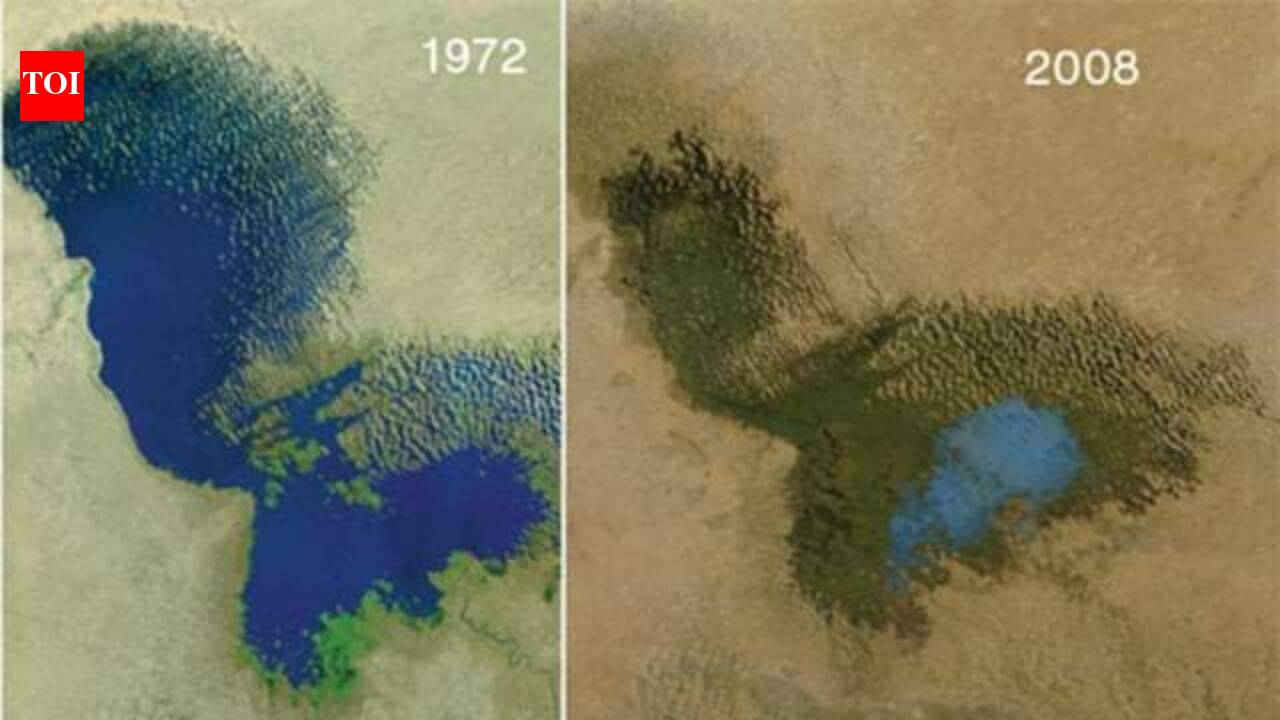

In 1823, British explorers Hugh Clapperton, Dixon Denham and Walter Oudney were some of the first Europeans to document the lake and the surrounding kingdoms. He was struck at the sight of one of Africa’s largest inland lakes. But two centuries later, about 905 of the lake’s surface area has shrunk, leaving only a sliver of what was previously an ever-flowing water body covering roughly 25,000 square kilometres. The loss of this lake not only threatens a water source for people but also the livelihoods of about 50 million people in four countries, Cameroon, Chad, Niger and Nigeria. This is why the government has launched a $50 billion ambitious Trans Aqua project that proposes to redirect water from the Congo River Basin to Lake Chad.The reason behind this transformation is climate change which has intensified the pressure on the lake. With rising temperatures, prolonged droughts and changing rainfall patterns, water availability reduced, while population growth and expanding irrigation increased demand. Consequently, fish production declined, farmland disappeared and competition for water and grazing areas intensified. Now, the economic damage is impacting more than just ecosystems, it has weakened household incomes, threatened food security and increased reliance on humanitarian support.
Billions poured in for restoration
- restore water levels
- generate electricity
- support agriculture
- aid in transport and industrial development
Currently, the project remains a proposal rather than an approved construction project, with its cost, environmental risks and the need for agreements among multiple governments delaying progress.