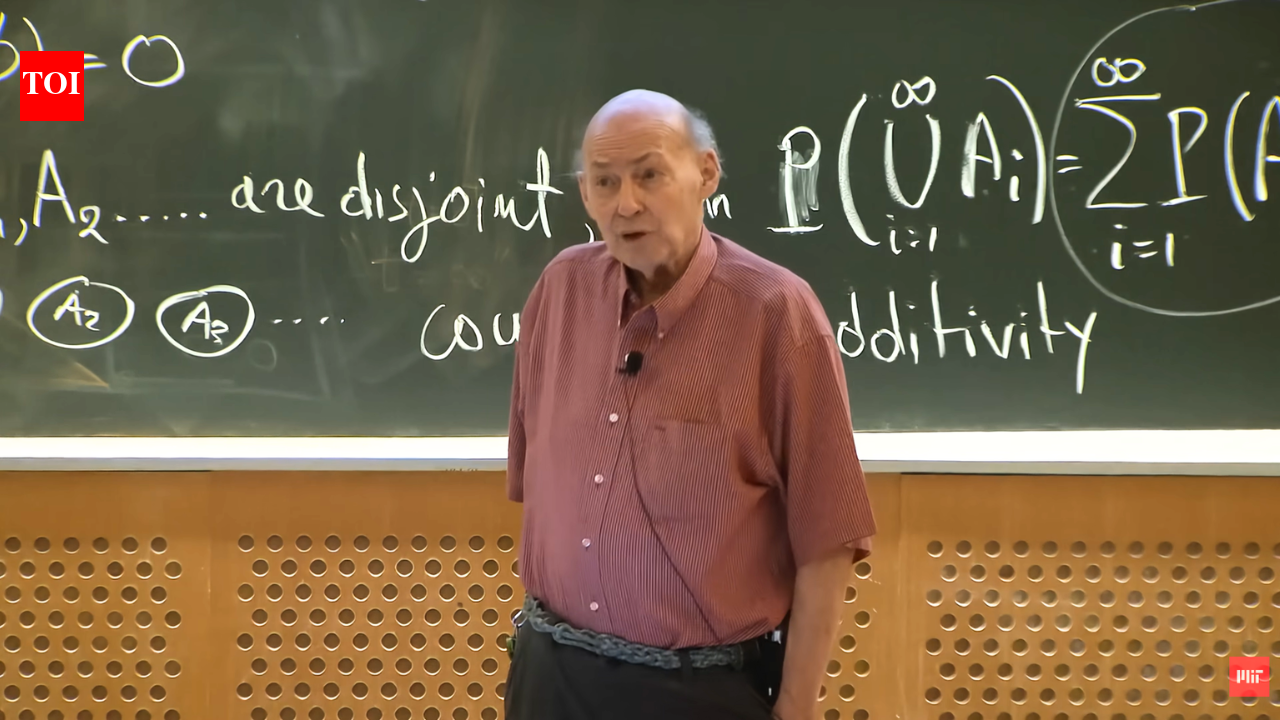


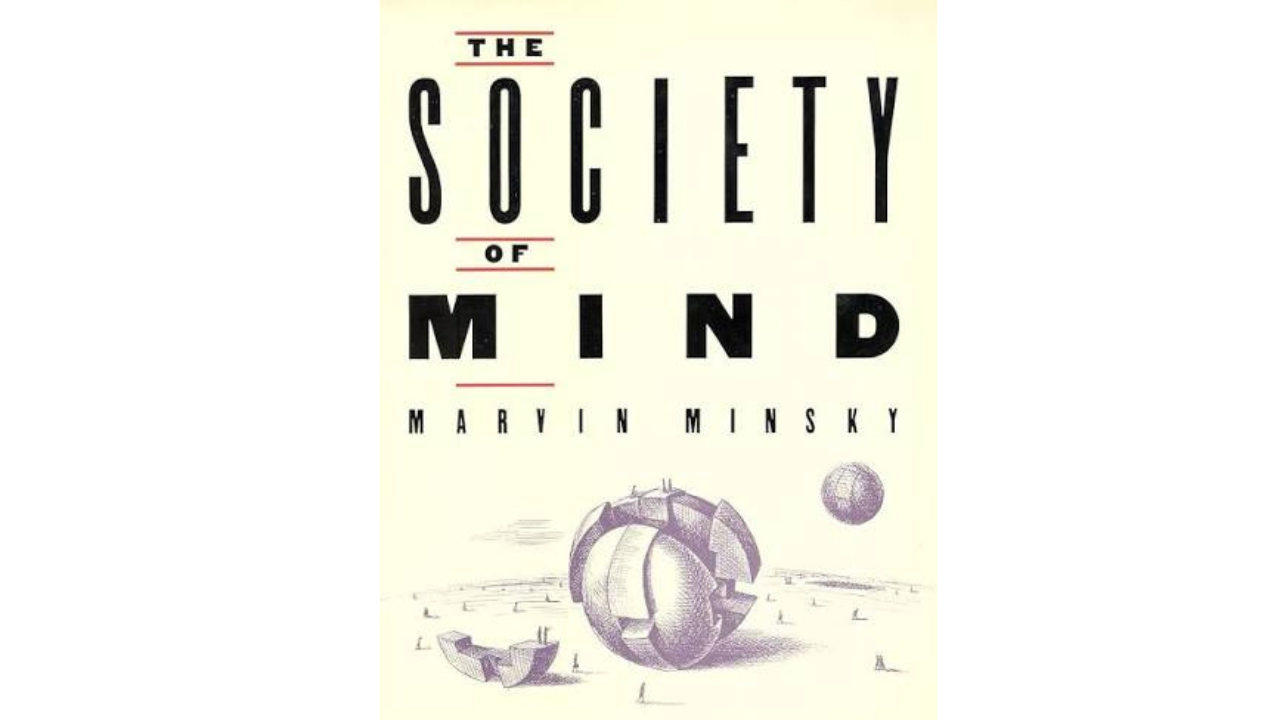
Long before AI companies began building teams of specialised AI agents that collaborate to solve complex problems, legendary MIT professor Marvin Minsky had already proposed a strikingly similar way intelligence works. In his landmark 1986 book The Society of Mind, Minsky argued that intelligence is not the product of one all-powerful brain but the result of countless simple “agents” working together, each performing a specialised task. Nearly four decades later, as companies such as Anthropic increasingly explore multi-agent AI systems, his ideas have returned to the spotlight. Widely regarded as one of the founding fathers of artificial intelligence, Minsky not only helped establish the field but also introduced concepts that continue to shape how scientists and engineers think about building intelligent machines.
How Marvin Minsky imagined today’s Anthropic style multi-agent AI
When The Society of Mind was published in 1986, artificial intelligence looked nothing like it does today. Personal computers were still in their infancy, the internet had yet to become mainstream and powerful AI chatbots were decades away. Yet Minsky proposed an idea that many researchers now find remarkably relevant.He believed intelligence does not come from one central thinking system. Instead, it emerges from thousands of tiny mental processes, or “agents”, each responsible for a specific job. One agent might recognise a familiar face, another might retrieve a memory, another could understand language, while others focus attention, solve problems or make decisions. Individually these agents are simple, but together they create the rich intelligence humans experience every day.The concept is easy to understand through an office analogy. Imagine asking one employee to handle research, planning, writing, editing, fact-checking and quality control alone. The result would probably be slow and inefficient. Now imagine a team of specialists, each focusing on one task while reporting to a manager who combines their work. That coordinated effort is far more effective. Minsky believed the human mind operates in much the same way.Today, AI companies are increasingly experimenting with similar approaches. Instead of relying on one AI system to complete an entire task, developers assign different responsibilities to specialised AI agents that plan, reason, write, review and verify each other’s work before producing a final answer.
Why today’s AI companies are revisiting his vision
As AI systems become more capable, researchers are discovering that solving complex problems often requires more than one model working alone. Multi-agent AI allows specialised systems to divide work into smaller tasks, exchange information and refine one another’s outputs.For example, one AI agent may create a strategy, another searches for information, another writes computer code, while others test results, identify mistakes and improve the final response. This approach often produces better organisation, improved accuracy and greater efficiency when handling lengthy or complicated tasks.While the technology powering these systems is vastly more advanced than anything available in the 1980s, the underlying philosophy of many specialised components working together closely reflects the organisational principles Minsky described decades ago. That is one reason his work has gained renewed attention as the AI industry increasingly focuses on collaborative AI systems.
Meet the man who became one of the founding fathers of artificial intelligence
Born in New York City in 1927, Marvin Minsky displayed an early fascination with mathematics, engineering and human intelligence. After serving in the US Navy, he studied mathematics at Harvard University before earning his doctorate from Princeton University.His career took a historic turn in 1959 when he and fellow AI pioneer John McCarthy co-founded the MIT Artificial Intelligence Laboratory. The laboratory quickly became one of the world’s most influential centres for AI research, producing groundbreaking work in robotics, computer vision, machine learning and intelligent systems.For more than five decades, Minsky taught at MIT, inspiring generations of scientists and engineers who would go on to shape the future of computing and artificial intelligence.
The inventions and achievements that made Minsky an AI legend
Minsky’s influence extended far beyond one famous book. In 1951, he built SNARC, one of the earliest artificial neural network learning machines ever created. Inspired by the behaviour of neurons in the human brain, it represented one of the first attempts to simulate learning using electronic hardware.Throughout his career, Minsky worked on robotics, mechanical hands, computer vision, knowledge representation and machine perception. His research helped establish many of the scientific foundations on which modern AI continues to build.He also co-authored Perceptrons with Seymour Papert in 1969, a highly influential book examining the strengths and limitations of early neural networks. Although later advances would overcome many of those limitations, the book played a significant role in shaping AI research for decades.That same year, Minsky received the ACM A.M. Turing Award, widely regarded as the highest honour in computer science, recognising his pioneering contributions to artificial intelligence.
The book that changed how scientists think about intelligence
Unlike many technical AI books, The Society of Mind explored a much bigger question: what is intelligence itself?Rather than describing intelligence as a mysterious quality or a single powerful reasoning engine, Minsky argued that complex thought emerges from countless simple interactions. He drew ideas from psychology, neuroscience, philosophy and computer science, presenting intelligence as a network of specialised processes constantly communicating with one another.The book challenged researchers to think beyond creating one “super-intelligent” machine and instead consider how many smaller systems could cooperate to produce intelligent behaviour. Over time, it became one of the most influential works in cognitive science and artificial intelligence, inspiring researchers across multiple disciplines.
Why Marvin Minsky’s legacy matters more than ever
Artificial intelligence has advanced dramatically since Minsky first began studying intelligent machines more than seven decades ago. Today’s AI relies on enormous datasets, powerful graphics processors, transformer architectures and billions of mathematical parameters capable of generating text, images and computer code within seconds.Yet one of Minsky’s most enduring ideas remains surprisingly relevant: intelligence is often strongest when specialised systems work together rather than when a single system attempts to do everything alone.As AI companies continue building collaborative AI agents capable of tackling increasingly complex tasks, Minsky’s work serves as a reminder that many of today’s most exciting innovations are rooted in ideas conceived decades earlier. His vision helped define the early history of artificial intelligence, and nearly 40 years after The Society of Mind was published, it continues to influence conversations about where the next generation of AI is headed. Go to Source