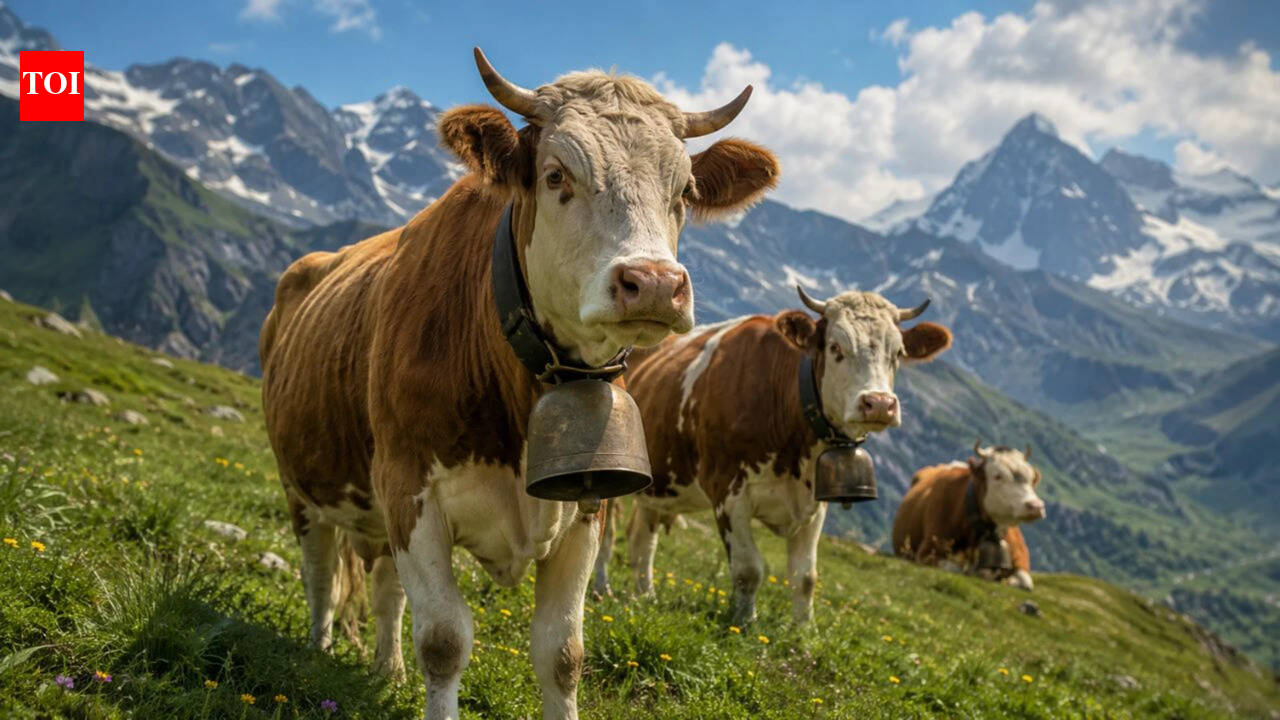

image AI generated
There is a particular sound that belongs to the Alps in summer. It drifts across mountain meadows, echoes from rocky slopes and sometimes arrives before the animals themselves come into view. The ringing of cowbells has become so closely associated with Switzerland, Austria and parts of southern Germany that many visitors assume the bells exist mainly as a cultural symbol. They certainly have a place in Alpine traditions, but their origins are far more practical. Long before they appeared on postcards and souvenir shelves, cowbells helped farmers manage animals across vast mountain landscapes where visibility could change quickly, and herds often grazed far from settlements. The bells remain part of Alpine farming today, although their role is more complex than it first appears.
How Swiss cowbells help farmers track cattle in the Alps
Mountain pastures are not like fenced fields on lowland farms. During summer, many Alpine cattle spend months grazing on high meadows that stretch across hillsides, valleys and ridges. Animals can disappear behind terrain features within minutes, even when they are relatively close. According to the University of Georgia, bells have traditionally been used as a way of keeping track of freely roaming cattle in Alpine regions. Farmers could listen for the distinctive sound and locate animals that might otherwise be hidden by slopes, forests or changing weather conditions.Fog is another factor often mentioned by Alpine farming communities. Visibility in mountain areas can drop suddenly, making sound more reliable than sight. The constant ringing provides an audible marker that allows herders to determine roughly where their animals are without needing to see them directly.According to the study published in the National Library of Medicine, titled “Regular Exposure to Cowbells Affects the Behavioural Reactivity to a Noise Stimulus in Dairy Cows”, it also notes that cows are commonly fitted with bells on Alpine pastures so farmers can locate animals grazing across extensive mountain terrain where parts of the landscape may be obscured from view.
Alpabzug festivals and the tradition of Swiss cowbells
The practical purpose of cowbells gradually merged with regional customs. In many Alpine communities, cattle are moved to high mountain pastures at the start of summer and brought back down when the grazing season ends.As per the University of Georgia, these seasonal returns are marked by festivals known as Alpabzug in Switzerland, with similar celebrations taking place in Austria and Germany. During these events, cattle are decorated with flowers, elaborate headpieces and specially selected bells.The bells used during these ceremonies are often different from those worn during everyday grazing. Local farmers have long regarded some of them as prized possessions, passed through families across generations. Decorative bells can be considerably larger and more ornate than working bells, reflecting status, craftsmanship and regional identity rather than purely agricultural needs.For visitors, the spectacle has become one of the most recognisable traditions of the Alpine countryside. Yet beneath the colourful displays lies a seasonal farming practice that predates modern tourism by centuries.
What science says about the effects of Swiss cowbells on cattle
Although bells help farmers locate animals, researchers have also examined how constant exposure to bell sounds affects cattle themselves.Involving 96 Brown Swiss cows compared animals that regularly wore bells with those that had little or no bell experience. The researchers investigated how the cows reacted to controlled sound stimuli and whether long-term exposure to bells altered their responses.According to the study, that bells worn on Alpine pastures can produce sound levels ranging from around 90 to 113 decibels close to the animal’s ears. Researchers found that cows accustomed to bells tended to show reduced avoidance reactions to certain sound stimuli compared with cows that had little experience wearing them.The findings did not provide evidence of severe hearing impairment among the animals tested. However, the researchers suggested that routine exposure to bells may influence how cows perceive and react to sounds, indicating a degree of habituation to the noise.The subject remains an area of discussion among animal welfare researchers and farming communities, particularly as modern technology offers alternative ways of monitoring livestock.
Why Swiss cowbells remain relevant in the age of GPS
GPS collars, electronic tracking systems and modern livestock management tools now provide methods of locating animals that were unavailable to earlier generations. Even so, bells continue to be used across many Alpine regions.Part of the reason is simple practicality. Sound travels across mountain landscapes in ways that can still be useful when technology fails, batteries run flat, or terrain interferes with signals. A bell requires no charging and functions regardless of weather conditions.There is also a cultural dimension that is difficult to separate from the agricultural one. The ringing of bells has become embedded in Alpine life, connecting present-day farming with traditions that stretch back through centuries of seasonal cattle movements.So while tourists often see cowbells as charming symbols of Switzerland and the Alps, their original purpose remains surprisingly straightforward. In a landscape of steep slopes, drifting fog and distant pastures, a bell helps farmers know where their cattle are. Go to Source