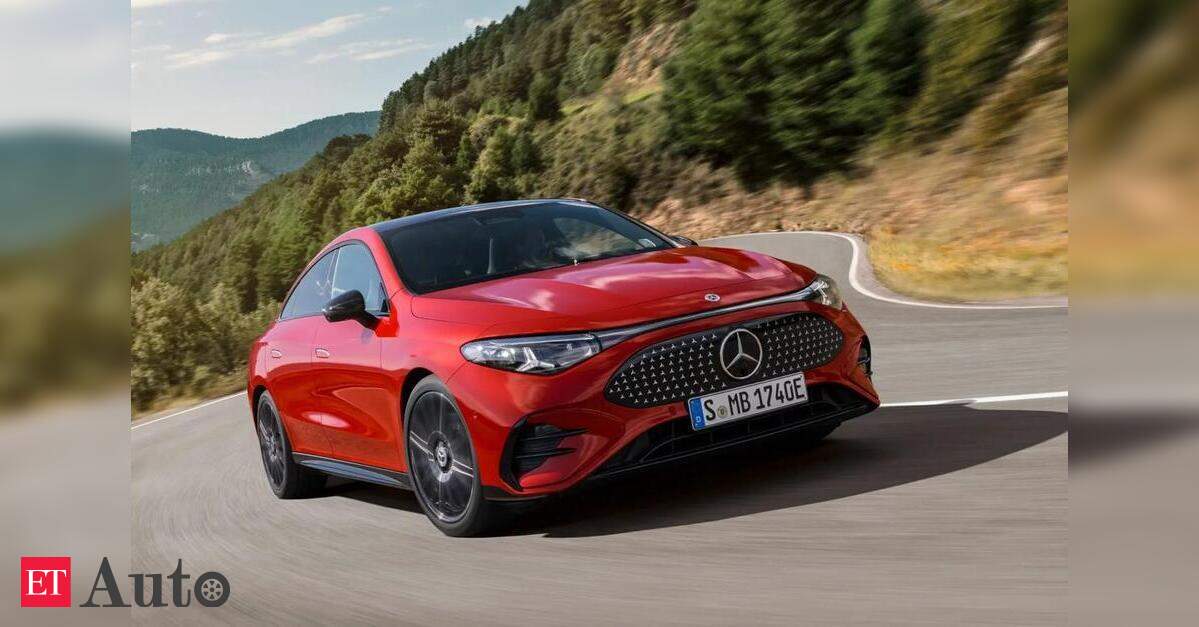

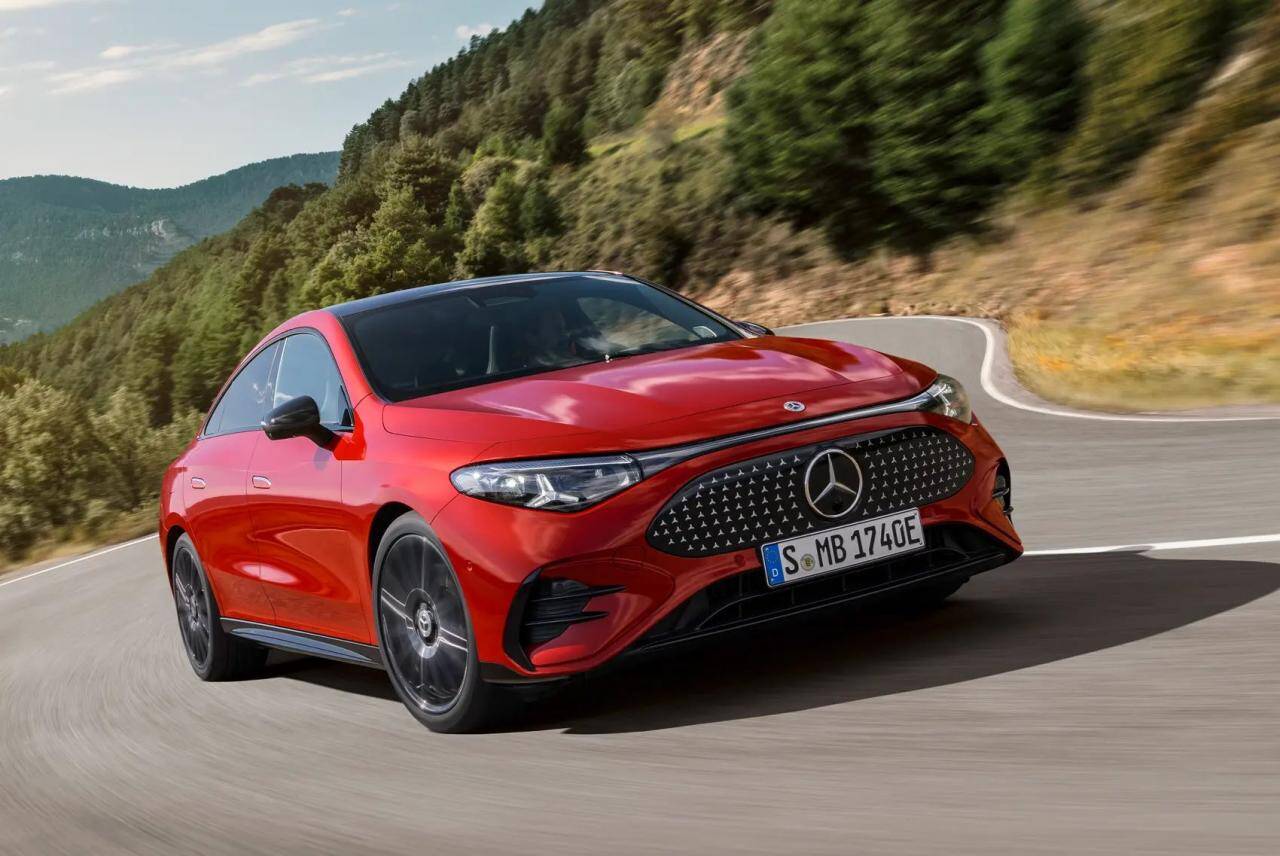
 The company’s EV penetration has grown to around 14 per cent, driven by strong response to the CLA electric sedan.
Mercedes-Benz India has cautioned that Delhi’s revised electric vehicle policy could unintentionally slow EV adoption in the premium segment by restricting incentives to cars priced below ₹30 lakh, even as the luxury carmaker posted its best-ever first-half sales driven by strong demand for the new all-electric CLA.
Speaking to ETAuto, Santosh Iyer, Managing Director & CEO, said the company’s EV penetration has climbed to around 14 per cent from 8-10 per cent earlier, with the CLA emerging as the biggest contributor to the shift.
“The success of the CLA clearly shows that our customers prefer value over price,” Iyer said, noting that the electric sedan, priced at around ₹60 lakh, has significantly expanded Mercedes-Benz’s EV customer base without relying on aggressive pricing.
However, Iyer questioned Delhi’s decision to limit EV purchase incentives to cars below ₹30 lakh. “If the tailpipe emission has to be zero, it doesn’t matter whether it’s a luxury car or a mass-market car,” he said, arguing that price-based discrimination works against the broader objective of decarbonisation.
According to him, premium buyers make purchasing decisions based on total cost of ownership (TCO). If incentives are unavailable for luxury EVs, customers comparing them with equivalent ICE models could opt for combustion-engine vehicles instead.
“The end objective is decarbonisation. If the EV becomes more expensive than the ICE alternative, the customer may buy the combustion-engine vehicle, resulting in another ICE car on the road,” he said.
Iyer cited Telangana as an example, where the withdrawal of EV incentives had initially reduced electric vehicle penetration before the state restored the benefits.
“We have seen this happen before. After incentives came back, EV penetration for us in Telangana went beyond 20 per cent.” He added that Mercedes-Benz has consistently recommended that EV incentives should remain technology-focused rather than price-based.
CLA leads EV growth charge in H1
Mercedes-Benz’s H1 performance reflects the growing acceptance of premium EVs alongside continued demand for conventional powertrains.
The company reported 29 per cent growth in its entry luxury segment, driven almost entirely by the launch of the CLA EV. At the higher end, localisation of the GLS Maybach, the launch of the new V-Class and strong demand for AMG models lifted overall volumes. The V-Class has already been sold out for its initial allocation, with fresh bookings opening for festive-season deliveries.
Despite the increase in EV penetration, petrol continues to account for the largest share of Mercedes-Benz India’s sales, at about 47 per cent, while diesel accounts for around 39 per cent. The company sold a total of 9,768 units in the first half of the calendar year, registering its best-ever half-yearly performance and a 9 per cent year-over-year growth, up from 9,013 units in the same period.
Iyer maintained that Mercedes-Benz will remain powertrain-agnostic, allowing customers to choose the technology that best suits their usage patterns.
“We have always maintained that it is a compelling total cost of ownership argument for the customer,” he said, adding that buyers themselves calculate operating economics before deciding between petrol, diesel or electric vehicles.
He also pointed out that product availability naturally influences the powertrain mix. While the CLA is available only as an EV, the S-Class is currently offered only as a plug-in hybrid, making their respective sales mix largely product-driven.
Luxury market to sustain momentum
Going forward, Mercedes-Benz expects the Indian luxury car market to sustain around 10 per cent growth this year, aided by festive demand in H2, healthy consumer sentiment and a robust product pipeline. The company will roll out three additional models in the second half, bringing its total launches for 2026 to 10.
However, Iyer cautioned that exchange-rate volatility remains the biggest headwind, and that the weakening rupee might necessitate another price increase in the coming months. Even so, he remains optimistic, citing strong order books for the CLA EV and V-Class, where supply constraints, rather than demand, remain the primary challenge.
For the company, the focus remains firmly on customer desirability and long-term brand value rather than chasing market-share rankings.